A drone appearing over your construction site means one of two things: someone is doing a survey, or someone is dead. The Health and Safety Authority has made drones a standard part of serious incident investigation, and that changes the stakes for every site manager in the country.
What the HSA Is Actually Doing
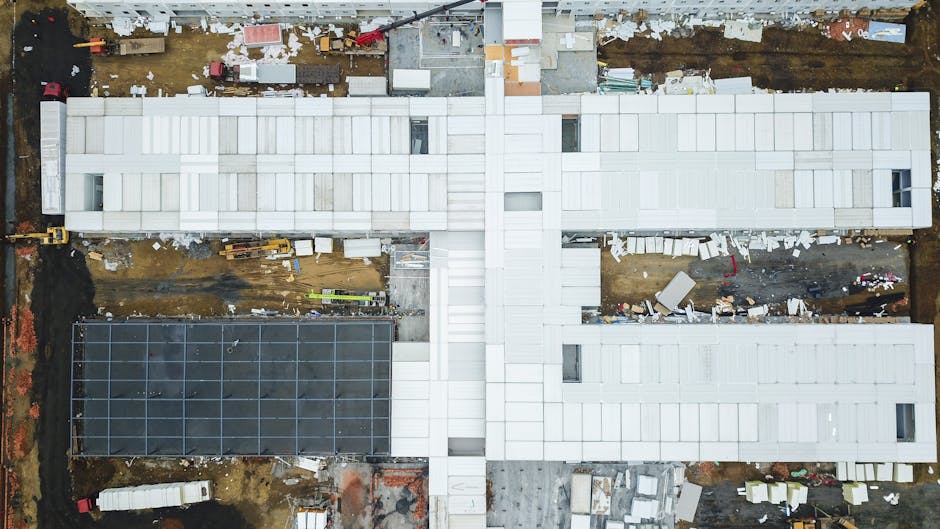
The HSA now uses drone technology to document scenes after serious and fatal incidents on construction sites. The drones capture aerial footage, map the scene in three dimensions, and preserve evidence that ground-level photographs simply cannot. An inspector walking a site after a collapse or a fall sees fragments. A drone sees the whole picture, and it sees it fast, before anything gets disturbed or moved.
This matters because incident investigation has always been hampered by the gap between what happened and what investigators can reconstruct. Witnesses remember differently. Evidence gets contaminated. Weather changes a scene overnight. Drone footage shot within hours of an incident gives the HSA a record that holds up in court and gives investigators something they rarely had before: an objective view of the conditions that existed when someone got hurt.
The technology is not experimental. It is deployed. If a serious incident happens on your site today, expect a drone over it before the day is out.
What This Means for Investigation Quality
Better investigation tools produce better evidence. Better evidence produces more accurate findings. More accurate findings produce prosecutions that reflect what actually happened rather than what could be proven from limited documentation.
For companies where poor site conditions contributed to an incident, this is not good news. The gap between "we couldn't prove the scaffolding was overloaded" and "here is aerial footage showing the scaffolding was overloaded" is the gap between a fine and a conviction. Courts have convicted on worse evidence than high-resolution drone mapping.
For companies running tight, well-managed sites, better investigation quality is actually a protection. When an incident results from a worker ignoring a safe system of work rather than the system failing, clear site documentation supports that finding.
The Indirect Effect on Safety Culture
Here is where it gets interesting. The HSA deploying drones for investigation is creating a secondary effect that nobody formally planned for: it is making site managers think harder about what a drone would see if it flew over their site right now.
That question is clarifying. Not "does our paperwork look right" but "does our site look right from the air." Are the edge protections in place? Is the plant movement separated from pedestrian routes? Is there hoarding where there should be hoarding? A drone does not read your method statements. It sees what is actually there.
This is a useful mental model for any site safety audit. Walk the job as if you are building a prosecution file. Falls from height remain the single largest cause of fatal injuries in Irish construction, and they are also the category where aerial footage is most damning. Missing guard rails. Incomplete working platforms. Gaps that ground-level supervision somehow missed. A drone finds all of them in one pass.
Prevention Is Still Cheaper Than Investigation
None of this is an argument for tolerating drone surveillance as a fact of life. It is an argument for running sites where drones have nothing interesting to find.
The logic is straightforward. An HSA investigation involving drone deployment means someone has been seriously injured or killed. The investigation costs, the legal exposure, the reputational damage, the prosecution risk, and the human reality of what happened all sit on one side of the ledger. On the other side sits the cost of running a site correctly. That is not a close comparison.
The HSA has consistently found that the majority of fatal construction incidents were foreseeable and preventable. Drone footage does not change that finding. It just documents it with more precision and makes it harder to argue otherwise in a courtroom.
For anyone thinking about what serious incident investigation actually looks like on the ground, the picture is not abstract. It is a preserved scene, mapped in detail, handed to a legal team who will spend months working through what the site manager should have done differently.
What Good Sites Are Doing Now
The construction companies taking this seriously are not waiting for drone footage to teach them lessons. They are conducting their own aerial audits, using the same technology proactively. Several larger contractors have begun using drones as part of routine site inspections, producing weekly or fortnightly aerial records of site conditions. These records do two things: they identify problems before incidents occur, and they create a documented history of a site being well-managed.
That documented history matters. In the event of an incident with factors outside management control, a site with six months of clean aerial inspection records is in a fundamentally different position than one with nothing. Evidence of diligence is evidence. It does not guarantee an outcome, but it reflects reality, which is the point.
Smaller contractors do not need to run a full drone programme to adopt the thinking. Walk your site from high points. Use the scaffold platform, the crane cab, the elevated access equipment already on site. Look for what the paperwork says is in place and confirm it is actually there. The gap between those two things is where incidents live.
The Shift That Is Already Happening
Drone investigation technology is not coming to Irish construction. It is here. The HSA has the capability, the training, and the legal framework to deploy it. Construction companies that treat this as a future concern are behind.
The better response is to treat it as a prompt. Not to fear investigation, but to run sites that do not need investigating.
If a drone can fly over your site tomorrow and find nothing worth putting in a report, you are doing your job.