Every year the campaigns launch. Posters go up. Inspectors hit the roads. And every year, Irish farms record fatalities that the investigation reports describe with the same phrases: foreseeable, preventable, inadequate supervision.
The gap between a safety campaign and a safe farm is not a mystery. The investigation reports explain it in detail. Most operations just never read them.
What the Investigation Reports Actually Say
The Health and Safety Authority publishes findings from fatal farm investigations. The patterns repeat so consistently they stop being shocking and start being instructive. Tractor runovers. PTO entanglements. Slurry tank collapses. Falls from heights. Livestock crushes. The mechanisms vary. The systemic failures behind them barely do.
Three failures show up in nearly every report. No written risk assessment for the specific task that killed someone. No adequate supervision of the person who died, often a young worker or a family member helping out. And no engineering control that would have broken the chain of events before it became fatal. The paperwork existed in some cases. The farm had a safety statement. It just did not reflect what actually happened on the land.
That is not a paperwork problem. That is a hazard identification failure.
The Tractor and Machinery Gap
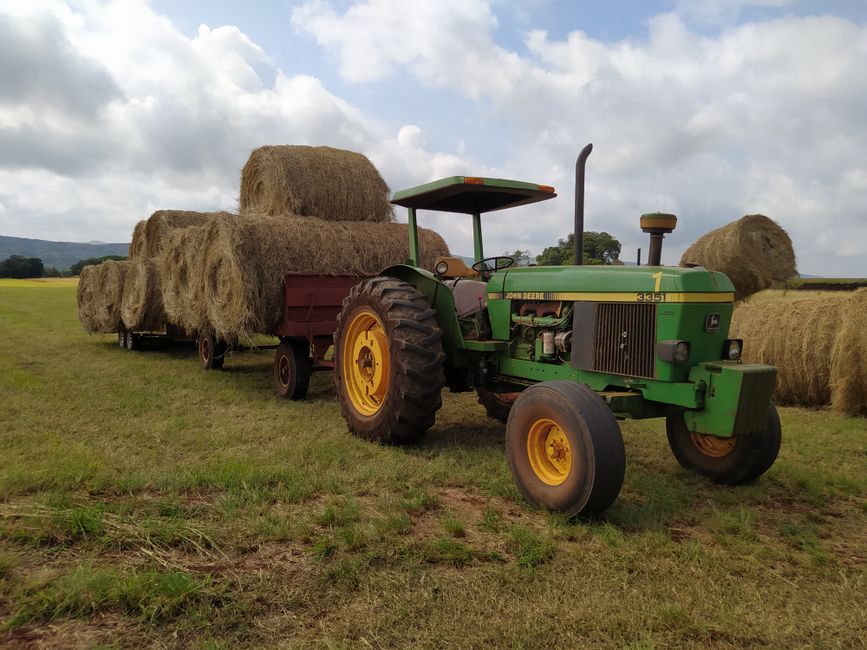
Tractors account for a disproportionate share of Irish farm fatalities. The investigation findings point to two consistent issues. First, operators working alone with no system for raising an alarm. Second, unguarded or poorly guarded power take-off shafts and attachments.
PTO entanglement injuries are catastrophic and fast. You do not get a second chance to assess whether the guard was adequate. Crush injuries from farm machinery produce outcomes that no first aid kit on the farm is equipped to handle. The control hierarchy here is not complicated. Guard the shaft. Maintain the guard. Train anyone who works near it. Check that the training was understood, not just delivered.
The investigation finding that keeps appearing is that guards were removed for maintenance or cleaning and never replaced. Not malice. Habit. Fix the habit before it becomes a fatality.
Slurry: The Most Predictable Killer
Slurry tank incidents kill quickly and kill multiple people, because the instinct when someone collapses is to go in after them. Hydrogen sulphide from agitated slurry can reach fatal concentrations in under a minute. The HSA has investigated incidents where the original victim and three rescuers all died in the same tank on the same day.
No farm that opens slurry tanks or operates a slurry agitator should be doing so without a confined space procedure in place. That means gas monitoring equipment on site and in use, not on a shelf. It means never agitating near open doors, windows or vents. It means a written rule that nobody enters a slurry space for any reason without standby personnel and atmospheric testing.
The investigation findings on slurry deaths are consistent about one thing. The farms involved were not reckless operations run by people who did not care. They were ordinary family farms where the specific risk of agitation in enclosed or semi-enclosed structures had never been formally assessed.
Young Workers and Family Members: The Supervision Failure
A significant proportion of farm fatalities involve people who were not the main farm operator. Young workers under 18. Children of the operator. Elderly relatives helping out. Neighbours doing a favour. Contractors who arrived without a site induction.
The common thread in the investigation reports is that nobody treated them as workers requiring supervision and instruction. They were family. They had been around tractors their whole lives. They knew the farm.
Familiarity with an environment and competence to work safely in it are not the same thing. A teenager who has ridden on farm vehicles since childhood has not been trained to operate them. An older relative helping with a task is not automatically aware of the specific hazards involved in that task that day. Why farm safety keeps failing comes down, in many cases, to the mistaken belief that knowing a person is the same as knowing their competence.
Written instruction for every person doing every task is the standard. The farm does not get an exemption because the worker is a family member.
When the Safety Statement Is Not the Safety System
Irish law requires farms above a certain size to have a safety statement. Many have one. A significant number have one that was written by a consultant in 2019, filed in a drawer, and never updated.
A safety statement that does not reflect current operations, current hazards, and current staff is not a safety system. It is a liability document pretending to be a safety document. Investigations consistently find that the written statement and the actual work practices on the day of the incident bore no relationship to each other.
An effective farm safety system does five things. It identifies specific hazards for specific tasks, not generic categories. It assigns responsible persons for each control measure, with names, not job titles. It gets reviewed when operations change, not on a calendar cycle alone. It is communicated to everyone who works on the farm. And it gets checked, not assumed.
The checking part is where most farms fall over. A control measure that is documented but never verified is not a control measure. It is a note about intent.
What Controls Actually Stick
Investigation findings point toward what works. Physical controls that do not depend on behaviour outperform behavioural controls that depend on memory and compliance. A guarded PTO shaft stops an entanglement regardless of whether the operator remembered to be careful. A locked gate to a slurry tank prevents unauthorised entry without requiring anyone to make a good decision under pressure.
Where physical controls are not possible, written procedures need to be specific enough to be testable. Not "operate machinery safely" but "do not engage the PTO without checking that the guard is fully seated and fastened." Specific. Verifiable. Trainable.
The operations that show the best outcomes in follow-up inspections are not the ones with the thickest safety files. They are the ones where every person on the farm can tell an inspector what the hazards in their work are and what they do about them.
The Turn
Campaign posters do not stop fatalities. Investigation reports show what does: identified hazards, engineered controls, supervised workers, and a safety statement that describes the farm you actually run. The information has been available for years. The gap is implementation.
Read the reports. They are on the HSA website. They name the mechanisms, the failures, and the controls that would have changed the outcome. That is the most useful safety document on any Irish farm right now.