Asbestos kills more construction workers in Ireland and the UK each year than any other single occupational cause. Not accidents. Not falls. A material that was enthusiastically specified into buildings for decades, then quietly banned, and is now sitting inside walls, ceilings, and plant rooms waiting for someone with an angle grinder.
Why Ireland Still Has an Asbestos Problem
The ban on asbestos use in Ireland came into full effect in 1999 under EU directive. Before that, the stuff was everywhere. Corrugated roofing sheets, pipe lagging, floor tiles, textured ceiling coatings, fire doors, boiler insulation. Any building constructed or refurbished before 2000 is a candidate. That is a lot of buildings.
The problem is not that asbestos exists in a building. Intact, undisturbed asbestos-containing materials, or ACMs, are broadly stable. The fibres become dangerous when the material is cut, drilled, sanded, scraped, or broken. At that point, fibres enter the air, enter lungs, and begin a process that can take 15 to 45 years to manifest as mesothelioma or asbestos-related lung cancer. There is no safe exposure level. There is no treatment that cures mesothelioma.
This is the reason a contractor who hits unknown asbestos ceiling tiles with a circular saw on a Tuesday is not just making a health and safety error. He is potentially sentencing himself and anyone in the vicinity to a death that will arrive quietly, decades later.
Where Asbestos Actually Hides
Knowing the common locations matters because this is where surveyors look first and where workers accidentally disturb material.
Roofing and cladding. Asbestos cement was the material of choice for industrial and agricultural buildings from the 1950s through the 1980s. Corrugated sheets, flat sheets, profiled cladding panels. It weathers and degrades over time, which increases fibre release risk.
Pipe and boiler insulation. Older plant rooms are high-risk areas. Lagging around pipes, boilers, calorifiers, and ductwork often contains amosite or chrysotile. This material is frequently friable, meaning it crumbles easily.
Floor tiles and adhesives. Vinyl asbestos tiles were standard in schools, hospitals, and commercial buildings from the 1960s onward. The tiles themselves may be relatively stable, but the black adhesive underneath often contains more asbestos than the tile.
Ceiling coatings and Artex. Textured decorative coatings applied by spray or trowel in the 1960s to 1980s routinely contained chrysotile. Sanding or scraping to redecorate is one of the most common routes to uncontrolled asbestos exposure among DIY workers and small contractors.
Fire protection materials. Structural steelwork in older buildings was often coated with sprayed asbestos as fireproofing. This is among the most dangerous forms because it is friable and applied to areas where maintenance work frequently happens.
Asbestos insulating board. Used in ceiling tiles, partition walls, soffit boards, and fire doors. More hazardous than asbestos cement and requires licensed removal in most circumstances.
The Legal Duty to Survey
Under the Safety, Health and Welfare at Work (Exposure to Asbestos) Regulations 2006, and subsequent amendments, employers and building owners have a duty to manage asbestos. This is not optional and it is not limited to demolition work.
Before any construction, refurbishment, or maintenance work begins on a pre-2000 building, a duty holder must determine whether ACMs are present. This means commissioning a survey. There are two types.
A management survey is the standard survey for buildings in normal use. It locates and assesses the condition of ACMs that could be disturbed by routine maintenance. It does not involve destructive investigation.
A refurbishment and demolition survey is required before any work that will disturb the building fabric. It is more intrusive, involves sampling, and must cover all areas affected by planned work. No licensed contractor should start strip-out work without sight of this survey.
The role of the project supervisor on Irish sites includes ensuring that pre-construction surveys are complete and that asbestos information is captured in the Safety File. If the survey has not been done, the project supervisor for the design stage should not be signing off on a construction phase plan that pretends the building is clean.
The survey must be carried out by a competent person. Competence here means specific asbestos surveying training, not general construction experience.
Licensed Removal and What It Involves
Not all asbestos work requires a licensed contractor, but most of the high-risk material does. The HSA licenses contractors under the 2006 Regulations. Work with asbestos insulating board, sprayed asbestos, and asbestos lagging requires a licensed contractor. Asbestos cement work falls below the licensing threshold in most cases, but still requires a trained and competent operative and proper controls.
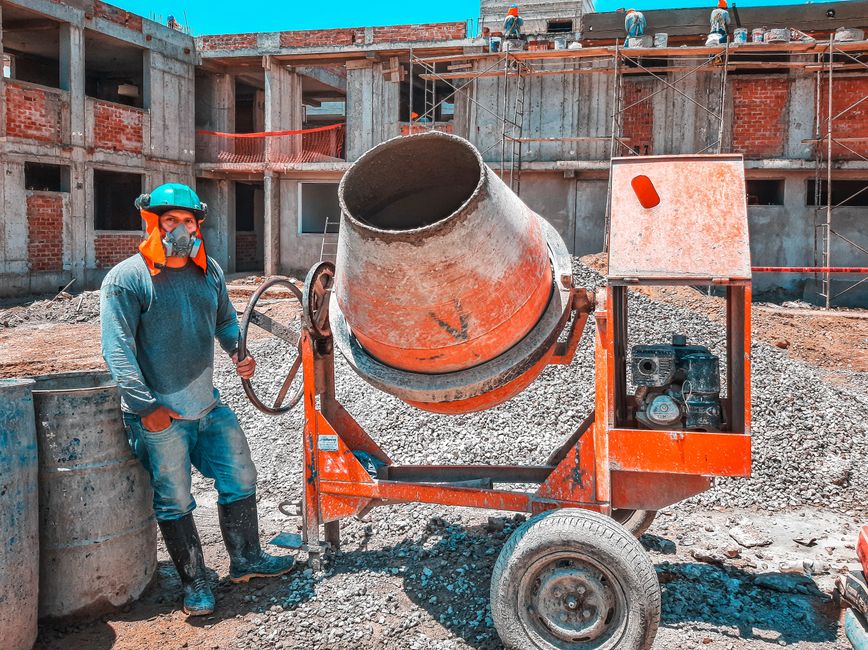
Licensed removal involves containment of the work area using polythene sheeting and negative pressure units, which create an airflow that prevents fibres escaping. Operatives wear RPE rated to the task, typically full-face respirators with P3 filters, and disposable coveralls. All waste is double-bagged, labelled as hazardous waste, and disposed of at a licensed facility. Air monitoring happens during and after the work. A four-stage clearance procedure, including a visual inspection and air test, is completed before containment is removed.
This is not a job for a general labourer with a dust mask. The cost of proper licensed removal is real. The cost of getting it wrong is prosecution, remediation, and the long-term health consequences for anyone exposed.
The HSA Register and Notifications
The HSA maintains a register of licensed asbestos contractors. Checking the register before appointing a contractor takes five minutes and is the minimum due diligence a responsible employer should do.
Notification to the HSA is also required before certain asbestos removal work begins. The notification must include the location of work, the nature of the ACMs, the planned control measures, and the contractor's licence number. This is not paperwork for its own sake. It allows the HSA to inspect high-risk jobs before fibres are in the air rather than after.
The Turn
Ireland has done reasonably well on the regulatory framework. The problem is enforcement and awareness at the smaller end of the market, where one-off refurbishments, small commercial fit-outs, and residential extensions regularly proceed without any asbestos check. A landlord converting an office in a 1970s building, a contractor taking out partition walls in a school during summer holidays, a homeowner scraping Artex in a Victorian terrace. These are the exposure events that accumulate.
The survey requirement is not bureaucracy. It is the only way to know what you are dealing with before a grinder is in someone's hands.
If your building was built or refurbished before 2000, you need an asbestos management survey before any intrusive work begins. Find a licensed surveyor, get the report, act on it. The alternative is not a fine you can budget for. The alternative arrives 30 years later in a hospital ward.