Every year in Ireland, people die at roadworks. Not just workers. Motorists, cyclists, pedestrians. The cones are visible. The danger is not.
The public sees a minor inconvenience. Safety professionals see a temporary workplace sitting inside a live traffic stream, staffed by people whose backs are sometimes inches from vehicles doing 80 km/h. That tension between public perception and operational reality is exactly where people get killed.
The Numbers Don't Lie
Road workers in Ireland face fatality rates that dwarf most office-based industries. Transport Infrastructure Ireland data consistently shows that vehicle incursion into works zones is the leading cause of death at roadworks, not excavation collapses, not equipment failures. A driver looking at their phone for 3 seconds at 80 km/h travels 67 metres blind. That is more than enough to end a life.
The Whitemountain case in Northern Ireland, which resulted in fines reaching €1.2 million for roadworks safety failures, showed exactly what a prosecuted roadworks death looks like. Inadequate traffic management. Poor site setup. Workers placed in harm's way without adequate protection. The fine is eye-catching. The underlying failures are depressingly ordinary.
Where It Actually Goes Wrong
Traffic management that exists on paper only. A Traffic Management Plan is a legal requirement under the Safety, Health and Welfare at Work (Construction) Regulations. What regularly happens in practice is a TMP written for ideal conditions, then ignored when the site changes shape, the crew is short-staffed, or the job runs late into evening hours. The plan in the folder and the reality on the ground are two different sites.
Speed that nobody enforces. Reduced speed limits at roadworks are advisory in the minds of most Irish drivers. Without enforcement, a 50 km/h works zone is a suggestion. Research from the Road Safety Authority confirms that speeding through roadworks is widespread. A worker struck at 80 km/h does not survive. A worker struck at 30 km/h has a fighting chance.
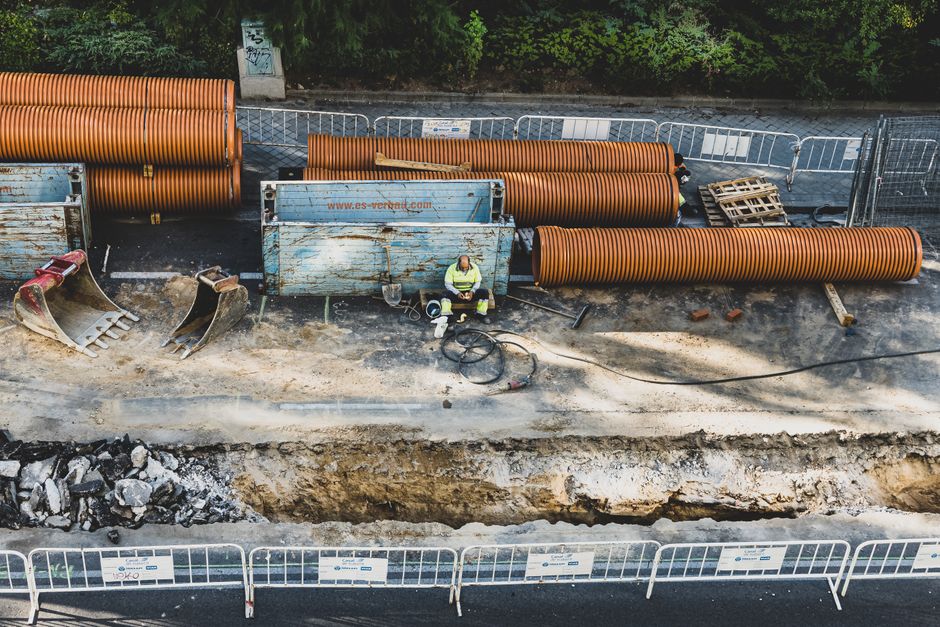
Inadequate separation. The gap between moving traffic and working personnel is often measured in centimetres rather than metres. Water-filled barriers, concrete barriers, and crash cushions exist specifically to create a physical buffer. They are expensive and awkward. They are also the difference between a near-miss and a fatality. Sites that skip them to save money are making a bet with someone else's life.
Night and low-visibility work. A significant proportion of roadworks happen at night to minimise disruption to traffic. This creates a compounding risk. Drivers are tired. Visibility is reduced. Retro-reflective gear on workers is necessary but not sufficient when a driver is drowsy or distracted. Sites must increase lighting standards, not rely on high-vis alone.
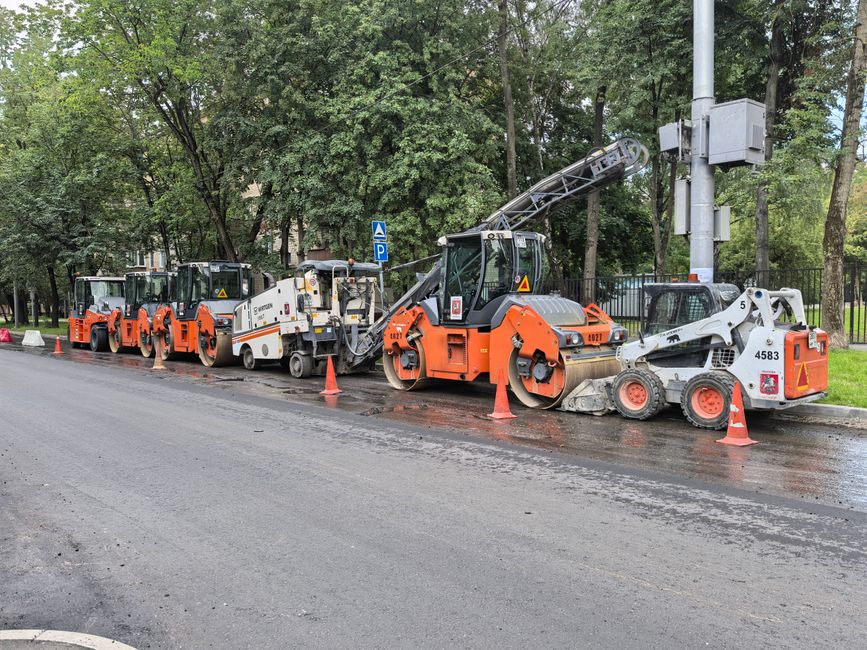
The reversing vehicle hazard. Construction plant moving within the works zone kills workers independently of external traffic. Reversing dumpers, excavators, and road maintenance vehicles operating in confined spaces create blind spots that are genuinely fatal in Irish sites. A banksman who is also doing two other jobs is not watching. That is when the incident happens.
What Workers and Managers Need to Do
For contractors managing active sites:
Run a daily pre-start briefing that covers that specific day's traffic management setup, not last week's TMP. Conditions change. The briefing needs to reflect the actual site workers are walking onto, not an abstract version.
Place exclusion zones and enforce them. Nobody not directly involved in a specific task should be standing in the works zone without a defined reason. Standing and waiting is how people get caught by moving plant or errant vehicles.
Review your works zone layout every time the job moves or traffic conditions change. A layout that worked for a straight section fails at a junction. Adaptability is not optional.
Install physical barriers where possible. Water-filled barriers cost money. Funerals cost more.
For workers on the ground:
Know your escape route before the traffic management fails, because at some point it will. A driver will clip a cone and enter your space. Where are you going when that happens? If you don't have an answer, that is a problem.
Never position yourself between a reversing vehicle and a fixed object. Ever. The operator cannot see you and the machine will not stop in time.
Wear your high-vis correctly. A jacket hanging open or a vest worn under a waterproof defeats the purpose. At night, check your retro-reflective strips are clean. Dirty strips reflect poorly.
For the driving public passing through:
Slow down before the signs tell you to. The taper zone where lanes merge is where sudden braking happens and rear-end collisions stack up.
Put the phone down. Completely. Not on the passenger seat. Not in a cupholder. Put it away.
The worker ahead is someone's parent, child, or partner. They are standing on an active road because someone has to fix it. The minimum owed to them is your full attention.
The Regulatory Picture
The Safety, Health and Welfare at Work Act 2005 and its construction regulations are clear. Principal contractors have a duty to plan, manage, and monitor construction work. Roadworks are construction work. The HSA treats vehicle incursion incidents with the same scrutiny as any other construction fatality, and prosecutions are following. Directors and project supervisors are named personally in more recent cases. The days of the company absorbing a fine while individuals walk away are shortening.
TII's Traffic Management Guidelines for Roadworks set out signing, signalling, and barrier requirements in detail. They are not suggestions. Deviation from them requires documented justification and an alternative that provides equivalent protection. "We didn't have the barriers on site that day" is not justification. It is evidence.
The Turn
Most roadworks deaths are not freak accidents. They are the predictable outcome of a site that cut a corner, a driver who was not paying attention, or a system that was never set up to protect the people most exposed. The hazard is understood. The controls are known. The gap is in treating a temporary road configuration as somehow less serious than a permanent workplace.
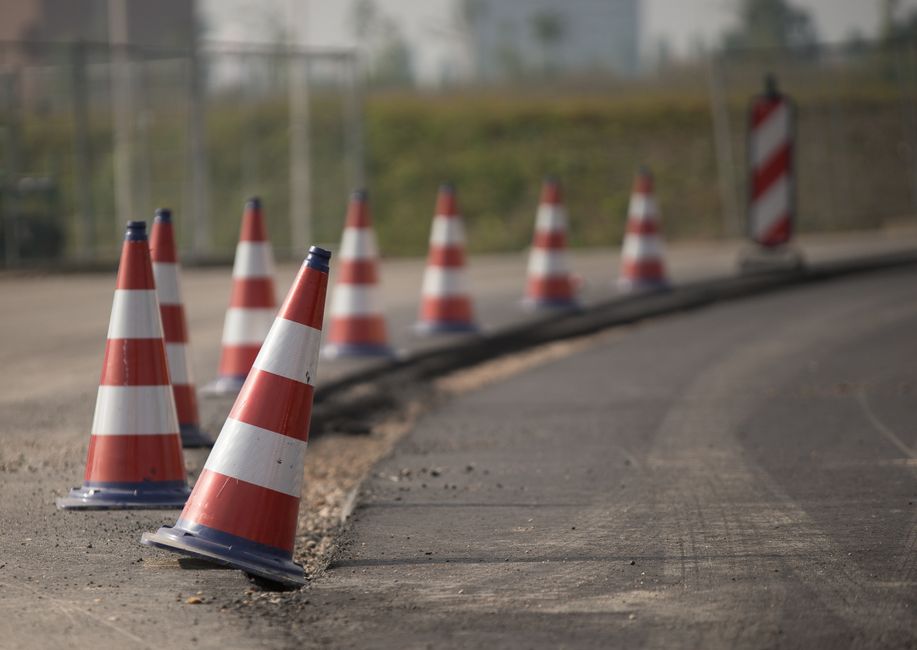
A cone is not a barrier. A sign is not protection. People are working on Irish roads right now, and whether they go home depends on whether the site around them was set up by someone who understood that difference.