The road looks wet. It is not wet. You find this out at 80km/h when the steering goes light and the backend starts to drift, and suddenly you are a passenger in your own car on a Leitrim back road at 7am with a ditch coming up fast.
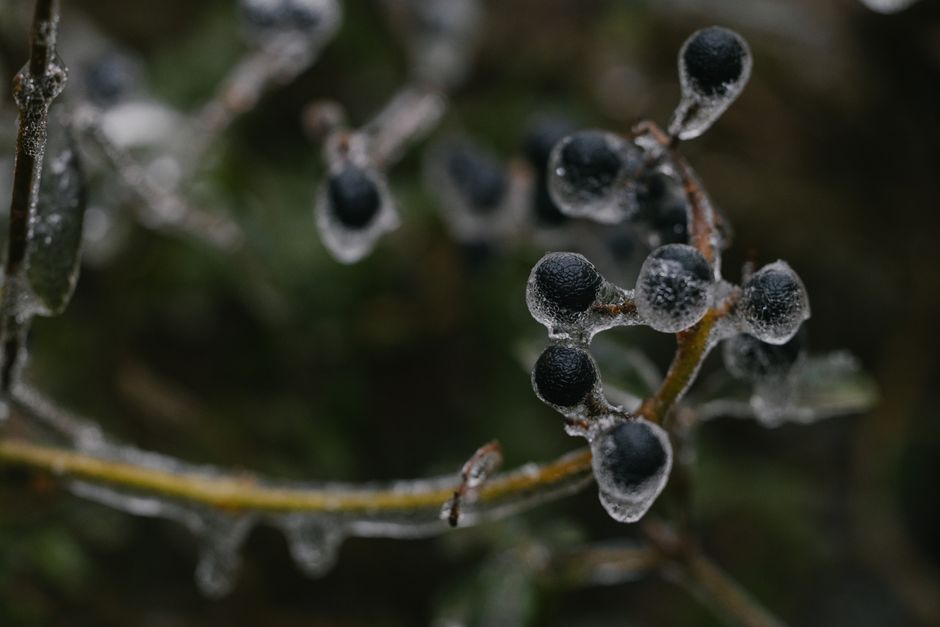
Black ice kills because it looks like nothing. No crunch underfoot, no white coating, no visual warning. Just a dark, slightly glossy road surface that your brain reads as damp tarmac and your tyres read as a skating rink. Rural roads in Ireland are especially unforgiving here. The gritters prioritise national routes and towns. That three-kilometre stretch between your house and the main road is on its own, and so are you.
Why Rural Roads Are a Different Problem
Local secondary roads in Ireland often sit in hollows, run through forestry, or follow river valleys. These are exactly the spots where cold air pools overnight and temperatures drop two or three degrees lower than the open fields nearby. The gritter that swept the N-road at 4am never touched your road. By the time you are driving it at 8am, the dew that formed after midnight has frozen solid.
Bridges are another trap. They lose heat from both above and below. A bridge surface can freeze while the road 50 metres either side is still clear. Cross one at speed and you will understand why the signs that say "bridge ices before road" are not decoration.
Shaded stretches under tree cover also hold ice long after open sections have thawed. A road that feels fine through a sunny field can turn lethal the moment it dips under a canopy.
How to Spot Black Ice Before It Gets You
Your car will often tell you before you feel it in the wheel.
If the outside temperature gauge reads 4 degrees or below, the road surface can already be at zero. The gauge measures air temperature. Road surface temperature lags behind and can be significantly colder, especially after a clear night with no cloud cover to trap heat.
Watch the road ahead. Black ice has a slightly different sheen than wet tarmac. Wet roads reflect light diffusely. Ice tends to have a flatter, almost polished look. You will not always see it, but sometimes you will if you are looking for it.
Watch other drivers. If a car in front of you makes an unexpectedly wide correction, that is information. Spray from a car travelling at normal speed that suddenly disappears is also information. No spray means no water, which can mean ice.
Listen to the radio. Met Éireann issues ice warnings and status alerts via RTE and local stations. A yellow ice warning does not mean avoid the road. It means treat every rural stretch as a potential hazard and adjust everything.
Speed, Distance and Why Your Normal Stopping Distance Is Fantasy
On a dry road, a car travelling at 80km/h needs roughly 55 to 60 metres to stop from the moment the driver reacts to the moment the car halts. On ice, that figure can increase by a factor of ten. You are not stopping in 60 metres. You might not stop in 600.
The only answer is speed that matches the conditions, not the limit. The speed limit is a maximum for good conditions. On an untreated rural road on a January morning, 40km/h is not being timid. It is being alive.
Double your following distance. Triple it. The driver in front is in the same situation as you, except they might have discovered the ice patch 1.5 seconds before you do.
Treat every junction, gateway and entrance as a potential ice source. Water drains across roads at field gates. That drainage channel freezes overnight. The patch just past the entrance is often the worst spot on the road.
What to Do When the Car Starts to Skid
A rear-wheel skid is when the back of the car swings out. Steer into the skid. If the back is going right, turn the wheel right. Do not brake. Do not accelerate. Steer smoothly and wait for the car to recover.
A front-wheel skid, more common with front-wheel drive cars on ice, is when the front wheels lose grip and the car goes straight despite steering input. Ease off the accelerator. Do not brake hard. Give the front tyres a moment to find grip again, then gently reapply steering.
Both scenarios require the same overriding principle: smooth inputs. Sudden braking, sudden steering and sudden acceleration are all ways of overwhelming whatever small amount of grip your tyres still have. The car has physics on its side. Work with them.
ABS will help you stop faster on ice than locking the brakes, but it will not stop you as fast as you would stop on dry tarmac. Feel the pedal pump and keep the pressure firm and steady.
If a collision is unavoidable, your one job is to reduce speed as much as possible before impact. Even 10km/h less makes a significant difference to outcome.
The Morning Commute Checklist for Icy Conditions
Clear your entire windscreen, not just a letterbox gap. Clear the roof too. Ice sliding off your roof onto the car behind is both dangerous and an offence under the Road Traffic Act.
Give yourself time. The single biggest driver error in icy conditions is speed driven by being late. Leave ten minutes earlier. Treat it as non-negotiable.
Check tyre pressure. Cold air drops tyre pressure. Under-inflated tyres have less contact patch with the road. Less contact patch means less grip on the conditions you are already struggling with.
Distracted driving is dangerous in any conditions, but on black ice it is a different category of risk entirely. Both hands on the wheel. Phone in a pocket or mounted. No coffee cup in your hand on a rural road in January.
Tell someone where you are going and what route you are taking if the conditions are severe. Rural roads in Ireland can be isolated enough that an off-road incident leaves you in a ditch with no passing traffic for forty minutes. That is not dramatic. That is geography.
The gritter does not owe you a safe road. Know what you are driving into, slow down before the road tells you to, and keep the inputs smooth when it goes wrong.