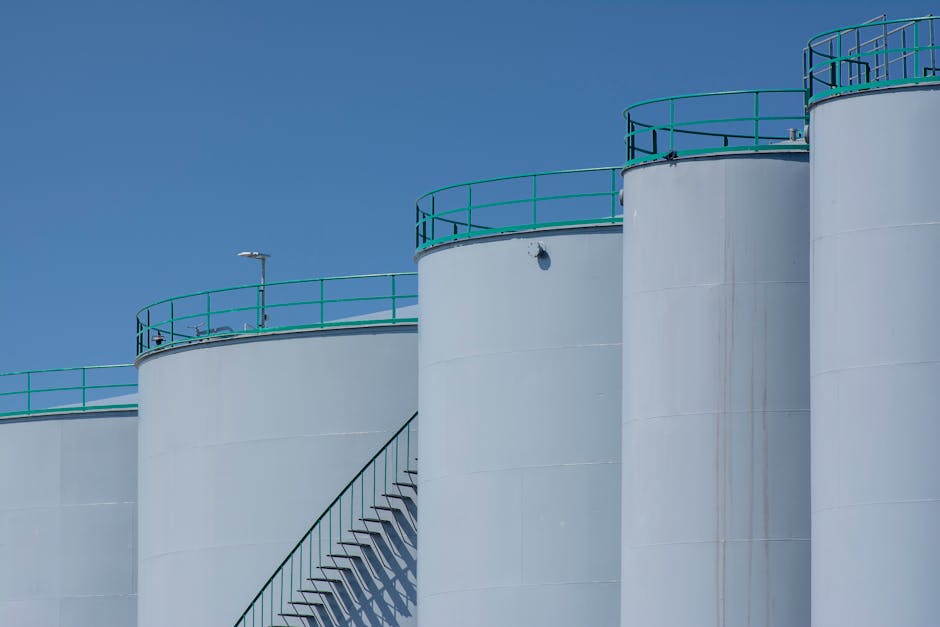
A chemical storage tank does not fail overnight. It fails over ten years while inspectors sign off on it, managers file the paperwork, and nobody asks why the paint around the base looks like that.
The £350,000 fine handed to a UK chemical manufacturer last year was not for an explosion or a spill that made the news. It was for chronic, documented neglect of corrosion that inspectors had flagged, recorded, and then watched nobody act on. The tank eventually failed. Employees were exposed to a hazardous substance. Nobody died, which is the only reason this article is not about a fatality inquiry.
The case is a near-perfect example of how inspection systems fail. Not because inspectors are incompetent, but because the entire structure of routine inspection is designed to find what is obviously wrong today, not what will be catastrophically wrong in three years.
Why Routine Inspections Miss Corrosion
Most inspection checklists are built around visible, immediate hazards. Is the guard in place? Is the label legible? Is the valve closed? These are yes or no questions, and they get yes or no answers.
Corrosion does not answer yes or no questions. It answers slow questions. Is this surface degrading faster than last year? Is the wall thickness still within tolerance? Is that staining new, or has it been there since 2019? Answering those questions requires comparison over time, and most inspection regimes do not build in that comparison. Each inspection is treated as a standalone event rather than a data point in a trend.
The result is that an inspector can look at a tank with 40% wall-thickness loss and tick "condition: acceptable" because it has not yet breached the failure threshold. Technically correct. Operationally dangerous.
What Actual Warning Signs Look Like
Employers and safety officers need to train their eyes for specific indicators, not general "deterioration." These are the ones that precede failures in storage tanks and chemical process vessels.
Surface rust that reappears within weeks of treatment. Light rust that comes back slowly is a surface problem. Rust that reappears within a fortnight of treatment means the corrosion is active beneath the coating.
Staining at welds and joints. Welds are the weak points in any tank. Discolouration, chalking, or white mineral deposits around weld seams indicate moisture ingress or chemical leaching. This is where failures start.
Floor-to-wall junction changes. The base of a tank accumulates the heaviest product contact and the most condensation. Any pitting, bubbling paint, or soft spots at the junction between the tank floor and the wall wall require thickness measurement, not a visual note.
Blistering or delamination of linings. Internally lined tanks are particularly dangerous because the lining hides what is happening to the steel behind it. Blistering on the lining surface means the steel behind it is already compromised.
Settlement or distortion. A tank that has shifted position, even slightly, puts stress on welds and connections. Visible distortion of the shell, even minor, warrants immediate professional assessment.
Unexplained product discolouration. If the stored chemical is picking up rust particles or colour change, the internal surface is failing. You are finding out because the product is telling you.
The Ten-Year Problem
Most corrosion that causes serious incidents has been present for between five and fifteen years. That window contains dozens of inspections, maintenance visits, and management walkthroughs. None of them caught it early enough to be cheap to fix.
This happens because corrosion is gradual and inspection intervals are fixed. Annual inspections on a tank with an active corrosion rate can miss the critical transition from "manageable degradation" to "structural risk" entirely if that transition happens in month seven of a twelve-month cycle.
The fix is not more frequent inspections. It is smarter ones. Ultrasonic thickness testing at known corrosion-prone points, documented and compared against previous readings, gives you a rate of change. That rate of change tells you whether you have two years or two months before you have a serious problem. A visual inspection alone never will.
Industries handling aggressive chemicals, whether acids, alkalis, or oxidising agents, should be running thickness surveys on storage vessels every two to three years at minimum, with more frequent checks on vessels over fifteen years old. The cost of a thickness survey is measured in hundreds. The cost of a failure is measured in something else entirely.
What the Regulations Actually Require
The Chemical Agents Regulations and REACH obligations require employers to manage risks from hazardous substances, which includes the integrity of the vessels that contain them. The Safety, Health and Welfare at Work Act 2005 places a duty on employers to maintain plant and equipment in a safe condition. Neither piece of legislation specifies ultrasonic testing or inspection frequencies for storage tanks, which is exactly the problem.
The absence of a prescriptive requirement is read by many employers as the absence of any particular obligation. It is not. The general duty to maintain safe plant is not satisfied by an annual visual inspection that produces the same tick-box outcome every year for a decade.
The HSA has prosecuted under these general duties before, and the pattern of enforcement tells a consistent story: if documentation shows a known hazard that was not acted on, the employer's position in court is extremely weak regardless of how many inspections were completed.
When a tank breach does result in chemical exposure, the first priority shifts to injury management, but the legal and reputational exposure for the employer has already started. Chemical burns from a compromised storage vessel are among the most severe workplace injuries on record, and they are almost always preceded by exactly the kind of structural failure that was visible to anyone looking for it properly.
Building an Inspection Regime That Actually Works
Three things make the difference between a compliant inspection regime and one that catches problems before they become disasters.
First, baseline documentation. Every tank needs a condition record from commissioning or from the date your regime starts. Wall thickness at multiple points, coating condition, photograph log. Without a baseline, you cannot measure change.
Second, trend analysis. Inspection findings need to be compared against the previous inspection, not just recorded in isolation. A maintenance manager looking at three years of thickness readings can see a trend that an inspector on a single site visit cannot.
Third, competent assessment, not just visual inspection. For chemical storage over ten years old, or any vessel storing aggressive substances, the person signing off on structural integrity needs appropriate technical competence. A general facilities manager doing a walk-around does not meet that bar.
The £350,000 fine was not the worst outcome. The worst outcome is what happens when the tank fails and someone is standing next to it. That outcome is still entirely preventable, but only if the inspection regime is built to prevent it rather than to document that someone showed up.
Corrosion does not care about your inspection schedule. Build one that returns the favour.