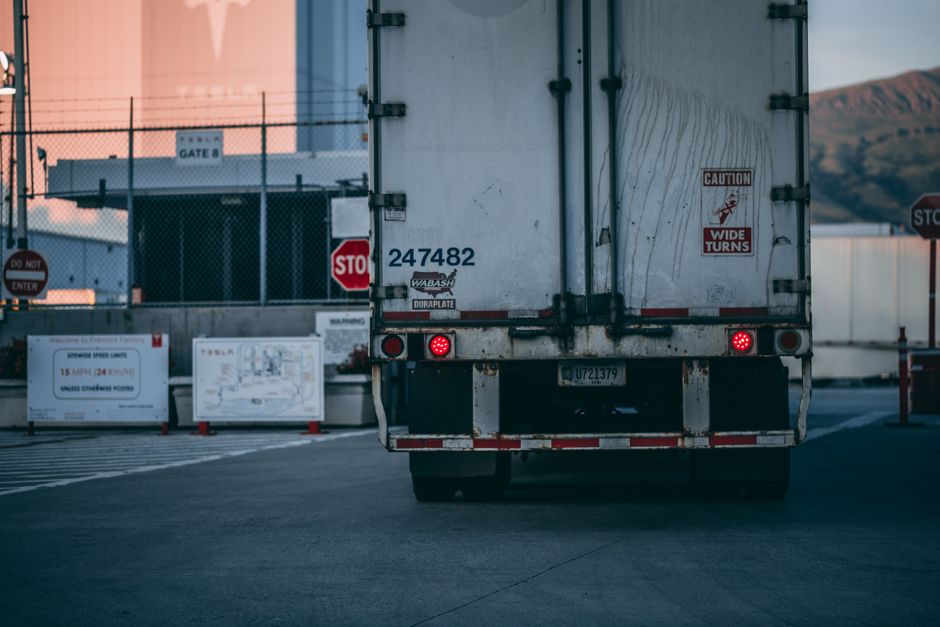
A reversing truck kills a worker on a busy site. The investigation finds no traffic management plan, no banksman, no mirrors, no camera. The company pays a five-figure fine and the director stands in a courtroom wondering how it came to this. That story has repeated itself enough times in Ireland that it should no longer surprise anyone. It still does.
The Numbers Are Not Moving in the Right Direction
The Health and Safety Authority consistently flags vehicle and pedestrian interaction as a leading cause of workplace fatalities. Construction, logistics, agriculture and waste management all carry the same pattern: large vehicles reversing in areas where people on foot are working. The blind spot behind a standard 10-tonne dumper can swallow a person completely. Drivers are not incompetent. The geometry is just brutal.
Prosecutions have climbed because inspectors now look specifically for documented traffic management. A verbal arrangement between the driver and a labourer does not constitute a system of work. Courts have stopped accepting it as one. Fines in the range of €30,000 to €80,000 are now routine for reversing incidents, and when a fatality is involved the numbers go considerably higher. When contractors cut corners, the financial consequences tend to follow a predictable pattern that sites could see coming from a mile out.
The legal framework is not complicated. The Safety, Health and Welfare at Work (General Application) Regulations require employers to organise traffic routes so vehicles and pedestrians can move safely and separately. That sentence alone covers most of what sites are getting wrong.
Segregation First, Technology Second
The most effective control is also the cheapest. Keep pedestrians and vehicles apart. If a person does not need to be in the reversing zone, they should not be in the reversing zone. Full stop.
This means physical barriers, clearly marked pedestrian routes and designated crossing points. It means gates that stay closed. It means the delivery area is not also the shortcut to the canteen. On a well-run site, these things are not negotiable and not expensive. On a poorly run site, they are the first things to go when a schedule slips.
Segregation is not just a nice idea. It is the hierarchy of controls applied properly. Eliminate the interaction before you try to manage it with training and technology. If your only defence is a camera and a trained driver, you have skipped several steps.
Spotters and Banksmen: What Actually Works
A banksman is not a formality. A trained banksman with a clear system of signals, positioned where the driver can see them at all times, genuinely prevents incidents. The problems start when the banksman becomes a habit rather than a system.
Common failures include:
- Banksman positioned where the driver cannot maintain visual contact
- No agreed signal system documented before the work starts
- Banksman also doing another job simultaneously
- Worker acting as banksman with no training and no PPE
- Banksman absent and reversing continuing anyway
The banksman system needs to be written into the site's traffic management plan and reviewed when site layouts change. When the compound moves, the plan moves with it. Too many sites treat the original plan as permanent and let the physical reality drift away from it over the following months.
Technology: Useful, Not Sufficient
Reversing cameras are now standard fitment on most plant and HGVs. Proximity sensors and radar systems are increasingly common. Telematics can flag high-risk reversing events. All of this is genuinely useful. None of it is a substitute for segregation and trained spotters.
A reversing camera does not eliminate blind spots and it does not tell the driver that a pedestrian has stepped into the zone in the two seconds since they last checked the screen. Camera displays can wash out in direct sunlight. Proximity sensors can give false positives in cluttered yards, which means drivers start ignoring them. Technology fails quietly and nobody notices until it matters.
That said, the sites getting this right are using cameras and sensors as a genuine layer of protection, not a replacement for the layers before them. A reversing camera on a vehicle that also has a banksman, operating in a segregated zone, inside a site with a documented traffic management plan is well protected. A reversing camera bolted to a vehicle operating in a chaotic yard with no plan is a liability in disguise. It looks like safety without being it.
The Traffic Management Plan: What It Has to Cover
The HSA expects a specific, site-specific document. Not a generic template downloaded from a trade body's website and filed in a folder nobody opens. The plan needs to cover:
- All vehicle routes on site, including delivery and removal
- Pedestrian routes and crossing points
- Reversing zones and who is permitted to enter them
- Banksman requirements and signal systems
- Visibility aids required on each class of vehicle
- Procedures when the layout changes
- Emergency procedures if a person is struck
Review it when site conditions change. Sign it. Date it. Make sure the people operating in those zones have read it and can describe it back to you. An inspector will ask.
What the Prosecution Record Is Telling You
The HSA's prosecution reports are publicly available and worth reading. The reversing incidents that end in court tend to share a few features. No traffic management plan, or one that did not reflect the actual site. No evidence of supervision during reversing operations. Vehicles and pedestrians sharing routes without controls. The odd case where a camera system was fitted but had not been working for weeks.
None of this is complex to fix. The fixes are documented, well understood, and not particularly expensive relative to the cost of getting them wrong. The problem is not knowledge. The problem is that sites treat reversing as a routine activity rather than a high-risk one, and routine activities do not get the attention they need until something goes wrong.
A reversing vehicle weighing 20 tonnes is not routine. Treat it accordingly and you probably will not see the inside of a courtroom.