The camera was working. The driver was experienced. The pedestrian was dead. That sequence appears in prosecution after prosecution, and it should end the conversation about technology being the answer.
It doesn't, of course. Fleet managers buy cameras, tick a box, and move on. The camera becomes the system, which is the same as having no system at all.
What a Reversing Camera Actually Does
It shows you a rectangle of what's directly behind the vehicle at that moment. That's it. It doesn't show you what moved into the zone while you were checking mirrors. It doesn't account for the angle of a reversing arc. It doesn't work well in bright sunlight, heavy rain, or when the lens is caked in site mud. And it demands that the driver is watching the screen at the exact second the hazard appears, not adjusting a mirror or responding to a radio call.
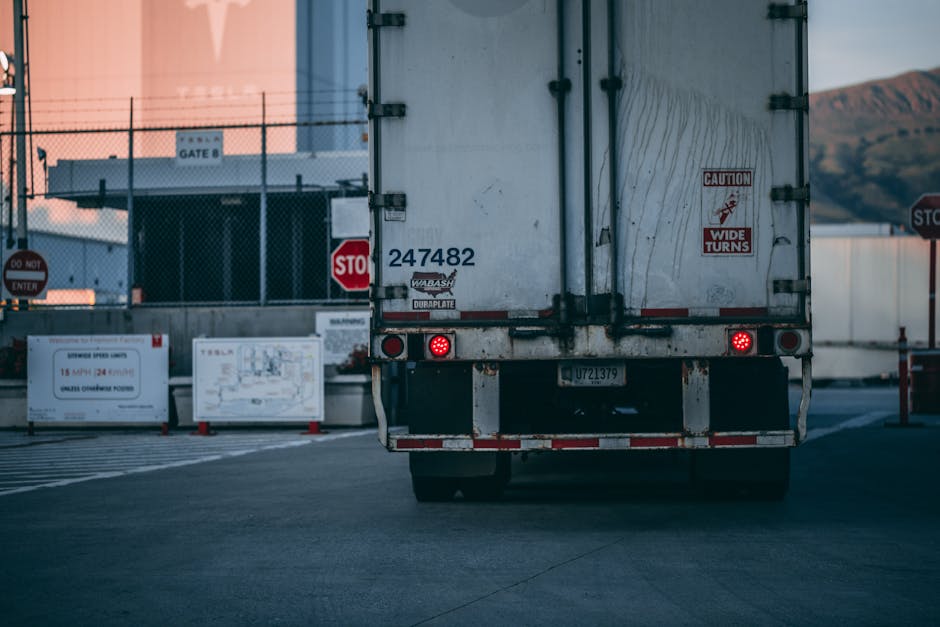
Most reversing cameras cover a 120 to 150 degree field directly behind the vehicle. An articulated lorry or large plant machine has blind spots that extend several metres to the sides and up to 30 metres directly behind in some configurations. The camera covers a fraction of that geometry. The rest is invisible.
The Blind Spots That Actually Kill
For HGVs, the left side is the most lethal zone on Irish roads. A cyclist or pedestrian standing beside the cab on the driver's left is invisible. Completely. Not partially. Not if the driver leans forward. Invisible. The nearside mirror shows a strip of the road surface. It does not show a person standing close to the vehicle.
The front blind spot kills too. A child, a low vehicle, a worker crouching on a construction site, all can be directly in front of a large vehicle and below the driver's line of sight. Drivers have driven over people they never saw because they were physically incapable of seeing them from that cab position.
Reversing adds a third dimension to this problem. The rear arc of a reversing vehicle sweeps wide. A banksman standing at what feels like a safe distance gets caught in that arc because arcs are counterintuitive. People underestimate how far the rear of a vehicle swings when the front turns.
What the Prosecutions Show
The Health and Safety Authority and the RSA have pursued prosecutions where reversing incidents killed workers on construction sites, in yards, and in loading areas. The pattern is consistent. A vehicle reverses in an area shared with pedestrians. A camera or sensor is fitted but the system around it has failed. Nobody managed the separation of people and vehicles as a primary control.
The fine isn't the story. The story is what was absent. In case after case, the absent thing is a written reversing plan, a designated banksman with authority to stop the vehicle, and physical separation of pedestrian routes from vehicle routes. Not sophisticated technology. Basic geometry and organisation.
Prosecution outcomes for machinery incidents follow a similar logic, where the gap between what was fitted and what was managed turns out to be exactly where someone got hurt.
What Actually Prevents Reversing Fatalities
Eliminate reversing entirely where possible. Drive-through layouts, one-way systems, and loading bay designs that remove the need to reverse are the only controls with a zero failure rate. If the vehicle never reverses near people, the camera is irrelevant.
Physical segregation as the first line. Pedestrian routes need barriers, not paint. Yellow lines on a yard floor do not stop a vehicle. A concrete kerb, a steel barrier, a raised walkway, these things stop vehicles. They work when the driver is distracted, when the banksman steps away, when the camera fogs up.
A banksman is a role, not a job title. A banksman has one job during a reversing operation. Not two. One. They have a clear signal system with the driver agreed in advance. They have authority to stop the vehicle and that authority is real, meaning the driver stops when signalled, every time, without question. They are not also answering a phone, directing other traffic, or doing anything else.
Sensors are a supplement, not a replacement. Radar-based proximity sensors that sound an alarm in the cab are more reliable than cameras in poor visibility. They cover a wider arc. They don't require the driver to look at a screen. They still fail if the driver ignores them. Layer them with banksmen and segregation and they are genuinely useful.
Reversing plans are written documents. Not mental models. Not common sense. Written, site-specific plans that identify where vehicles reverse, who manages each operation, what signals are used, and what happens when the plan isn't followed. New workers get shown the plan. The plan gets reviewed when the site layout changes.
The Camera Isn't the Problem
Cameras are fine. Sensors are fine. The problem is the belief that fitting them transfers risk away from the organisation. It doesn't. The duty to manage reversing operations safely sits with the employer, full stop. The camera is evidence of effort. It is not evidence of a safe system.
When the HSA or an RSA inspector asks what your reversing management looks like, showing them a camera installation is the beginning of the answer, not the end of it.
A reversing incident that kills someone will be investigated. The camera footage will be reviewed. And if that footage shows the person entering the blind spot while the operation was unsupervised, with no banksman present and no segregation in place, the camera will have recorded exactly how the system failed.
Get the system right. The camera can take care of itself.