The festival season is in full swing and the HSA has made outdoor events a targeted inspection priority. Inspectors are not there for the music.
Most event organisers assume that having a safety statement and a few stewards covers them. It does not. The gaps the HSA keeps finding are not exotic. They are the same problems, at the same types of events, year after year. A shutdown notice ruins your event. A prosecution ruins your business. Neither outcome requires bad luck. They require the specific oversights covered below.
What the HSA Is Actually Targeting
The HSA's outdoor event inspections focus on three pieces of legislation: the Safety, Health and Welfare at Work Act 2005, the General Application Regulations 2007, and where relevant, the Planning and Development Acts. Inspectors cross-reference your event safety management plan against what they see on the ground.
If those two things do not match, you have a problem regardless of how good the paperwork looks.
Events with more than 5,000 attendees trigger automatic multi-agency coordination with local authorities, the fire service, and An Garda Síochána. Smaller events get less scrutiny from other bodies, which means they sometimes get more from the HSA precisely because nobody else is watching.
The Crowd Management Failures That Keep Appearing
Crowd management is where most notices get issued. Specifically:
No documented capacity calculation. Organisers frequently quote a maximum attendance figure without being able to show how they calculated it. The HSA expects a methodology based on venue geometry, entry and exit flow rates, and emergency egress time. A number on a page is not a calculation.
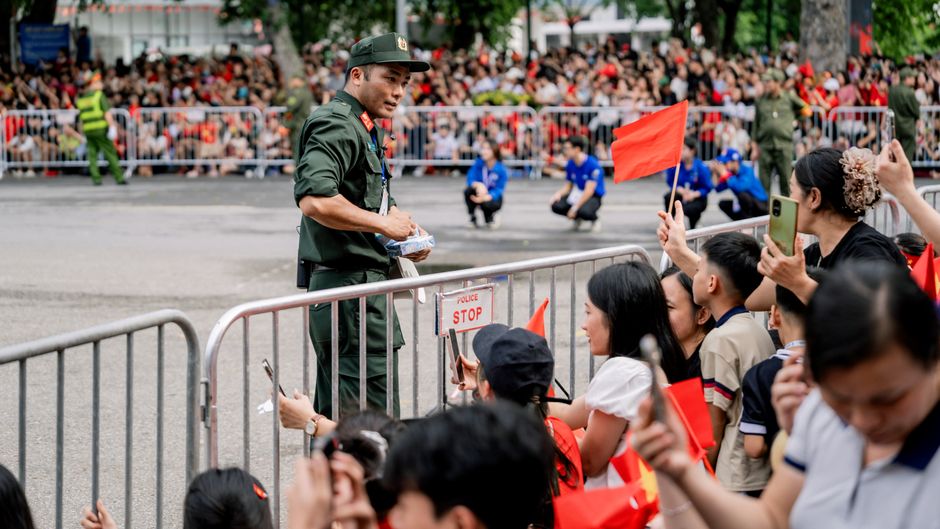
Stewards who do not know their role. Hiring stewards is not the same as briefing them. Inspectors ask stewards direct questions. If a steward cannot tell an inspector what their emergency action is when a crowd surge starts, your event has a documented failure.
Entrance bottlenecks that were not modelled. Queuing outside a venue creates its own crowd safety risk. Gates that can process 400 people per hour against an arrival spike of 2,000 in 30 minutes create conditions that have ended careers and lives at other events. Model the arrivals, not just the capacity.
No designated crowd monitoring position. Someone needs to watch the crowd density in real time and have the authority to stop entry. That person needs to be named in your plan and needs a radio. At most inspected events, this role exists on paper and not in practice.
Temporary Structures: The Gap Between Installation and Sign-Off
Stages, barriers, towers, and viewing platforms are temporary structures under Irish law. They require a structural engineer's sign-off before public access. The certificate needs to be on site and available to inspectors.
What frequently happens is that the cert gets issued for the design but the structure gets modified during installation. A stage extended by three metres, a barrier section added late, an extra speaker stack bolted to a platform. Each change potentially invalidates the original cert, and no one calls the engineer back.
The second structural issue is ground conditions. A temporary structure that was engineered for compacted hardstanding becomes a different proposition when three days of July rain turns the field to porridge. The original certification does not automatically cover changed ground conditions.
Fire Safety: The Basic Stuff Still Getting Missed
Outdoor events are not exempt from fire safety requirements. The fire risk assessment needs to cover:
Generator placement and fuel storage. Generators placed against canvas vendor structures with diesel stored nearby are a combination that inspectors flag immediately. Ten metres clearance from flammable structures is a starting point, not a suggestion.
Cooking vendors with LPG. Every cooking unit running LPG needs a current gas safety certificate, a dry powder extinguisher within arm's reach, and staff who have been shown how to use it. Inspectors check all three. Failure on any one is a notice.
Emergency vehicle access routes. Mapped, marked, and kept clear throughout the event. Not just at setup. Access routes that get parked in during the event create a scenario where a fire appliance cannot reach the source in time to matter.
First Aid Provision: Numbers and Location Both Count
The formula most organisers use is one first aider per 1,000 attendees. That is a floor, not a ceiling, and it does not account for event type. A standing music event with alcohol service has a different injury profile than a family cycling event.
Crowd crush and medical emergency response requires trained personnel who can reach a casualty within four minutes. At large outdoor events, that means positioned first aid stations mapped against crowd flow, not a single tent at the perimeter.
What inspectors find: one first aid team covering a 40-acre site with no internal communications and a response time of 12 minutes to the far end of the venue. That is not first aid provision. That is paperwork.
The Safety Statement Nobody Can Find
Every outdoor event employer needs a safety statement under the 2005 Act. But the statement needs to be specific to the event, not a generic company document with the event name typed in.
Inspectors ask to see it on arrival. If the person who can produce it is not on site, or if it takes 45 minutes to locate, the inspection is already going badly. The safety statement needs to cover the specific hazards of this event, at this venue, on these dates, with these contractors.
Speaking of contractors: you are responsible for ensuring that every contractor working your event has their own safety statement and that their work is coordinated with yours. A catering contractor who uses a system of work that creates a hazard for your crowd is your problem as the principal duty holder, not theirs alone.
What Happens When the Inspector Arrives
The HSA inspector will ask to speak with the person responsible for safety. If that person is not identifiable within two minutes, the inspection starts badly. If they are not on site, it may end with a Prohibition Notice.
Inspectors look at whether the physical setup matches the safety plan. They talk to workers and stewards. They check credentials for specific roles. They examine temporary structures, first aid positions, fire points, emergency access, and crowd management arrangements.
A Prohibition Notice stops the event. An Improvement Notice gives you a timeframe to fix specific issues and requires a written response. Prosecution follows if you ignore either.
The fines for non-compliance at events have moved well beyond token amounts. The reputational damage lasts longer than the fine.
The Fix Is Not Complicated
Get a competent safety advisor involved in event planning before the site opens, not the morning of. Walk the site against your safety plan 48 hours before gates open. Brief every steward in person, not via a document they sign. Have your structural certs, gas certs, and first aid rosters in one folder on site with the safety manager.
The events that pass inspection are not the ones with the most paperwork. They are the ones where the people on the ground know what the plan is and can show it in action.