The robot will not clock in late, call in sick, or argue about shift patterns. It will also not tell you when it is about to break your worker's wrist.
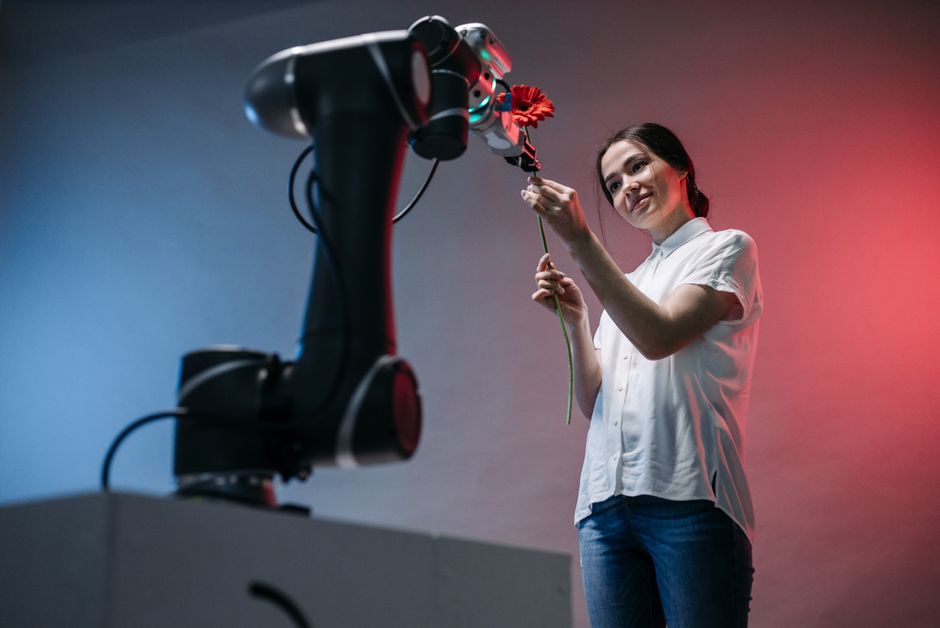
Collaborative robots, or cobots, are now present in Irish food processing plants, pharmaceutical facilities, logistics warehouses, and light manufacturing operations. The sales pitch is compelling: a cobot works alongside humans, senses their presence, and stops when contact is detected. Safe by design, the brochure says. The reality on the floor is more complicated, and the injury patterns emerging from early adopters across Europe should make any Irish employer pause before they sign the installation contract.
What Makes Cobots Different from Traditional Industrial Robots
Traditional industrial robots live in cages. The guarding is the safety system. A cobot is designed to operate without fixed barriers, using force-limiting technology, speed monitoring, and proximity sensing to share space with workers. That is genuinely useful. It is also genuinely new territory for risk assessment.
The hazard profile is different in ways that catch people out. Traditional robot injuries tend to be catastrophic and obvious: a worker enters a restricted zone and the machine does not stop. Cobot injuries are more subtle. Repetitive contact forces below the stop threshold. Awkward postures as workers reach around or accommodate the robot's movement path. Pinch points that exist not because of the robot alone but because of the interaction between the robot, the workpiece, and the human body position. Crush injuries from a cobot moving a heavy payload at low speed can occur well within the force limits that trigger an emergency stop.
The other factor is task drift. A cobot gets installed for one specific job. Six months later, the task has evolved slightly, the tooling has changed, or someone has adjusted the payload. The original risk assessment no longer describes the actual operation.
What Irish Regulation Currently Requires
The Safety, Health and Welfare at Work Act 2005 and the associated General Application Regulations 2007 cover the general duties. The Machinery Directive, implemented in Ireland through the European Communities (Machinery) Regulations, governs how robots are placed on the market. But collaborative robotics introduce a gap between what the machine manufacturer certifies and what the employer actually creates when they integrate that machine into a real production environment.
The CE mark on a cobot covers the machine as supplied. The moment an employer integrates it with a conveyor, a fixture, a gripper, a workstation layout, and a human workflow, they have created a new composite machine. Under Irish and EU law, that integration makes the employer the effective manufacturer of the overall system. The risk assessment obligation, and the liability, shifts substantially toward them.
ISO/TS 15066 is the technical specification covering collaborative robot safety. It sets guidance on permitted contact forces and pressures for different body regions. It is not a legal requirement in itself, but any HSA inspector or court looking at a cobot injury will treat departure from it as evidence of inadequate risk assessment. Know it. Apply it. Document that you applied it.
The Risk Assessment Nobody Is Doing Properly
The standard machinery risk assessment asks what the machine does and what can go wrong. For cobots, that is not enough. You need to assess the human behaviour the task induces.
Workers adapt to machines constantly and unconsciously. They lean in to see a part more clearly. They brace against the workstation when they are tired. They reach across the robot's path because it is faster than walking around. None of this appears in a generic risk assessment. It only appears after someone gets hurt.
The HSA's guidance on machinery that maims makes a point that applies directly here: Ireland has repeatedly failed to learn from incident patterns that the UK and European regulators documented years earlier. Cobots are not a future risk. They are a current one, and the incident data from German and Dutch manufacturing operations is already showing where the failures cluster.
Task observation is not optional. Watch how workers actually interact with the cobot during a full shift, not just during a demonstration. Film it if you can. The postures people adopt after hour six are different from what they do in the first twenty minutes when the assessor is watching.
Speed, Payload, and the Stop Function
A cobot moving at 250mm per second carrying a 5kg payload generates significant force on contact. The ISO guidance sets body-region-specific limits, but these assume transient contact, not a worker being pressed against a fixed surface while the robot continues its path. That scenario, known as a quasi-static contact event, is where the numbers get dangerous fast.
Force-limiting technology works within its design parameters. If those parameters were set for a different task, a different tool, or a different workspace geometry than what is now operating, the stop function provides false assurance. Reconfigure the task, revalidate the parameters. Every time.
Training That Actually Addresses the Hazard
Generic manual handling and machinery induction training does not cover cobot-specific risks. Workers need to understand what the robot will and will not detect, what happens if it stops unexpectedly mid-cycle, and what the correct response is to a fault condition. They also need to understand what task drift looks like and have a clear route to flag it.
Crush injuries and amputation from cobot interactions are low-speed events that can still cause serious tissue damage. First-response training on site should account for the specific nature of those injuries, not just assume a standard laceration protocol applies.
Supervisors need separate, deeper training. They are the people who will authorise informal task changes, approve a new gripper because the old one broke, or allow production pressure to override a stop-event investigation. That is where the real risk lives.
The Inspection and Maintenance Gap
Cobots require periodic revalidation, not just mechanical maintenance. Sensor calibration drifts. Software updates change behaviour. A gripper worn by 10,000 cycles behaves differently than a new one. Build formal revalidation into the planned maintenance schedule and document it.
The HSA has signalled clearly that it is watching automation deployments. An inspection that finds a cobot operating without a current risk assessment covering the actual configured task and the actual workspace is an enforcement waiting to happen.
What the New Guidance Changes
The Health and Safety Authority has moved to address collaborative robotics more directly in its guidance outputs, aligning with European Agency for Safety and Health at Work material on emerging automation hazards. The core message is not that cobots are dangerous and should be avoided. It is that the traditional safety management approach of buying equipment with a CE mark and writing a brief risk assessment is not sufficient for human-robot collaboration.
The guidance places the integration risk assessment firmly on the employer. It requires documented evidence of force and pressure limit analysis against ISO/TS 15066 parameters. It requires consideration of all foreseeable human behaviours in the workspace, not just intended ones. And it requires a review process tied to any change in task, tooling, payload, or layout.
Ignore that framework and you are not just non-compliant. You are operating without the knowledge base to even identify when your cobot has become dangerous.
The technology will keep arriving. The question is whether your safety management keeps pace with the delivery schedule.