A worker reaches under a suspended load to free a snagged strap. The load shifts. That is how amputations happen, and that is how they keep happening.
Ireland's logistics and freight sector has a loading problem that goes beyond individual carelessness. HSA investigation reports from the past decade show a pattern that is almost tedious in its consistency: inadequate systems of work, pressure to move loads fast, and a near-total absence of formal procedures at the point where goods actually leave the vehicle. The statistics are rising not because workers are getting more reckless, but because the systems around them are getting thinner.
The Injuries That Show Up in the Reports
Crush injuries and amputations dominate the serious incident data from loading and unloading operations. Hands, fingers, and feet are the most common sites. Forklift interactions account for a significant portion, but so does something far simpler: manual handling of unstable loads on flatbeds and curtainsiders where the load has shifted in transit. A driver pulls a curtain and 800 kilograms of block paving comes with it.
HSA inspectors have noted the same contributing factors repeatedly. No banksman. No exclusion zone around the vehicle during unloading. No written procedure for dealing with a shifted or damaged load. The driver is expected to manage the situation alone based on experience and instinct, because nobody wrote down what to do when things go wrong. For those on the receiving end of a crush injury or amputation, the consequences are permanent and the response time matters enormously.
Why the Shortcuts Keep Getting Repeated
The loading bay is a pressure point. Delivery windows are tight. Drivers are paid per drop in some arrangements. Receiving staff are stretched. Everyone knows the procedure is to wait for the safe system, and everyone also knows that the safe system takes an extra twelve minutes they do not have.
This is not a mystery. It is a rational response to the incentive structure, and it will not change because someone laminated a poster. Companies that have actually reduced incidents in this area have done one thing differently: they built the safe system so that it is genuinely faster than the shortcut, or they removed the conditions that make the shortcut attractive in the first place. That means delivery scheduling that accounts for actual unloading time. It means receiving areas designed so exclusion zones are physically enforced, not just marked on the floor in yellow paint that half the staff have stopped seeing.
What a System of Work Actually Means Here
The Safety, Health and Welfare at Work Act 2005 requires employers to provide safe systems of work. In loading and unloading, that means written procedures covering every foreseeable scenario including what to do when a load arrives damaged, when a vehicle is not level, and when a load has shifted in transit. It means training workers in those procedures, not just handing them a document to sign. It means supervision that is real rather than nominal.
Specifically for vehicle loading and unloading, the relevant guidance from the HSA points to:
- A designated person responsible for directing loading and unloading
- Physical segregation of pedestrians from vehicle movement areas
- Procedures for load restraint inspection before unloading begins
- Clear communication between driver and site staff before any restraint is removed
- Written risk assessment for non-standard loads
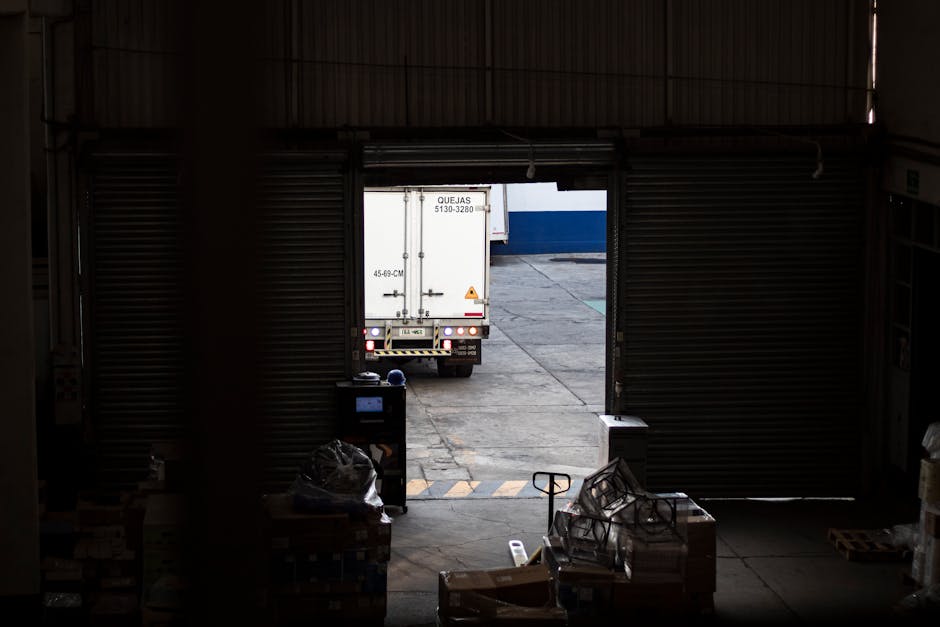
The physical segregation point is where most sites fall short. Reversing and vehicle movement hazards are well documented in road transport incidents, but the risk does not stop when the vehicle parks. The loading bay itself is where pedestrians and moving loads interact at close range, often with no formal system managing that interaction.
Forklift Operations Are Their Own Category of Risk
Forklifts appear in a disproportionate number of loading-related fatalities and serious injuries. The common thread is not mechanical failure. It is proximity: pedestrians in forklift operating zones, often because the operating zone was never properly defined or enforced.
Operators are frequently trained and certificated. The problem is the environment they operate in. A yard where pedestrians routinely cross forklift routes because the alternative is walking an extra 90 seconds is an accident waiting for its moment. Segregation by physical barrier is reliable. Segregation by painted lines and good intentions is not.
Racking collapse during pallet loading is a related and underreported problem. A single impact from a forklift tine can compromise a racking bay structurally while leaving no visible damage obvious to a non-specialist. The collapse happens three months later when a different operator loads the bay to full capacity. This is preventable with regular racking inspection by a competent person and a system for reporting and acting on damage immediately.
The Investigation Pattern Nobody Wants to See
When the HSA investigates a serious loading incident, the report almost always contains the phrase "no written procedure." Occasionally it contains "written procedure existed but was not followed." Rarely does it contain "procedure was followed and the outcome was unavoidable."
That tells you something useful. Most of these incidents are not the result of bad luck or unforeseeable circumstances. They result from organisations that have absorbed the cost of risk as a normal operating condition, right up until the day the risk becomes a prosecution and a significant fine. Machinery-related prosecutions in Ireland have consistently shown that the gap between prevention cost and prosecution cost is not even close.
What Needs to Change
Start with a loading and unloading risk assessment that was written by someone who has actually stood in the loading bay and watched the operation, not assembled from a template. Walk the route a driver takes from arrival to departure. Count the interactions with forklifts, with other vehicles, with pedestrians. Map the points where the safe route requires more time than the unsafe route. Those are your intervention points.
Then build the safe system around the actual work, not around what the work looks like on a flowchart. If your exclusion zone requires workers to walk through it to reach the exit, your exclusion zone does not work. If your procedure assumes a banksman is available and you have one banksman covering three bays, your procedure does not work.
The system has to work for the people doing the work, or they will find a version that does, and it will not be the safe one.