You won't notice it happening. That's the whole problem.
One day you're shouting at a colleague two feet away and thinking nothing of it. A few years later you're asking people to repeat themselves, turning the TV up, missing words in a noisy pub. By then, the damage is done, permanent, and entirely irreversible. Noise-induced hearing loss doesn't announce itself. It accumulates quietly, over years, while you get on with the job.
The Damage Starts Earlier Than Anyone Thinks
The inner ear contains around 15,000 tiny hair cells. These cells translate sound vibrations into nerve signals your brain interprets as hearing. Loud noise physically destroys them. Unlike most cells in your body, they do not regenerate. When they're gone, they're gone.
The legal exposure limit under Irish law is 87 decibels averaged over an eight-hour day. The action level at which employers must start providing protection is 80 decibels. For context, a standard angle grinder runs at around 100 decibels. A pneumatic drill hits 110. A chainsaw reaches 115. Every 3 decibel increase doubles the energy hitting your ears. Working at 100 decibels without protection for two hours delivers the same damage as a full eight hours at 85.
Most workers in noisy industries rack up years of exposure before anyone measures it properly. Construction, manufacturing, agriculture, food processing, events, printing. The list is long and the monitoring is often absent.
Why Workers Don't Notice Until It's Too Late
The cochlea adapts. After a loud shift, you might experience temporary threshold shift, a muffled sensation or ringing that clears by the next morning. Workers interpret this as their hearing returning to normal. It isn't quite. Each episode leaves a residue of permanent damage. The temporary shifts become slightly less temporary over time, and the baseline quietly degrades.
Tinnitus, a persistent ringing or buzzing with no external source, is often the first real symptom. Many workers dismiss it for years. It's only when speech becomes difficult to follow in noisy environments, or when family members start commenting, that the penny drops. By this point, audiometric testing typically reveals significant high-frequency hearing loss, the frequencies at which consonants live, the sounds that make speech intelligible.
This is the brutal timeline. Ten, fifteen, twenty years of exposure. No pain. No bleeding. No visible injury. Just a gradual narrowing of the world of sound until conversations require effort and television needs subtitles.
What the Regulations Actually Require
The Safety, Health and Welfare at Work (Control of Noise at Work) Regulations 2006 set out specific duties for Irish employers. These are not suggestions. At 80 decibels averaged over eight hours, employers must provide information, training, and make hearing protection available. At 85 decibels, protection is mandatory and exposure must be reduced. At 87 decibels, that exposure limit must not be exceeded.
The hierarchy of control matters here and most workplaces get it backwards. Engineering controls come first: quieter equipment, acoustic enclosures, isolation of noisy processes, damping and anti-vibration mounts. Hearing protection sits at the bottom of that hierarchy, a last resort when other controls are insufficient. The industry habit of handing out foam earplugs and calling the job done is legally and practically inadequate.
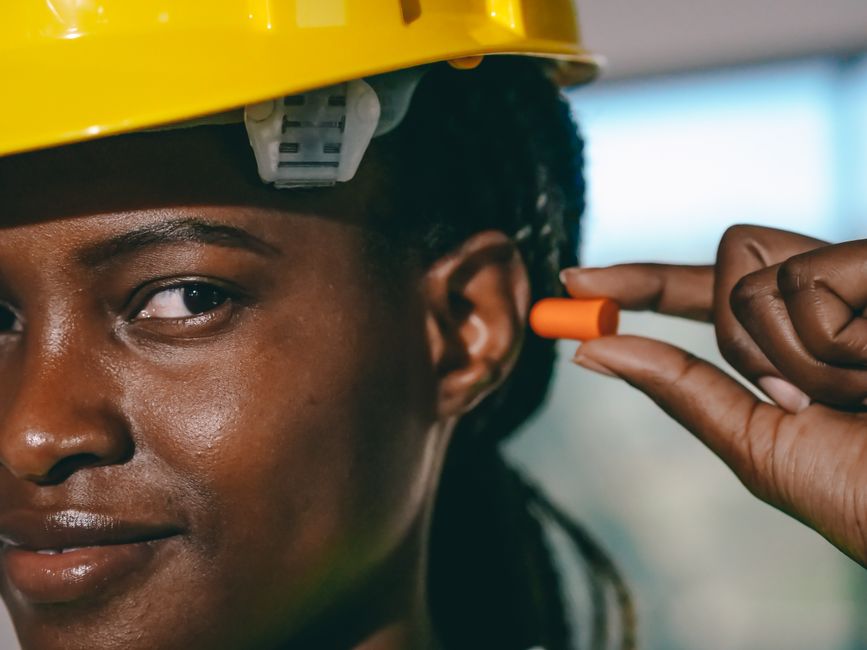
Hearing protection is also wildly misused. A foam earplug rated at 33 decibels provides nowhere near that reduction in real-world use. Workers insert them incorrectly, wear them intermittently, or remove them briefly during the loudest parts of the job. HSE research in the UK found that removing hearing protection for just 30 minutes in an eight-hour shift reduces its effective protection by around half. The protection hierarchy being built on correct and consistent use of PPE is a house of cards.
If you want to understand how noise and vibration exposure are managed on construction sites, the engineering controls and monitoring requirements are more involved than most site managers expect.
Audiometric Testing and Why It's Underused
Regular hearing checks are a legal requirement where workers are exposed above the first action level. In practice, baseline audiometry is often taken at the start of employment and then forgotten. Meaningful surveillance means annual testing and, crucially, comparing results over time. A single test tells you where someone is. Repeat tests tell you whether the job is destroying their hearing.
The value of audiometric surveillance is that it catches damage while there's still something left to protect. A 25-year-old construction worker with measurable high-frequency loss has decades of working life ahead. Catching that early and changing their exposure profile can preserve the rest of their hearing. The alternative is waiting until they make a claim in their fifties.
This connects to a wider problem in occupational health that most employers underinvest in: the conditions that develop over years rather than minutes don't trigger the same urgency as acute injuries, even though the long-term burden on workers and businesses is substantial.
What Actually Works
Reduce the noise at source. Buy quieter equipment. This is possible. Manufacturers publish noise emission data. Procurement decisions can specify noise levels. A quieter compressor that costs 10% more will protect dozens of workers over its lifetime.
Separate people from the noise. Workers who don't need to be in a noisy area shouldn't be there. Remote operation, control rooms, and scheduling noisy work when fewer people are around all reduce total exposure across a workforce.
Rotate workers. Spreading exposure across multiple people reduces individual dose. Eight workers each doing one hour of noisy work receive less cumulative damage than one worker doing eight.
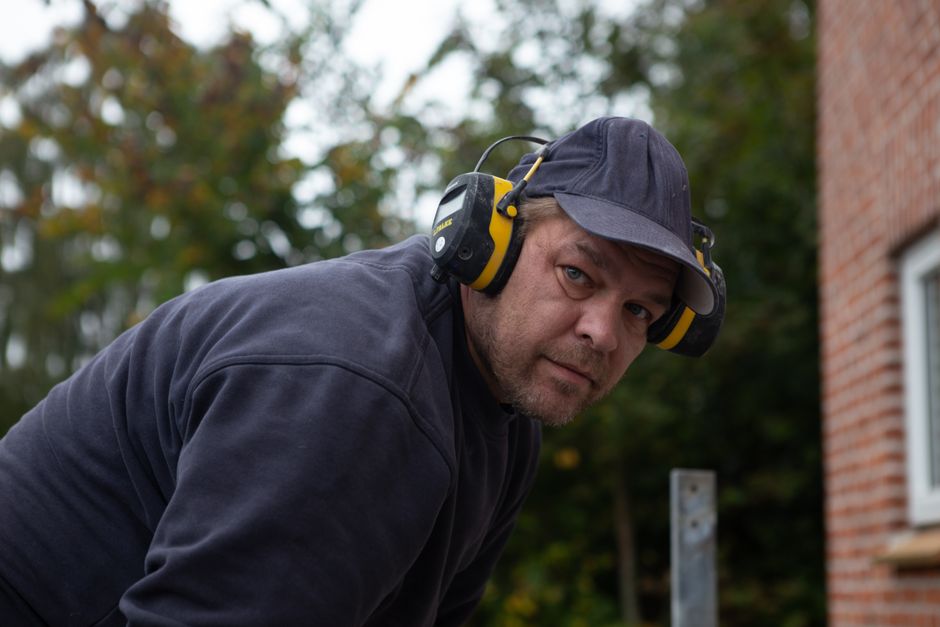
Fit-test hearing protection. Not just issue it. Workers wearing the wrong size earmuff or using earplugs they don't know how to insert correctly are unprotected. Fit testing takes minutes and dramatically changes real-world protection.
The Turn
Hearing loss claims are rising in Ireland. Employers who have failed to implement controls, conduct audiometry, or keep proper records are finding that years of neglect carry a financial cost that makes the engineering controls look cheap. More importantly, a worker who retires with significant hearing loss doesn't get a refund on the parts of life they've missed: the grandchildren's voices, the conversations in restaurants, the ability to follow a meeting without straining.
This is a preventable condition. All of it. The technology to reduce noise, the protocols to measure exposure, and the medical tools to monitor hearing exist and are not expensive relative to the damage they prevent.
Earplugs are not a noise control programme. A noise control programme is a noise control programme. The difference, after twenty years, is the difference between a worker who can still hear and one who cannot.