Farmers over 65 account for roughly half of all farm fatalities in Ireland in a typical year. That is not a coincidence. It is a pattern, and patterns have causes.
The Health and Safety Authority has been publishing farm fatality data for years. The same demographic appears at the top every time. Older male farmers, working alone, on their own land, doing a job they have done hundreds of times before. The familiarity is not protecting them. In many cases it is killing them.
Ireland has around 135,000 farm holdings. A significant proportion are run by farmers aged 65 and over, many of them without hired help. The work does not stop because you are older. The cattle still need handling. The slurry still needs spreading. The fields do not care that your reaction time has slowed, that your grip strength is a fraction of what it was at 40, or that the inner ear changes that come with age have quietly undermined your balance on uneven ground. The farm stays the same. The person running it changes.
Understanding what the HSA's farm safety code changes is the starting point for any older farmer doing an honest review of their own situation. The revised code puts risk assessment at the centre of every farm operation, and that includes assessing how your own physical capacity fits the task.
Why Age Changes the Risk Profile
Strength, balance, reaction time and vision all decline with age. None of that is controversial. What is less often acknowledged is how those changes interact with farm-specific hazards.
A younger farmer who loses footing in a cattle crush has a reasonable chance of recovering. An older farmer with reduced grip strength and slower reflexes in the same situation does not have the same margin. The crush does not change. The cow does not change. The gap between the incident and a serious injury narrows.
Hearing loss is common in older farmers after decades of machinery noise. That matters in livestock handling because you lose the audio cues that tell you an animal is about to bolt. It matters with machinery because you may not hear a warning you would have caught twenty years ago.
Slower healing is the downstream consequence. A fracture that a 35-year-old recovers from in six weeks can end an older farmer's independence entirely. The severity of the outcome is not just a function of the incident. It is a function of the person.
Livestock Handling
Cattle crush injuries and being struck by animals are consistent features of Irish farm fatality and serious injury data. Older farmers are overrepresented.
The practical changes here are not complicated, but they require admitting that how you handled cattle at 50 is not necessarily safe at 70.
Use handling equipment properly. A well-designed cattle crush with a head bail, used consistently, reduces the need for physical intervention. If your crush is 30 years old and held together with baling twine, replace it. The cost of a new crush is not comparable to the cost of a crush injury.
Stop handling bulls alone. Full stop. No qualification needed. A bull that has been handled safely for years can still kill. The HSA's data includes experienced farmers killed by animals they knew well.
Reduce stocking density if working alone. Fewer animals in a space means fewer variables. It means you have room to move. Giving yourself a clear exit from any pen or crush area is not timidity. It is basic risk management.
Consider the layout of your handling facilities with fresh eyes. If you have to climb over a gate to get out of a pen, that gate needs a pedestrian escape gap cut into it. That is a morning's work with an angle grinder.
Machinery
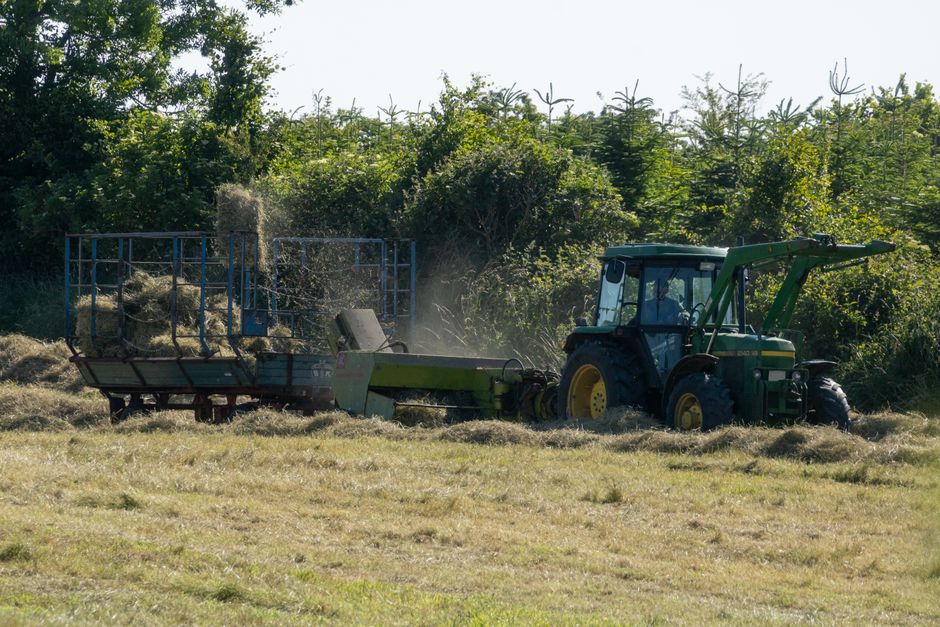
Tractor overturns, PTO entanglement and being struck or run over by machinery are the machinery categories that kill Irish farmers. Older farmers die in these incidents at rates that reflect both their prevalence on farms and their increased vulnerability.
PTO guards that have been missing for years get missed again at inspection. If a PTO shaft on your farm does not have its full guard, fit one today. The shaft does not care how experienced you are. Loose clothing and reduced agility increase entanglement risk with age, and there is no recovery from a PTO entanglement.
Tractor ROPS (rollover protection structures) on older tractors are worth checking. Tractors manufactured before the ROPS requirement became standard are still working on Irish farms. If your tractor has no ROPS, the HSA's grant supports for farm safety upgrades exist for exactly this reason.
Mounting and dismounting tractors and other machinery causes more incidents than most people expect. Three points of contact going up and down, every single time. It takes three seconds and it prevents falls that, for an older farmer, can mean a hip fracture and a long road to recovery, or worse.
Lone Working
This is where the risk compounds. The older farmer working alone is not just at higher risk of an incident. They are at higher risk of an incident with no one to respond, in a location where it may be hours before anyone notices something is wrong.
A fall at a cattle crush at 7am on a February morning, out of mobile coverage, with no one expecting you until evening, is a survivable incident that becomes unsurvivable because of the response time.
The practical measures for lone worker safety on farms are well established. Tell someone your work plan for the day and when to expect you back. Carry a charged phone. Know where on your land you have no coverage and treat those areas with extra care. Personal alarm devices designed for lone workers are inexpensive and work where phones do not.
Check-in systems do not need to be formal. A daily text to a family member at a set time costs nothing. The discipline of doing it every day is what makes it work.
Consider whether certain tasks should simply not be done alone anymore. Handling bulls, working in confined spaces, working at height, working with PTO machinery. These are tasks where a second person is not a luxury. If you cannot reliably have someone with you, change the task or stop doing it.
Adapting the Work Is Not Giving Up
The framing matters here. Farmers who have worked the land for 40 or 50 years do not want to be told they cannot do it anymore. That is not what this is about.
Adapting the work means using the handling facilities properly instead of relying on physical strength. It means structuring the day so the most demanding tasks are done when help is available. It means buying the guard, fixing the gate latch, cutting the escape gap. It means checking in every morning so that if something goes wrong, the response time is measured in minutes rather than hours.
The farms that keep older farmers safe are not the ones where nothing has changed in 30 years. They are the ones where the farmer looked at the gap between how they work and how safely they can work, and closed it.