By the time a worker tells you they can't hear properly, the damage is already done. That's the part nobody warns you about.
Noise-induced hearing loss does not announce itself. There is no bleeding, no swelling, no moment where someone clutches their ear and falls to the ground. It accumulates across years of shift after shift, in foundries and factories, on construction sites, in food processing plants and print rooms. Then one day a worker asks a colleague to repeat themselves for the third time in a conversation, and that's when it clicks. Too late to reverse. Too late to fix.
This is the defining feature of occupational hearing loss that makes it so dangerous: the absence of immediate feedback. A grinder throws sparks, you notice. A machine throws out 95 decibels for eight hours a day, five days a week, and nobody notices until the audiologist starts drawing graphs.
The Numbers That Should Make Every Manager Uncomfortable
Noise-induced hearing loss is one of the most common occupational diseases in Europe. Ireland's Health and Safety Authority has run enforcement campaigns targeting workplace noise for good reason: the problem is not theoretical, and it is not rare.
The legal threshold under the Safety, Health and Welfare at Work (General Application) Regulations 2007 is a daily noise exposure of 80 decibels averaged over an eight-hour period. That is the lower action value, where employers must inform workers and make hearing protection available. At 85 decibels, protection becomes mandatory. At 87, exposure must not exceed that level even with protection factored in.
A busy construction site regularly hits 90 to 100 decibels. A woodworking shop can reach 95. A pneumatic drill runs at around 100. At those levels, sustained daily exposure without protection is not a marginal risk; it is a guaranteed path to permanent hearing damage over time.
Tinnitus comes along for the ride. That persistent ringing or buzzing that workers sometimes dismiss as a quirk becomes a 24-hour companion that never leaves. There is no cure for tinnitus. There is only management, coping, and wishing someone had taken the risk seriously earlier.
What the Law Actually Requires
The regulations are specific. Employers must:
- Carry out a noise risk assessment if workers are likely to be exposed at or above the lower action value of 80 decibels
- Reduce noise at source through technical or organisational controls
- Provide health surveillance (audiometric testing) for workers regularly exposed at or above 85 decibels
- Provide suitable hearing protection and ensure it is used correctly
- Mark hearing protection zones with appropriate signage
The hierarchy matters here. Hearing protection is the last line of defence, not the first. Regulations require employers to reduce noise through engineering controls before reaching for earplugs. That means acoustic enclosures, damping materials, quieter machinery, rotating workers to limit exposure duration, and maintaining equipment so it does not run louder than it should.
The earplug approach is seductive because it is cheap and visible. It also creates a paper trail that looks like compliance. But a worker wearing earplugs incorrectly gets a fraction of the stated protection. And workers who find protection uncomfortable will remove it when no one is watching. That is human nature, not negligence.
Health Surveillance: The Step Most Employers Skip
Audiometric testing is not optional for workers regularly exposed above 85 decibels. The HSA is clear on this. Testing gives you a baseline record of a worker's hearing when they join your company, and tracks changes over time. If someone's hearing deteriorates, you find out while you can still adjust working conditions. Without it, you find out in a solicitor's letter.
Health surveillance serves two purposes. It protects the worker by catching damage early. It protects the employer by demonstrating active management of the risk. The employer who cannot produce audiometric records for a worker who later sues for occupational deafness is in a very uncomfortable position.
The testing itself is not complex. Occupational health providers across Ireland offer it. The obstacle is never the test; it is the decision to prioritise something that does not produce an immediate, visible problem.
The Risk Assessment That Actually Works
Most noise risk assessments collect dust in a folder. They reference generic decibel values from equipment datasheets and leave it at that. A risk assessment that works does something different.
It identifies which workers are exposed, for how long, and to what sources. It uses noise measurement where the exposure is uncertain, rather than estimating from published figures. It accounts for the fact that a worker operating a disc grinder for two hours and then spending six hours in a noisy workshop has a combined daily exposure that may exceed limits. It gets reviewed when new equipment arrives, when layouts change, or when work patterns shift.
Construction sites present a particular challenge because the noise environment changes constantly. A noise and vibration management plan for a construction site needs to be a living document, updated as the site evolves, not a document signed at tender stage and filed away.
Choosing and Using Hearing Protection Properly
Not all hearing protection is equal, and fit matters more than the rating on the box.
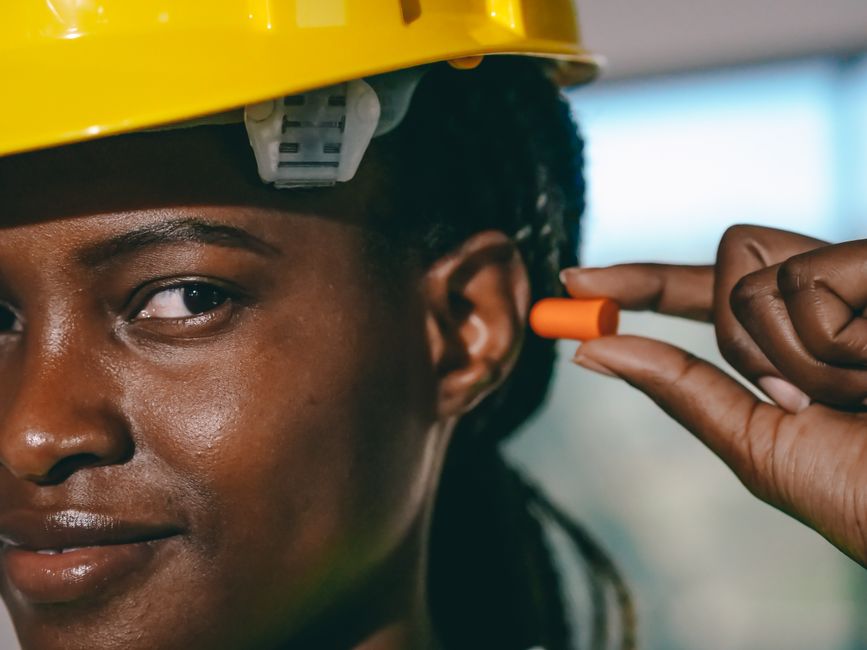
Single-number rating (SNR) figures on earplugs assume correct fitting. In practice, workers wearing earplugs incorrectly may receive half the rated protection or less. Employers should provide training in correct fitting, not just hand over a box of foam plugs. Pre-moulded plugs and earmuffs can be easier to fit consistently. Custom-moulded protection improves both comfort and compliance over time.
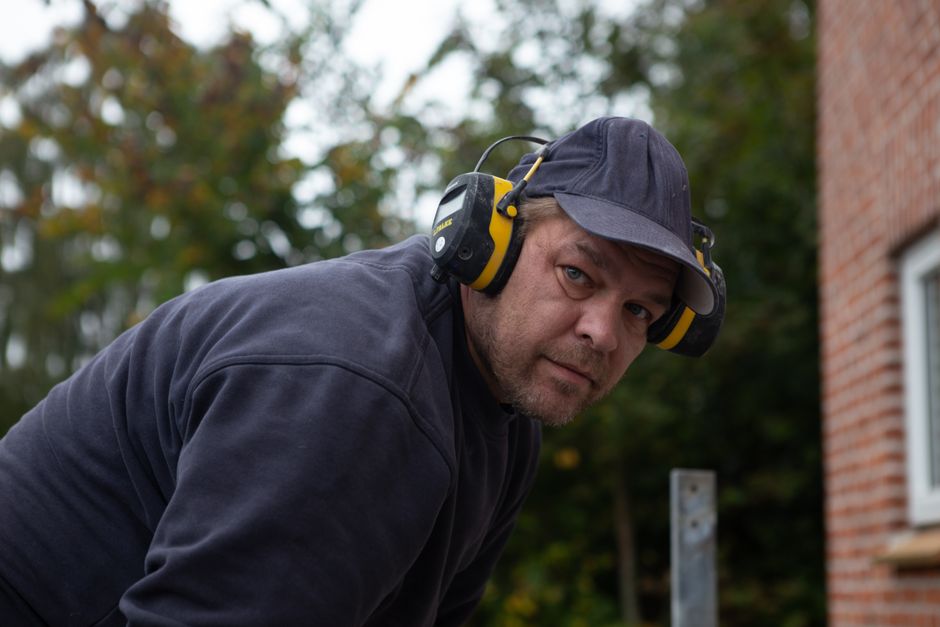
Earmuffs provide consistent protection but can be uncomfortable in heat and interfere with communication. This matters in environments where verbal communication is critical for safety. Solutions include earmuffs with integrated communication systems, or the use of quieter signalling methods. The problem of workers removing protection because they cannot hear their colleagues is real, and the answer is not to let them remove it.
Training Is Not a Tick-Box Exercise
Workers need to understand why noise is dangerous, not just be told to wear protection. The reason is straightforward: a worker who understands that the damage is permanent, cumulative, and invisible is more likely to comply than one who has sat through a fifteen-minute induction video and signed a form.
Training should cover what noise-induced hearing loss feels like in its early stages (muffled sounds after a noisy shift, difficulty following conversations, tinnitus appearing temporarily then becoming permanent), what protection is available and how to use it, and who to report concerns to.
Supervisors need to lead by example. A site manager who walks through a hearing protection zone without earmuffs has communicated the real policy far more clearly than any poster on the wall.
The Turn
The HSA's ongoing campaigns around workplace noise are not bureaucratic theatre. They reflect a pattern the authority has observed for years: noise-induced hearing loss remains chronically underreported, under-assessed, and under-prevented. Workers reach retirement age unable to hear their grandchildren, and the company that employed them has long since moved on. The regulation exists. The enforcement is ramping up. The medical knowledge is settled. The only variable is whether employers act now or wait until a claim forces the issue.
Hearing protection is available for under a euro per pair. An audiometric testing programme costs a fraction of what a single compensation claim will cost. The choice, stated plainly, is not actually a difficult one.