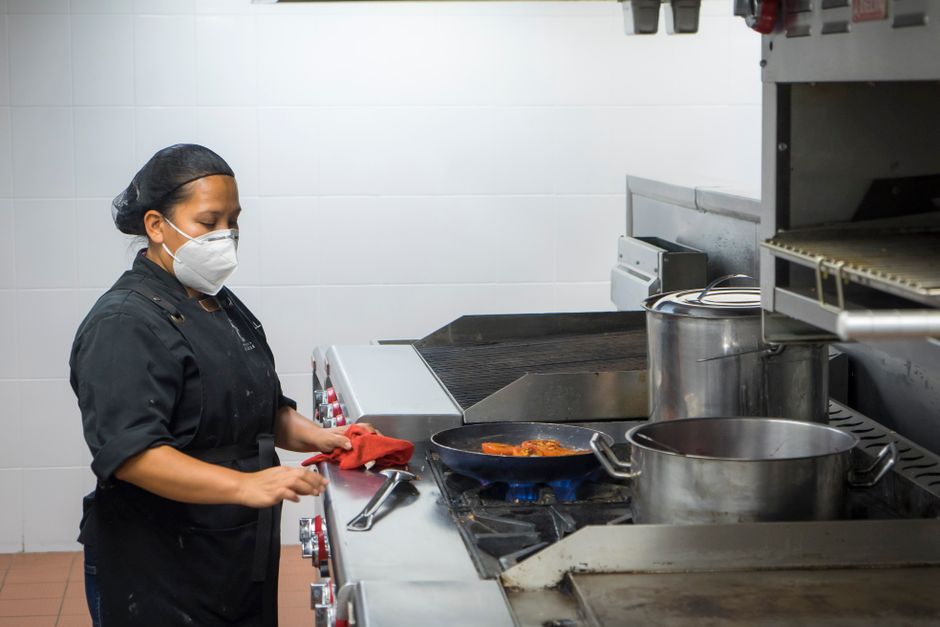
A busy service kitchen can hit 40°C at the pass. Your food safety plan almost certainly does not account for that.
The regulatory attention around heat management in Irish workplaces has grown sharply. Warehouses, factories, and outdoor sites get scrutinised for how they protect workers from ambient heat. Food businesses, meanwhile, are having a completely different conversation about temperature, one focused almost entirely on what goes in the fridge and what comes off the grill. The space in between, where food sits, moves, and waits in an environment hotter than most industrial floors, gets surprisingly little attention from operators or inspectors.
That is where the risk lives.
The Danger Zone Is Not a Movie Title
Pathogenic bacteria multiply fastest between 8°C and 63°C. That range is not new information. It sits in every food hygiene course delivered in Ireland. What gets glossed over is how easy it is to keep food in that range for extended periods inside a commercial kitchen, without anyone noticing, measuring, or recording it.
A tray of cooked rice sitting at the back of a prep counter. A batch of soup cooling in a stock pot on a cold burner. Sliced cooked meats waiting for the lunch rush. None of these are stored incorrectly in the traditional sense. They are not in a warm fridge or a broken freezer. They are just sitting in a hot kitchen, drifting through temperatures that Salmonella, Listeria, and Staphylococcus aureus all find extremely agreeable.
The two-hour rule exists for exactly this reason. Food should not spend more than two hours in the danger zone, and ideally far less. In a kitchen running a busy service, where timings slip and communication breaks down, two hours becomes four without anyone making a conscious decision to let it happen.
Why HACCP Plans Miss This
HACCP temperature monitoring frameworks are built around critical control points. Cooking temperature: checked. Cold storage: logged. Hot holding: recorded. These are the visible, measurable stages where food businesses have learned to focus.
The ambient kitchen environment is not a critical control point in most HACCP plans. It is background noise. But ambient temperature directly affects how quickly food moves through the danger zone during every handling step that is not a CCP. Portioning, plating, garnishing, transferring between containers, all of these happen in open air, in a kitchen that routinely operates at temperatures that would trigger a workplace heat stress alert anywhere else in Irish industry.
A kitchen at 38°C is not unusual during a summer service. Food sitting on a prep surface in that environment does not need to be left for hours to become a problem. It is already accumulating bacterial load faster than the same food would in a kitchen running at 18°C. The HACCP plan probably treats both scenarios identically.
The Worker Heat Problem Makes the Food Problem Worse
There is an irony here. The same conditions that create food safety risk also create worker safety risk. Managing heat stress in Irish workplaces is a legal obligation under the Safety, Health and Welfare at Work Act 2005, and the HSA has been clear that employers cannot ignore ambient temperature as a workplace hazard.
A kitchen worker pushing through a service in extreme heat is slower, less accurate, and more likely to skip steps. That means probe thermometers do not get used. Time logs do not get filled in. The batch of chicken that should have gone straight into blast chill sits on the pass while someone tries to remember where the forms are kept.
Heat stress does not just endanger the worker. It degrades the entire system of controls the food business depends on.
What Good Kitchen Temperature Management Actually Looks Like
The fix is not complicated, but it does require treating the kitchen environment as a variable rather than a constant.
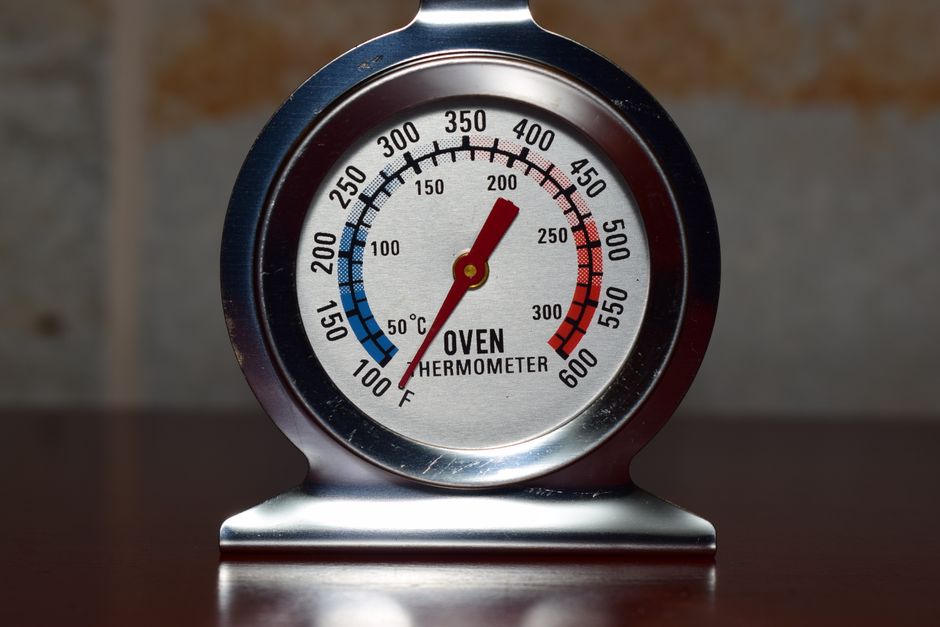
Ambient temperature logging. Place a simple thermometer in the prep area and record the temperature at the start and end of each service. If it regularly exceeds 25°C, food handling protocols need to reflect that. Shorter times out of temperature control, smaller batch sizes, more frequent returns to cold storage.
Time as a critical control point. Most kitchens track temperature at the point of cooking and the point of service. Add time stamps for every significant transfer: cooked to cooling, portioned to service, prepped to held. A 30-minute gap in records is a 30-minute gap in your food safety defence.
Blast chilling is not optional in a hot kitchen. If you are cooling cooked food in a kitchen above 30°C, a covered tray in the walk-in is not fast enough. Blast chillers exist for exactly this environment. If the business cannot afford one, the production volume and kitchen temperature should drive the decision about how much food gets cooked in advance.
Calibrated probe thermometers on every section. Not one for the whole kitchen. Not the one someone borrowed for the barbecue. One per section, calibrated, logged, and used as a matter of routine rather than when someone is watching.
Review when conditions change. A HACCP plan written for a kitchen in February does not automatically apply in August. If kitchen ambient temperatures rise significantly across the summer, the plan needs a seasonal review. This is not a legal grey area. It is the basic principle of HACCP: assess the hazard in the actual environment where food is prepared.
The Inspection Gap
Environmental Health Officers inspect food businesses with rigour and real consequences. Closure notices, improvement orders, prosecutions: these happen. But inspection visits tend to focus on what can be measured on the day. Cold storage temperatures, cooking records, staff hygiene. The systematic ambient temperature risk, the one baked into how the kitchen operates across every service, is much harder to catch in a single visit.
That means it falls to the operator. No inspector will be standing in your kitchen at 13:40 on a Friday in July when the extraction is struggling and the prep counter is holding three uncovered trays of cooked protein.
The businesses that get this right do not wait to be asked. They build ambient temperature into their food safety thinking from the start, not as a compliance exercise, but because they understand what 40 minutes at 35°C actually does to a bacterial count.
The Part Nobody Wants to Hear
Most food safety incidents do not come from dramatic failures. No broken fridge, no rogue delivery, no obvious negligence. They come from the slow accumulation of small temperature exceedances in a hot kitchen where everyone is too busy to stop and measure anything.
The pathogen does not know you were having a particularly difficult service. It just knows the temperature was right.