Every year in Ireland, sudden cardiac arrest kills people at work. Not on the way to hospital. At work, surrounded by colleagues who watched it happen and did not know what to do next.
That is the part nobody puts in the annual report.
The Numbers Behind the Silence
Sudden cardiac arrest is not a hospital event. It happens in warehouses, on construction sites, in open-plan offices, and in factory canteens. The Irish Heart Foundation estimates that survival rates from out-of-hospital cardiac arrest in Ireland sit around 8 to 10 percent. In countries with widespread CPR training and defibrillator access, that number climbs above 25 percent. The gap between those two figures is almost entirely explained by what bystanders do in the first four minutes.
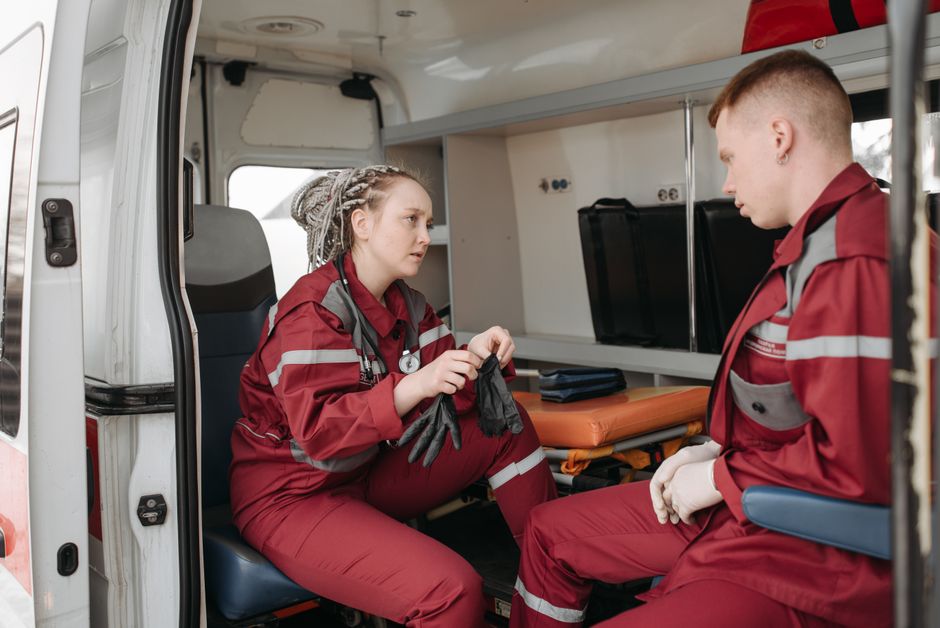
The heart stops. Blood stops moving. Brain cells start dying in four to six minutes. An ambulance in a rural Irish county can take 15 minutes or more to arrive. The maths is brutal and it does not care about your good intentions.
Why Workplaces Are High-Risk Environments
Chronic stress raises blood pressure, disrupts heart rhythm, and accelerates coronary artery disease. Physical labour spikes cardiac demand. Both are constants in Irish workplaces, from logistics depots to building sites to food processing plants. Middle-aged male workers in physically demanding roles are statistically the most vulnerable group, and they are also the group least likely to have disclosed pre-existing cardiac conditions to an employer.
The combination of hidden risk factors, physical exertion, and workplace stress creates conditions where cardiac events are not rare outliers. They are predictable. Treating CPR training as an optional extra in that context is not a conservative position. It is a gamble with someone else's life.
What Irish Law Actually Requires
The Safety, Health and Welfare at Work Act 2005 and the General Application Regulations 2007 both require employers to provide adequate first aid, proportionate to the risk profile of the workplace. The Health and Safety Authority does not publish a minimum defibrillator ratio for all workplaces, but it does expect employers to assess the specific risks of their environment and resource accordingly.
That assessment, done honestly, points toward defibrillators in any workplace with more than a handful of staff, particularly where physical work is involved. An employer who conducts a risk assessment, identifies cardiac risk as plausible given workforce size and nature of work, and then decides a defibrillator is unnecessary will have a difficult conversation after an incident.
Courts have not been sympathetic to paperwork-over-action approaches to foreseeable harm.
CPR Without a Defibrillator Is Still Worth Doing
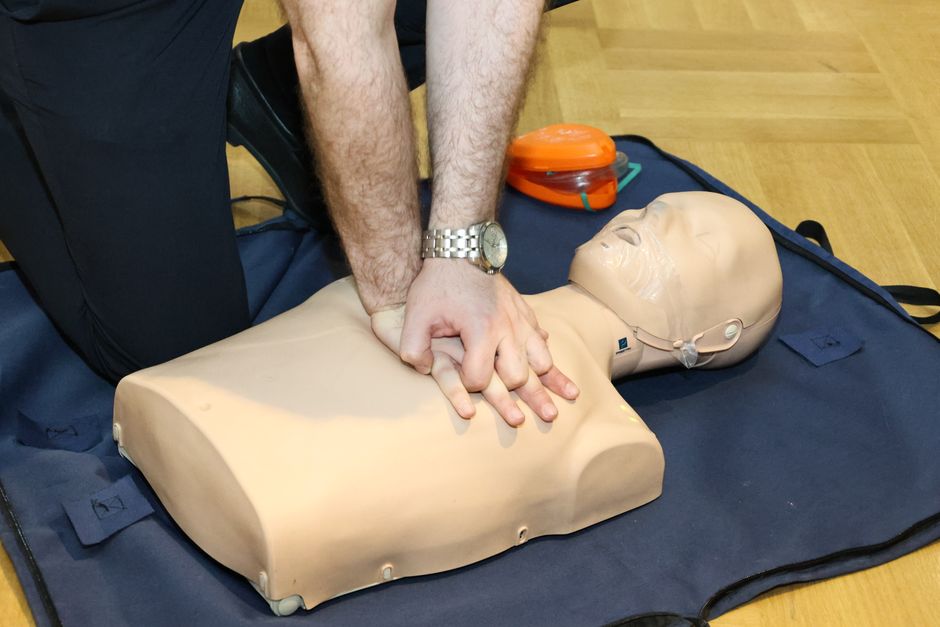
CPR alone does not restart a heart in ventricular fibrillation, which is the most common presenting rhythm in sudden cardiac arrest. What CPR does is buy time. It keeps oxygenated blood circulating to the brain and heart muscle, extending the window during which defibrillation can work. Without CPR, that window closes fast.
A trained colleague starting CPR immediately and maintaining it until a defibrillator arrives or emergency services take over is the single most important variable in survival. Untrained bystanders often hesitate because they fear doing harm. The evidence is consistent: doing nothing is always worse. Hands-only CPR, even imperfect, improves outcomes.
This is why CPR and first aid training for multiple staff members matters more than having one nominated first aider. That first aider might be off sick, on lunch, or on the far side of a large site when someone goes down.
Defibrillators: Placement and Access
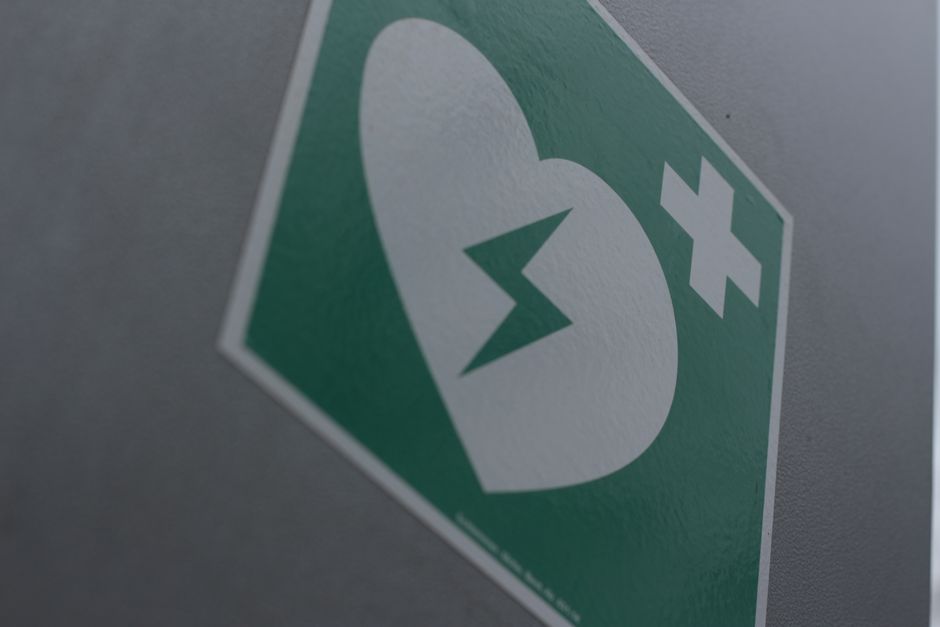
An AED locked in a manager's office on the second floor is not a workplace safety measure. It is decoration with a price tag.
Placement matters. The HSA and Irish Heart Foundation both recommend that an AED be accessible within three to five minutes at walking pace from anywhere on site. For larger or multi-floor premises, that often means multiple units. Monthly checks confirm the unit is charged and pads are in date. This is not complicated maintenance. It takes about two minutes.
Public access defibrillators are mapped on national registers including the Irish Heart Foundation's AED map, and it is worth knowing where the nearest external AED is relative to your premises. But relying on external provision rather than having your own unit is a risk calculation that does not hold up once you have worked through response times in a real scenario.
Training: Who, How Often, and to What Standard
The Irish Heart Foundation recommends refresher CPR training every two years. The skill degrades faster than most people expect. A person trained three years ago and never retested will perform compressions that are too shallow, at the wrong rate, with inadequate chest recoil. The training is not complicated, but it requires practice to be automatic under stress.
In a workplace context, the goal is multiple trained staff on any given shift, not a single named first aider. Workplace stress and chronic health issues are increasingly visible concerns in Irish employment, and the connection between sustained psychological pressure and cardiovascular health is not theoretical. Employers investing in mental health supports and those investing in cardiac response capability are often addressing different ends of the same problem.
Recognised CPR and AED courses in Ireland run roughly three to four hours. The cost per head is low. The return, measured in a single outcome, is incalculable.
The Bystander Effect Is Real and Trainable
There is a documented psychological phenomenon where the presence of multiple people at an emergency reduces the likelihood that any individual will act. Everyone assumes someone else is handling it. Training breaks that paralysis. A person who has practiced calling for help, starting compressions, and operating an AED within a simulated scenario does not freeze in the same way.
Designating clear roles in advance helps further. Who calls 999. Who retrieves the AED. Who starts compressions. Who meets the ambulance at the gate. These decisions do not need to be made under pressure if they have been made already.
What Good Looks Like
A workplace with adequate cardiac response has trained staff on every shift, a defibrillator in a known and accessible location, monthly equipment checks logged, emergency procedures posted and understood, and refresher training scheduled rather than aspirational.
That is not a long list. It is achievable in a week. The alternative is hoping that the next cardiac event does not happen here, which is not a safety strategy.
The colleague who goes down on a Tuesday morning does not get a second attempt at the four-minute window. Neither does the employer who decided the training budget was tight this year.