Farming is the most dangerous occupation in Ireland, and has been for as long as anyone has been counting. That is not a claim that needs defending. The numbers do it themselves.
Every year the Health and Safety Authority publishes statistics, launches campaigns, and reminds farmers that the risks are known and the controls are simple. Every year the fatality and serious injury figures hold stubbornly steady. In 2023, agriculture accounted for roughly a quarter of all workplace deaths in Ireland, from a sector that employs around four percent of the workforce. That ratio has not meaningfully shifted in a decade. Something structural is broken, and a new poster campaign is not going to fix it.
The Same Deaths, the Same Causes
Pull any five years of HSA fatality reports and lay them side by side. The causes blur into each other. Overturning tractors without roll-over protection. Workers, often elderly, struck by livestock. Children on or near machinery. People working alone, injured, and not found in time. Falls from heights on farm buildings.
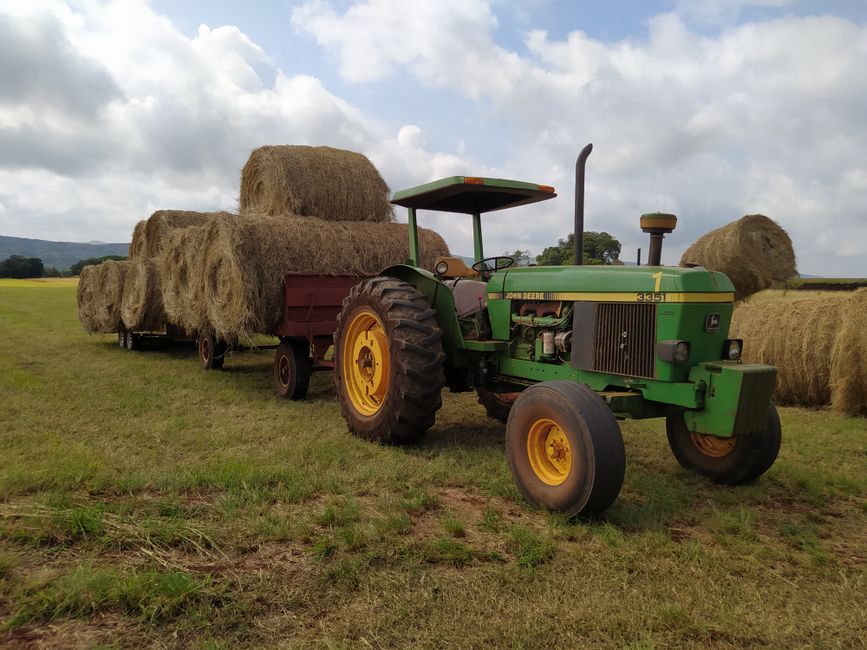
The HSA's farm safety campaign correctly identifies these categories. They are not new discoveries. ROPS (roll-over protective structures) have been mandatory on new tractors sold in Ireland since 1974. Farmers have had fifty years to fit them to older machines still working the land. Some still have not. When a tractor rolls on a slope in 2025 and kills its driver, it is not an unforeseeable accident. It is a foreseeable death from a known hazard with a known fix.
Livestock handling follows the same pattern. Bulls are dangerous. Cows with calves are dangerous. Farmers know this in their bones from watching their fathers work. Yet crush injuries and fatal strikes keep occurring because handling facilities are substandard, because the job gets rushed at calving, because the worker is alone with no one to raise the alarm. Crush injuries are catastrophic and fast-moving, and on a farm half a mile from the nearest neighbour, the window for intervention is brutally short.
Why Compliance Stays Low
The inspectorate argument goes like this: farms are numerous, dispersed, and privately owned. Ireland has roughly 137,000 farms. The HSA does not have the staff to visit every one of them regularly. Enforcement is therefore reactive, triggered by incidents rather than systematic.
That is a real constraint. It is also, partly, a choice. Construction sites face far more structured inspection regimes because the industry lobbied for clarity and the sites are geographically concentrated. Agriculture got guidance documents and awareness campaigns instead. The power imbalance between the regulated and the regulator looks different when the regulated party is a family farmer rather than a multinational contractor.
There is also a cultural factor, and naming it is not the same as excusing it. Farming identity in Ireland is bound up with self-reliance, with doing things the way your father did them, with the sense that outsiders do not understand how the work actually goes. A safety inspector arriving at a yard to discuss livestock handling is not always welcomed as a colleague. That resistance is not unique to farming, but it runs deep there.
Why your farm safety inspection matters is a question more farmers need to sit with seriously, not as a compliance exercise but as a genuine reckoning with the risk.
The Machinery Problem Specifically
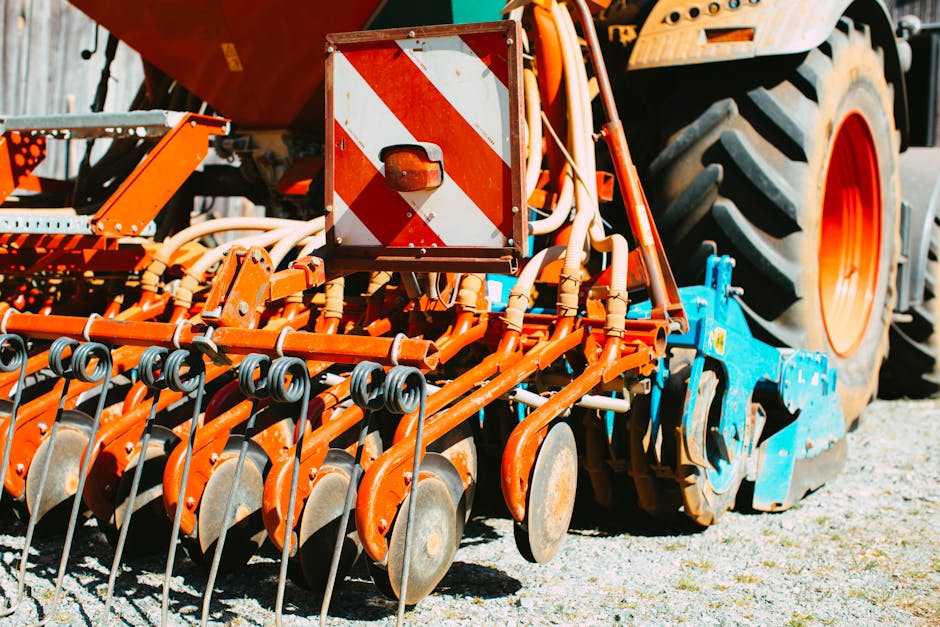
Tractors and farmyard machinery deserve their own paragraph because they generate a disproportionate share of the serious incidents. Power take-off shafts. Unguarded augers. Telehandlers and loaders working near people on foot. The mechanisms of injury are well documented and have been for decades.
The cost of guarding a PTO shaft is negligible against the cost of the injury it prevents. Courts know this. The HSA knows this. The argument that farms cannot afford compliance is, for most machinery hazards, simply not true. What farms often lack is not money but time and habit and the conviction that the risk applies to them personally.
There is a wider machinery enforcement picture worth reading if you want to understand how seriously the courts are starting to take these cases. How machinery incidents become criminal negligence cases sets out the trajectory, and it applies to farms as much as to any other workplace.
What the Campaign Gets Right and Where It Falls Short
The HSA's national farm safety campaign is not cynical. The people running it are not indifferent. The focus on the peak risk periods, specifically spring calving and the summer machinery season, is sensible. Targeting farms where previous incidents have occurred is sensible. Working through farm bodies and agricultural colleges to reach younger farmers is sensible.
What the campaign cannot do is substitute for enforcement. Awareness raising works when people are unaware. Irish farmers are not unaware that tractors can roll, that bulls can kill, that children should not be near working machinery. They know. The gap is not knowledge. It is the sustained operational failure to apply that knowledge on a wet Tuesday morning when the job needs doing and the safeguard takes ten minutes to fit.
Voluntary compliance in high-risk industries with low inspection rates does not trend upward on its own. That is not a cynical reading. It is the consistent finding from every sector that tried awareness campaigns as a substitute for enforcement and then compared the outcomes.
The Lone Worker Problem Nobody Solves
One cause of farm fatalities that gets less attention than machinery is the straightforward problem of working alone. A farmer who falls from a roof, is struck by livestock, or becomes trapped under a machine has, in a busy workplace, a chance. On a farm where the next person might not come looking for hours, that chance shrinks dramatically.
Lone worker protocols exist. Personal alarms exist. Check-in systems exist. Their uptake on Irish farms is low, and there is no regulatory mechanism that meaningfully compels them. This is a solvable problem with available technology and a clear method. It stays unsolved.
The Turn
The HSA's campaign will run, inspectors will visit farms, some hazards will be fixed, and some of those fixes will save lives. That is worth saying. But the death rate in Irish agriculture will not fall to construction-sector levels, or manufacturing-sector levels, or anything approaching acceptable levels, until compliance is treated as a legal obligation enforced with consequences rather than an aspiration promoted with leaflets.
The farms are not uniquely dangerous. The hazards are known, controllable, and often cheap to address. The gap between knowing and doing is where people die, and closing it requires more than another campaign.