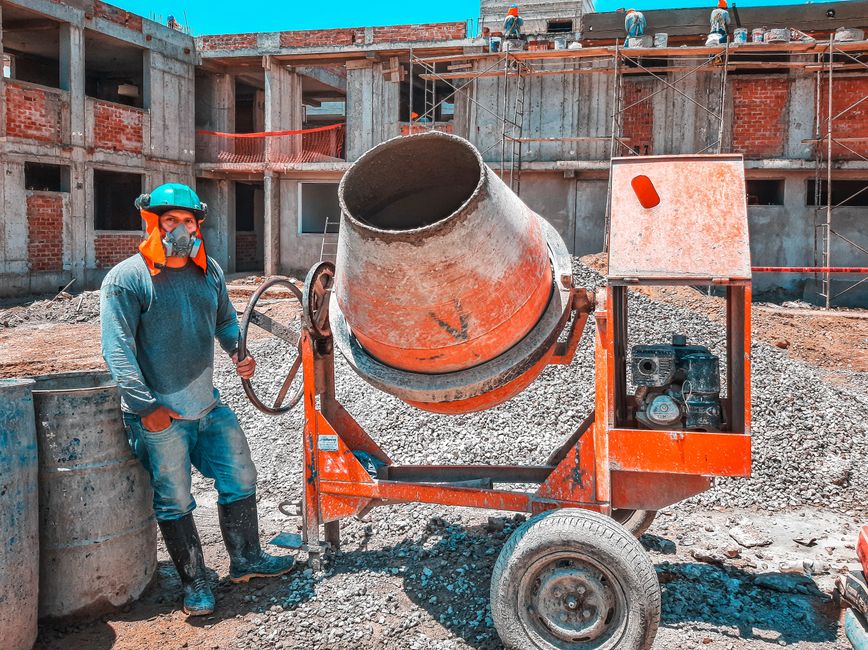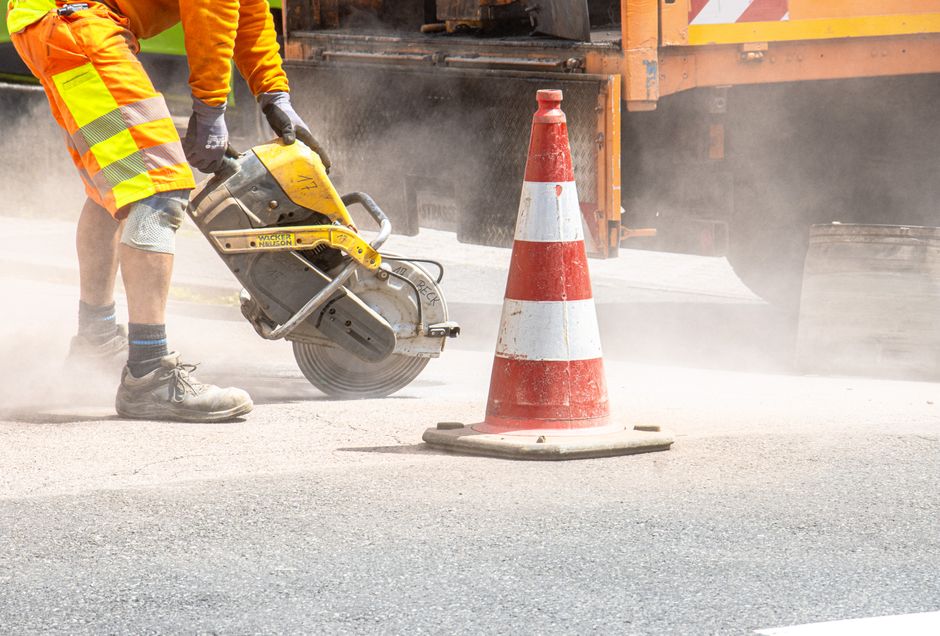
The van door closes. The site is behind you. And you are still inhaling silica dust.
This is the part of the silica conversation that nobody is having out loud. The industry has started to take on-site controls seriously, slowly and imperfectly, but the exposure pathway that runs through work vehicles, contaminated clothing, and the homes of construction workers is almost entirely unmanaged.
The Dust That Travels With You
Respirable crystalline silica particles are small. We are talking 10 micrometres or less. They do not settle quickly. They hang in the air of an enclosed van cab for hours after a dusty shift. They transfer from work gear to seat fabric in minutes. A worker who spent the morning cutting kerb stones or grinding concrete sits in that cab for forty minutes on the way home, breathing recirculated air that has effectively become a containment issue.
Studies measuring silica in work vehicles have found dust concentrations that would trigger intervention levels if they were recorded on a site. They are not being recorded. Nobody has a monitor clipped to the sun visor.
The same logic applies to clothing. A work jacket shaken out at the back of a van sends a visible plume into the air. Whatever is visible is the coarse fraction. The respirable fraction, the particles that reach the deep lung tissue and stay there, is invisible. It is still airborne. It lands on the van floor, on the driver's seat, on whatever bag is sitting in the footwell.
The Home Exposure Route
This is where it gets uncomfortable.
A worker brings contaminated clothing into the house. It goes on the hallway floor, or straight into the wash. The washing machine handles it badly unless the clothes are bagged and sealed before transport. The hallway, the kitchen, the family car now all have trace silica contamination. Partners and children who have no occupational exposure to crystalline silica are receiving a domestic dose.
This is not hypothetical. Take-home contamination is a documented exposure pathway for a range of occupational hazards. Asbestos research in particular has mapped it with grim precision over decades, and the asbestos lessons apply directly here. The particle sizes involved in respirable crystalline silica exposure sit in a similar range. The transfer mechanisms are identical.
The legal position in Ireland does not currently require employers to address off-site secondary exposure from silica contamination. The Safety, Health and Welfare at Work Act covers the workplace. The van, the hallway, and the family kitchen are outside that definition. Which means nobody is legally responsible for what happens there, and therefore almost nobody is managing it.
What the Regulations Cover and Where They Stop
The Chemical Agents Code of Practice under Irish legislation sets an occupational exposure limit for respirable crystalline silica at 0.1 mg/m3 as an eight-hour time-weighted average. Employers must assess exposure, implement controls, and provide health surveillance where exposure is significant. The HSA has the authority to inspect and prosecute.
All of that applies at the workplace gate. The commute home does not feature in a risk assessment. Neither does the domestic laundry cycle.
Silicosis is already killing workers who are younger than previous generations of cases, partly because high-powered tools like angle grinders and disc cutters generate far more respirable dust than older methods. The cumulative dose that tips someone into disease is being built from multiple sources simultaneously: the site, the van, the clothing, the home. Regulators are measuring one of those sources.
Practical Controls That Actually Work
None of this requires a policy document the length of a planning application. The fixes are specific and cheap.
The van. Keep it out of the work cab. Tools, PPE, and work clothing belong in a separate storage area, ideally a sealed box in the load bay. A cab is not a changing room. If the cab gets contaminated, vacuum it with a HEPA filter vacuum, not a brush and a shaken-out mat.
Decontamination before the commute. Changing facilities on site are not a luxury for dusty trades. They are a control measure. A worker who changes out of contaminated clothing before getting in the van eliminates one of the main transfer routes. This means the employer providing adequate facilities and the worker actually using them.
Clothing handling. Work clothing contaminated with silica dust should be treated like the hazardous material it is. Sealed bags for transport. Washed separately from household laundry. Never shaken out indoors or in the vehicle.
Vehicle cleaning. HEPA vacuum, not compressed air. Compressed air makes the problem invisible while making it significantly worse.
Health surveillance. Workers exposed to silica above the action level are entitled to lung function monitoring. If the occupational health record only captures site time, it is missing a portion of the actual dose. Employers running accurate surveillance need to understand that the on-site measurement is a floor, not a ceiling.
The Turn
The industry has spent years arguing about whether on-site silica controls are practical. That argument is mostly settled now. Controls are practical. They are also legally required. But the conversation stopped at the site boundary, and that boundary is a fiction. Dust does not clock out.
Construction workers are carrying a hazard home every single day, and the systems designed to protect them are not designed to see it. Fix the van. Fix the changing facilities. Fix the laundry. The regulation will catch up eventually. Your lungs will not wait for it.