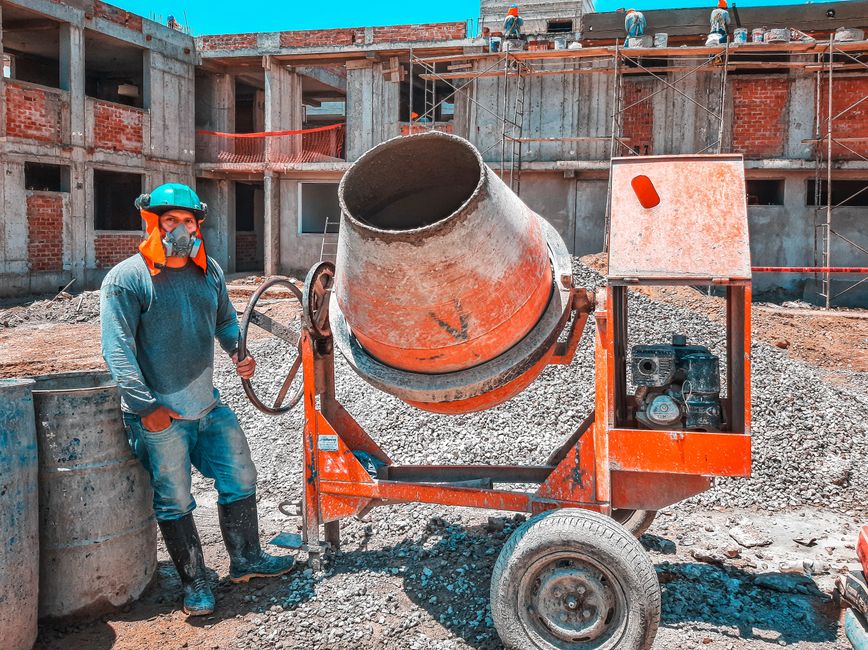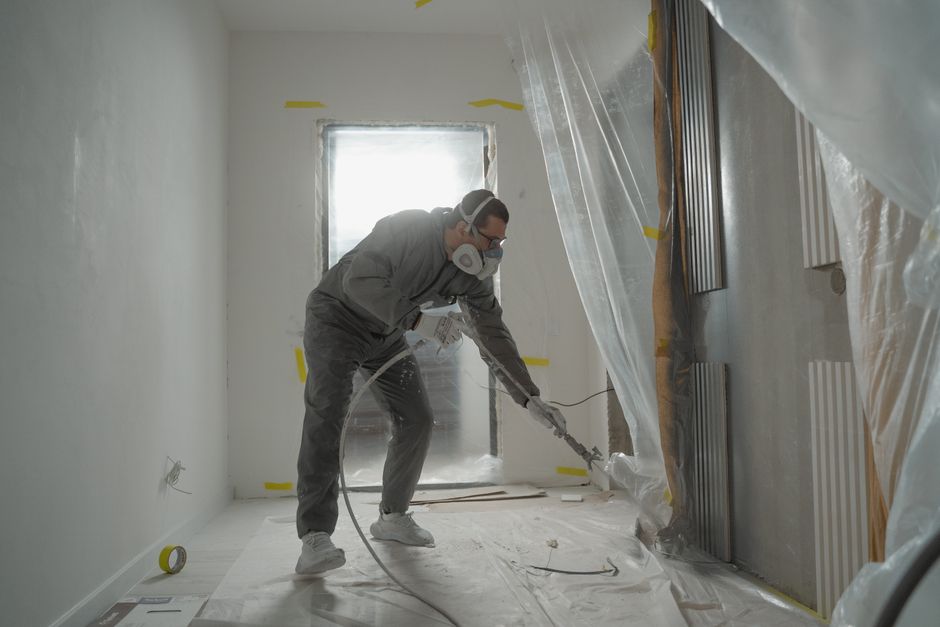
The mask is sitting on the dashboard. The grinder is already running. The job takes four minutes. Nobody puts the mask on.
This is not a story about ignorance. Most construction workers know silica dust is bad for you. They just don't feel bad today, and that gap between knowing and feeling is where occupational lung disease lives.
The Brain Doesn't Do 20-Year Risks Well
Humans are wired for immediate threat. A collapsing trench gets your attention. A cloud of fine white dust from a concrete saw does not, even though silicosis in Irish workers is already killing people in their 40s who first breathed the stuff as apprentices.
This isn't a character flaw. It's cognitive architecture. Behavioural researchers call it temporal discounting, the tendency to value a present inconvenience (a hot, fogged-up respirator) over a distant consequence (progressive, irreversible lung scarring). The future harm feels abstract. The sweaty face feels real.
Pair that with the fact that silica dust is invisible at working concentrations. You can see the heavy cloud when a block is cut dry, but the particles that do the most damage, those under 10 microns, are floating in air that looks completely clear. There is no immediate sensory feedback telling your body to move away. No smell. No pain. Nothing until the fibrosis is already years in progress.
Why Scare Campaigns Don't Stick
The standard industry response to this is a poster. Sometimes a toolbox talk with a lung diagram. Occasionally a video with someone on oxygen saying they wish they'd worn their PPE.
These approaches are not useless, but they are far less effective than the people who commission them believe. The research on fear-based health messaging is consistent: it works when people feel they have the ability to act, and it backfires when they feel helpless or sceptical. A worker who has been on sites for 15 years, watched half the crew cut stone without masks, and never seen anyone diagnosed with anything, has strong experiential evidence that the risk is overstated. One poster of a diseased lung does not override 15 years of lived experience.
There is also a social cost to wearing PPE that safety professionals persistently underestimate. On sites where respiratory protection is not the norm, the worker who stops to fit a half-face respirator before a four-minute cut is the odd one out. That social friction is real. It costs something. And the benefit it buys is invisible and 20 years away.
What Actually Changes Behaviour
The psychology literature on this is reasonably clear, even if sites are slow to apply it.
Norms shift when leaders visibly comply. Not when they tell others to comply. When the site manager, the foreman, the most experienced tradesperson on the job is already wearing dust control, it reframes the behaviour. It stops being the cautious choice and becomes the professional standard. A worker modelling themselves on a respected peer will copy the peer. Put the peer in a respirator.
Friction reduction works. If the mask is in a locked cabinet in the site office and the job is in front of you right now, the mask loses. If the mask is clipped to the grinder, immediately accessible, already fitted to the worker's face size, it wins more often. The Welsh construction industry ran a programme that pre-positioned RPE at dust-generating equipment rather than storing it centrally. Compliance rates improved significantly without any additional training.
Visible systems beat invisible rules. Control measures workers can see and interact with daily have more influence than regulations they read once. A water suppression kit on a cut-off saw is a constant physical prompt. It makes dust control the path of least resistance rather than an extra step. Local exhaust ventilation on a bench grinder does the same. The hierarchy of controls exists for a reason: engineering controls above PPE, always.
Short feedback loops help. One of the more promising tools is the use of real-time dust monitoring with visible displays. When a worker can see a meter reading spike when they cut dry and drop when they use water suppression, the consequence is no longer 20 years away. It is happening now. That immediate feedback engages the brain's threat response in a way that a poster simply cannot.
The Supervisor's Actual Job Here
Under Irish legislation, specifically the Safety, Health and Welfare at Work (Chemical Agents) Regulations, employers must assess exposure to hazardous substances including respirable crystalline silica, put controls in place, and maintain them. The Health and Safety Authority has enforcement powers and uses them. But enforcement catches failures after the fact. The day-to-day reality is determined by whoever is actually running the site.
The role of the project supervisor in occupational health is not just to have the right paperwork. It is to set the conditions where protective behaviour is the default, not the exception. That means specifying wet-cutting methods in work plans before the job starts, not as an afterthought when the HSA rings. It means providing the right RPE, not the cheapest half-mask from a builders' provider, and ensuring workers are fit-tested for it. It means monitoring and recording. And it means personally, visibly doing the things the plan says to do.
The Asbestos Comparison Is Worth Making
Construction workers broadly accept asbestos controls now. They did not always. The shift happened because asbestos became socially real, enforcement became serious, and a generation of workers watched what happened to their predecessors. Silica is currently where asbestos was in the 1980s. The evidence is solid. The enforcement is inconsistent. The culture hasn't caught up yet.
The difference is that we do not need another generation of workers to get sick before the culture shifts. The tools to change behaviour exist. They are not complicated. They require someone with authority on each site to decide the current situation is not acceptable, and then to change the physical environment and social norms rather than adding another laminated poster to the site cabin wall.
Twenty years from now, a man or a woman is going to be diagnosed with something irreversible. Whether that happens depends, in part, on a decision being made this week on a site somewhere in Ireland. The dust doesn't wait.