Every machinery incident the HSA prosecutes has a paper trail that leads back to a decision someone made months earlier. Not the worker who got hurt. The manager who skipped the risk assessment. The supervisor who waved a machine into service without documented checks. The director who knew the guard was broken and budgeted it for next quarter.
The fines are hitting €400,000 and above. The prosecutions are increasing. And the same four or five safety failures keep appearing in the court records.
What the Convictions Actually Show
Recent HSA prosecutions in construction involve a consistent pattern. Unguarded moving parts. No documented pre-use inspection regime. Workers operating plant without verified competency. And a safety management system that existed on paper but had no connection to what was actually happening on site.
One prosecution involved a telehandler operating in a zone with no segregation between pedestrians and moving plant. A worker was struck. The company had a traffic management plan filed away somewhere. It had not been communicated, enforced, or reviewed since the project started. The fine exceeded €150,000.
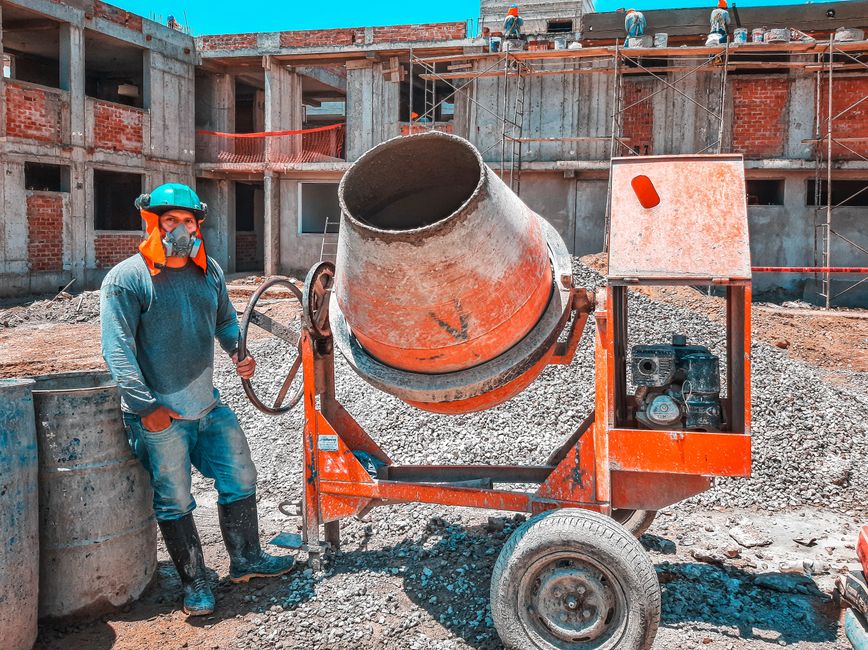
Another case centred on a concrete mixer with a guard that had been removed for cleaning and never replaced. No permit to work. No lockout procedure. A worker's hand went in during what the crew called a "quick check." The company argued the worker deviated from procedure. The judge found there was no procedure to deviate from. €200,000.
Finger loss incidents follow this exact pattern across industries, not just construction. The machinery changes. The missing guard, the absent procedure, and the untrained operative do not.
The Six Failures Regulators Keep Finding
Guards removed and not replaced. The most common physical failure. Guards get taken off for maintenance, cleaning, or because they slow the job down. There is no system to ensure they go back on. No permit to work. No sign-off before the machine returns to service.
No documented pre-use inspection. Every plant item on a construction site should have a daily pre-use check recorded somewhere. Not because the HSA likes paperwork. Because it creates the habit of looking, and it surfaces defects before they become incidents. Sites that cannot produce inspection records during an investigation are in serious trouble.
Competency not verified. The operator had "years of experience." Experience is not competency. Competency means documented training, an assessed qualification relevant to the machine type, and a record the employer can produce. CSCS cards for plant operators exist for this reason. Sites that allow workers to self-declare competency are one incident away from a prosecution.
No segregation of pedestrians and plant. Telehandlers, excavators, dumpers, and concrete trucks sharing space with workers on foot is a recipe for a fatality. Traffic management plans must be site-specific, communicated at induction, updated when site conditions change, and enforced by someone with actual authority to stop work.
Maintenance deferred without risk assessment. A known defect, logged and reported, that gets added to a snag list rather than triggering an immediate stop-use decision. Courts view this as conscious acceptance of risk. It is the difference between an accident and negligence.
No hierarchy of control applied. Employers reach for PPE first because it is cheap and visible. Regulators reach for the risk assessment to see whether elimination, substitution, or engineering controls were considered before gloves and hi-vis became the entire safety strategy. When the hierarchy is inverted, fines reflect it.
The Checklist That Stops This
This is not a theoretical framework. It is what separates companies that get prosecuted from companies that do not.
Before any machine goes on site:
- Confirm the machine has a valid thorough examination certificate (every 6 months for lifting equipment, annually for most other plant)
- Verify operator competency with documentary evidence, not self-declaration
- Check all guards are in place and functioning
- Establish and communicate the pre-use inspection regime
Daily:
- Pre-use checks completed and recorded before first operation
- Traffic management measures in place and visually confirmed
- Any defects reported through a system that triggers a decision, not a list
Before maintenance or cleaning:
- Permit to work issued
- Lockout/tagout applied
- Isolation confirmed before anyone approaches moving parts
- Sign-off before the machine returns to service
Ongoing:
- Monthly review of inspection records for emerging defect patterns
- Site induction covers machine exclusion zones and traffic routes
- Competency records reviewed when workers change roles or machines
- Project supervisor maintains oversight of plant safety as a standing agenda item, not just after something goes wrong
The Turn
The HSA is not catching companies off guard. They are catching companies that treated safety management as an administrative inconvenience rather than an operational system. The €400,000 figure is not a deterrent designed to shock. It is the statutory maximum under the Safety, Health and Welfare at Work Act 2005, and courts are reaching it because the facts warrant it.
The checklist above costs a few hours a week to run properly. The alternative is documented in every court record from the last three years.