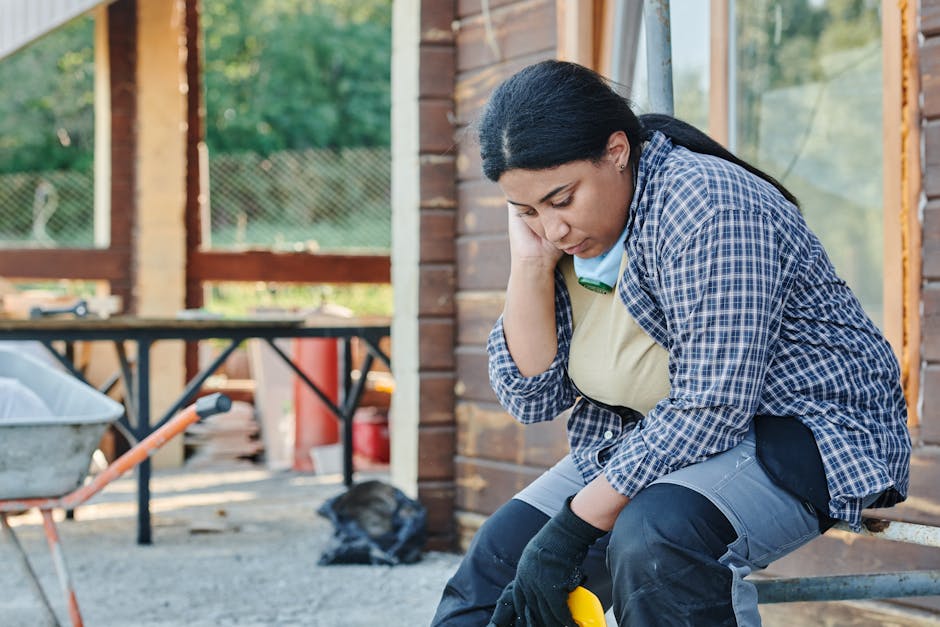
Outdoor workers in Ireland are 3.5 times more likely to develop skin cancer than office workers. That statistic gets quoted every summer. What doesn't get quoted is the anxiety rate, the burnout rate, or the number of lads who quietly stop coping somewhere around week six of a brutal July.
The physical risks of working outdoors are well documented. The psychological ones are not. That gap is costing people.
Heat Does Something to Your Head, Not Just Your Body
Core body temperature rising by even 1 to 2 degrees Celsius degrades cognitive function. Concentration drops. Decision-making slows. Irritability spikes. This is not a character issue. It is a physiological response to thermal stress, and it happens long before anyone collapses.
Heat stress in occupational health tends to get framed around heat exhaustion and heatstroke. Those are the acute emergencies. The chronic version is quieter. Workers who spend months cycling through heat stress and partial recovery accumulate a kind of cognitive debt. Sleep quality drops because core temperature stays elevated into the evening. Poor sleep drives anxiety. Anxiety impairs the focus needed to work safely. The cycle runs itself.
Research from occupational medicine consistently links prolonged heat exposure to increased psychological distress, reduced resilience, and higher rates of depression. Irish summers are not Mediterranean. But Irish outdoor workers are exposed to UV and heat across spring, summer, and into October. Twelve weeks of cumulative strain adds up to something real.
Isolation Is the Other Problem Nobody Measures
A lot of outdoor work is solitary. Groundskeepers. Forestry workers. Road crews posted to rural stretches. Farm contractors working plots miles from anyone else. The social structure of the office, whatever you think of it, provides low-level daily human contact. Outdoor workers often go hours without it.
Lone working regulations in Ireland focus almost entirely on physical risk: who knows you're out there, what happens if you're injured. They say very little about the psychological wear of sustained isolation. That is a gap in the law and in the culture around it.
When you add physical fatigue from heat, social isolation, and the particular Irish tendency to treat stoicism as a professional virtue, you get a population of workers who are struggling but not saying so. Burnout in outdoor roles often presents differently to office burnout. It looks like withdrawal, not drama. Workers stop engaging at toolbox talks. They take more sick days in winter. By the time anyone notices, the problem is months old.
What Burnout Actually Looks Like on Site
Burnout isn't a personality flaw, and it doesn't arrive with a diagnosis attached. For outdoor workers, the early signs tend to be physical in presentation: persistent fatigue that rest doesn't fix, reduced tolerance for discomfort, irritability with colleagues over small things, and a flattening of motivation that gets misread as laziness.
Supervisors are not trained to spot this. They are trained to watch for unsafe behaviour, but they are rarely given the tools to distinguish someone who is having an off day from someone who has been quietly drowning for six weeks. The distinction matters. An unsafe act driven by heat-induced cognitive impairment or psychological exhaustion is a different problem to an unsafe act driven by carelessness.
The Compounding Effect Nobody Talks About
Physical and psychological risk factors do not operate in parallel. They multiply. A worker with elevated anxiety from sustained isolation makes worse decisions under heat stress than a psychologically well worker in the same conditions. A worker in the early stages of burnout is less likely to apply sunscreen consistently, take rest breaks, or report symptoms before they become a medical emergency.
The cancer risk from sun exposure is real and cumulative. The mental health risk from occupational heat stress, isolation, and burnout is also real and also cumulative. Treating them as separate campaigns, one for the dermatology team and one for HR, misses how they interact.
What Employers Are Actually Required to Do
Under the Safety, Health and Welfare at Work Act 2005, employers have a duty to manage risks to psychological health, not just physical health. This is not optional and it is not a soft measure. It sits in the same legal framework as PPE requirements and manual handling training.
In practice, this means a few specific things for outdoor workers.
Risk assessments for outdoor roles need to include psychological hazards. Isolation, duration of solo work, exposure to sustained heat, and the availability of peer contact are all assessable factors. They belong in the document.
Rest breaks are not just about preventing heatstroke. Structured breaks, in shade, with access to cold water and ideally some human contact, also interrupt the psychological accumulation of heat-related cognitive load. The physical and mental benefit arrive together.
Supervision check-ins need a brief welfare component. Not a formal psychological assessment. A genuine question, answered honestly, about how someone is actually doing. The toolbox talk format, used well, is the right vehicle for this.
Access to mental health support needs to be visible and specific. Telling workers an EAP exists is not enough if the card for it is buried in an induction folder from three years ago. It needs to be mentioned, regularly, by people who are not embarrassed to mention it.
The Turn
The HSA's seasonal campaigns on sun safety are not wrong. They are incomplete. Skin cancer is the outcome of decades of cumulative UV exposure. The mental health crisis in outdoor workers is the outcome of years of cumulative psychological load that nobody is measuring, reporting, or treating as a safety priority. Both operate slowly. Both are preventable.
Stop waiting for a collapse before you ask how someone is doing. By then, you are already in incident territory.