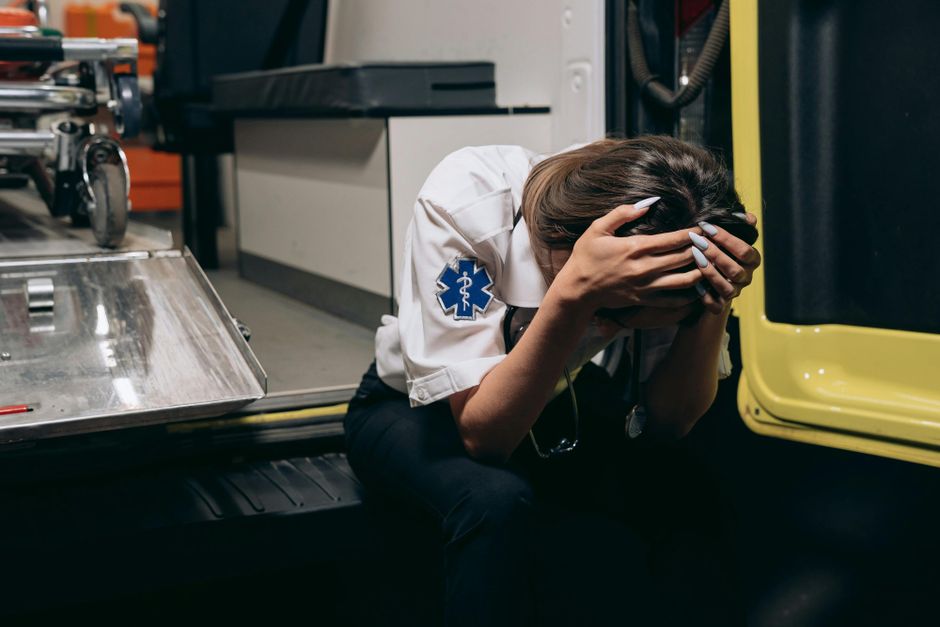
Someone gets hurt at work, or witnesses something they can't unsee, and then the system kicks in. Forms. Investigations. Maybe a return-to-work plan. What the system almost never captures is what's happening inside the person who was there.
Trauma after a workplace incident does not announce itself. It hides in plain sight, wearing the face of someone who seems fine.
Why This Gets Missed
The culture in most Irish workplaces, especially in construction, farming, manufacturing, and logistics, still operates on the assumption that if you're physically able to do the job, you're okay. That assumption is wrong, and it costs people years of their lives.
Acute stress reactions after a serious incident are normal. They are the brain's way of processing something it was not built to handle in a single go. The problem is that without someone noticing and naming what's happening, those reactions can harden into something more serious. Post-traumatic stress. Depression. Alcohol use. Withdrawal from work, family, and anything that feels like it matters.
If you're a manager or a colleague and you're looking for workplace trauma support resources to help the team after a serious incident, that guide covers what to do. This article is about how to spot the person who needs it before they tell you, which they probably won't.
The Physical Signs
The body holds what the mind can't process. This is not a metaphor. It is physiology.
After a traumatic incident, watch for:
Fatigue that doesn't match the workload. Someone who is visibly exhausted even at the start of a shift, or who looks like they haven't slept properly in weeks. They probably haven't.
Complaints of physical symptoms with no clear cause. Headaches, stomach problems, chest tightness, and muscle pain can all be the body expressing what the person hasn't been able to articulate. These often get dismissed. They shouldn't be.
A heightened startle response. If someone flinches at loud sounds or unexpected movement, particularly if that's new behaviour, it matters. The nervous system is stuck on high alert.
Changes to appetite. Noticeably not eating, or eating constantly as a coping mechanism. Either direction is a signal.
Signs of self-medicating. Coming in smelling of alcohol. Heavier smoking. Mentioned but quickly dropped references to not being able to get through the week without something to take the edge off.
The Emotional Signs
These are harder to see, partly because people work hard to conceal them, and partly because the people around them work hard not to notice.
Emotional numbness. The person who was previously engaged, opinionated, or chatty who is now flat. Not quiet in a thoughtful way. Flat in a way that doesn't fit them.
Irritability out of proportion. Anger that flares at minor things. Snapping at colleagues over nothing. This is often misread as the person being difficult. It's frequently dysregulation, the nervous system unable to modulate its own responses.
Guilt or self-blame. Someone who keeps circling back to what they should have done differently, even when they had no control over what happened. This is especially common in bystanders, people who witnessed the incident rather than experienced it directly.
Sudden emotional responses. Getting visibly upset over something small. Tearing up unexpectedly and then shutting down immediately. Brief windows where the mask slips.
Fear of specific tasks or areas. Avoidance of the location where the incident happened, or reluctance to do the task involved. This can look like laziness or a bad attitude. It is neither.
The Behavioural Signs
Behaviour changes are often the most visible, and the most misinterpreted.
Withdrawal. The person who ate lunch with the team and now eats alone. Who stopped joining conversations. Who gets out the door the second the shift ends. Isolation is both a symptom and a risk factor for things getting worse.
Performance changes. Making errors they wouldn't normally make. Missing steps in procedures they know well. Difficulty concentrating. The brain under chronic stress does not perform the same way as a rested, regulated brain.
Hypervigilance at work. Constantly checking things, refusing to work alone, being unable to focus on the task because they're scanning the environment. This is the nervous system doing its job, but in overdrive.
Presenteeism before absenteeism. Often the pattern runs like this: the person shows up and powers through, visibly not right, for weeks. Then they start calling in sick. Then the sick leave extends. At that point, you've missed several earlier windows where help would have been far easier to give.
Changes in risk tolerance. Some people become significantly more risk-averse after a traumatic incident, refusing tasks that are objectively safe. Others, counterintuitively, become reckless, as if they've stopped caring about their own safety.
How to Raise It Without Making Things Worse
The worst way to open this conversation is to corner someone, lecture them about mental health, or tell them they "need to talk to someone" in a tone that implies they're broken.
The best way is to make it specific and low pressure.
Notice the behaviour, name it without diagnosis, and leave the door open.
"I've noticed you've been quiet since the incident. I just want you to know I'm around if you want to talk. No pressure."
That's it. You are not their therapist. You are not responsible for fixing it. You are responsible for making sure they know someone noticed and someone cares. That alone changes the trajectory for a lot of people.
If they open up, listen. Don't minimise. Don't compare. Don't rush to solutions. "That sounds really hard" is more useful than "you'll be grand."
If you're a manager, follow up. Not once. The person who says they're fine on Monday might not be fine on Thursday. The fact that you check back matters.
Know what your organisation has available. An Employee Assistance Programme, occupational health referral, or even just the name of a good GP. Have those ready, not as a way to hand the problem off, but as a genuine option you can offer.
What Gets Overlooked Most
Witnesses. Colleagues who were nearby but not directly involved. Bystanders who helped after the incident. These people often receive no support at all, because the focus understandably goes to whoever was physically hurt.
Witnessing serious trauma is itself traumatic. Someone who watched a colleague get crushed by machinery, or who was first on the scene after a fall, is carrying something significant. The fact that they're not in a hospital bed does not mean they are unaffected.
The signs are the same. The need is the same. The tendency to assume they're fine because they "weren't involved" is a gap that leaves a lot of people struggling alone.
After a serious workplace incident, the right question is not just "how is the injured person?" It is "how is everyone who was there?"
The person who seems fine often needs the most attention.