Twenty minutes. That is the average emergency response time to a rural farm in Ireland. If someone falls from a grain store roof at 8am on a Tuesday, that is twenty minutes during which the difference between life and death sits entirely in your hands.
Falls from height are the leading cause of serious injury and death on Irish farms. Not machinery entanglement. Not tractor rollovers. Falls. From barn roofs, hay sheds, silage pits, and ladder climbs that should have taken thirty seconds. The HSA has published the statistics. The pattern is consistent and grim. A worker goes up, something gives way, and the people on the ground have no plan, no training, and no idea what to do while the clock runs.
That gap, between the fall and the ambulance, is what kills people. It is also entirely fixable.
Why Falls on Farms Are Different
A construction site fall from height happens in a controlled environment. There are colleagues nearby. There is often a first aider on site. The site may be a ten-minute drive from a hospital.
A farm fall is none of those things. It happens alone, or nearly alone. The surface below is often concrete, compacted earth, or the edge of a structure. The person who fell may be a family member. The person who finds them may be a child, a partner, or an elderly parent. And the nearest trauma centre might be 40 kilometres away.
The injury profile is also different. Spinal injuries, internal bleeding, head trauma, and crush injuries from landing on equipment are all common. These are not injuries where you clean a wound and apply a plaster. They require specific, trained responses in those first minutes before professional help arrives.
The Response Plan Nobody Has Written Down
Every farm with more than three people working on it needs a written emergency response plan. Not a mental note. Not a rough idea. A written plan, kept somewhere accessible, that answers four questions clearly.
Who calls the emergency services? One person. Not everyone at once. One named person with the job of calling 999 and staying on the line. Everyone else does something else.
What is the exact address? Rural addresses in Ireland are notoriously hard for emergency services to locate. The GPS coordinates of your farmyard gate should be written on the plan. Eircode is not always enough. Know the nearest road landmark. Know the junction. Tell the dispatcher before they ask.
Who provides first aid? At least one person on every working farm should hold a current QQI Level 5 or equivalent occupational first aid qualification. This is not a suggestion. Under the Safety, Health and Welfare at Work Act 2005, employers must ensure adequate first aid resources. A box of plasters in the kitchen does not satisfy that requirement.
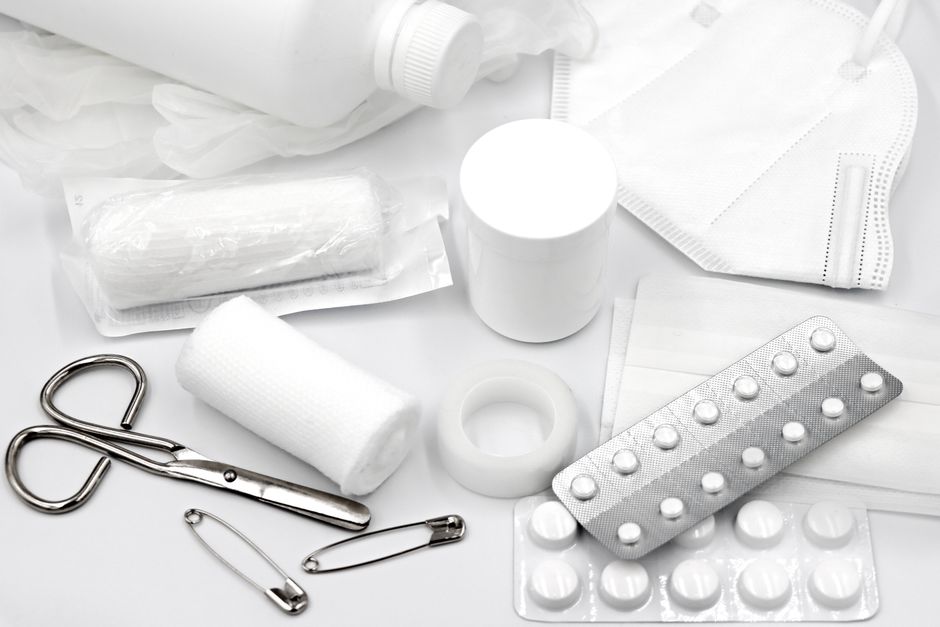
Where is the first aid kit? Mounted in a fixed, known location. Not under the sink. Not in the back of the jeep. Fixed. Known to everyone.
What to Do in the First Three Minutes After a Fall
If you are the first person on the scene after someone falls from height, these are the priorities.
Do not move the person. This instruction gets ignored constantly, usually by people who want to help. Moving someone with an undetected spinal injury causes the injury to complete. Unless there is immediate life-threatening danger, such as fire or water, leave them where they are.
Check for responsiveness. Call their name. Tap their shoulder firmly. If there is no response, they are unconscious and you have a different set of problems. Begin calling emergency services immediately.
Control any visible bleeding. Severe bleeding is the most immediately manageable threat you can address while waiting for help. Direct, firm pressure using whatever clean material is available. Do not remove it once applied. If it soaks through, add more on top.
Keep them warm. Shock and blood loss cause rapid temperature drops. A blanket, a coat, anything. Hypothermia compounds every other injury.
Stay with them. Talk to them if they are conscious. Keep them calm. Tell them help is coming. Do not leave them alone.
What Not to Do
Do not give food or water. Internal injuries may require surgery. A full stomach complicates that.
Do not remove a helmet if one was worn. Unless they cannot breathe and airway clearance is impossible otherwise, leave it on.
Do not ask them to stand. A person who has fallen from height may feel the urge to get up and demonstrate they are fine. They may not be fine. Adrenaline masks injury. A fractured pelvis can feel like bruising. A ruptured spleen can take hours to become symptomatic.
Do not send one person to guide in the ambulance and leave the casualty alone. If you have three people available, one stays with the casualty, one meets the ambulance at the gate, one handles calls and communication.
Building Your Farmyard Response Plan Before You Need It
The time to write a plan is on a quiet afternoon in January, not in the seconds after someone hits the ground. Farm fatalities in Ireland follow depressingly predictable patterns, and one of those patterns is the absence of any practiced emergency response.
Walk your farm and identify every location where a fall from height could happen. Roof access points, hay barn lofts, grain store ladders, silage pit walls, and trailer beds all qualify. For each one, ask what the first response looks like if someone falls there right now.
Then train everyone. Not just the people who work at height. The person most likely to find a fallen worker is often not the person who fell. It might be someone who came to bring lunch, or a neighbour who called in. Everyone on site needs to know the plan.
Post the emergency contact numbers, the farm's GPS coordinates, and the location of the first aid kit somewhere visible in every work area. The dairy parlour, the workshop, the grain store. Every place people spend time.
Review the plan every year. If personnel change, the plan changes. If the farm layout changes, the plan changes.
The Honest Reality
Most Irish farm families are capable of performing effective first aid in an emergency. The problem is not skill. It is preparation. The skills are learnable in a weekend course. The plan takes an afternoon to write. The GPS coordinates take five minutes to find and write down.
The alternative is improvising during the worst moment of your life, with someone you care about on the ground, while a dispatcher asks you questions you cannot answer.
Write the plan. Train the people. Know the coordinates.