Someone falls on a construction site. Your trained first aider rushes over. The problem is, the casualty is still on the scaffold platform, four metres up, and nobody on the ground has any idea how to get them down safely without making everything worse.
That gap between having a first aider and having a rescue-capable first aider is where people die. Falls from height are the single biggest cause of workplace fatalities in Ireland, accounting for roughly a third of all construction deaths recorded by the HSA over the last decade. The response to a fall matters as much as preventing one in the first place. And right now, most sites are not set up for it.
What Standard First Aid Training Actually Covers
Your QQI Level 5 occupational first aid course is solid for what it addresses. Airway management. CPR. Bleeding control. Shock. Burns. It prepares someone to respond at ground level, on a stable surface, with clear access to the casualty and ideally an ambulance twelve minutes out.
It does not prepare anyone to access a casualty on a roof. It does not cover working around edge protection and anchor points. It does not address how to manage a suspected spinal injury when the person is draped over a scaffold tube. And it does not touch the specific danger of suspension trauma, which can kill a conscious, uninjured person within minutes of hanging in a harness.
That last point catches a lot of people off guard. A worker whose fall arrest system has done its job, who is conscious and talking, can still go into cardiac arrest within fifteen to thirty minutes if left hanging. The blood pooling in the legs under harness pressure triggers a response that shuts the circulatory system down. The ambulance arriving twenty minutes later is too late. Your first aider standing at the bottom of the ladder, waiting, has watched someone die while technically following their training.
The Rescue Problem Nobody Plans For
Every site using work at height equipment is legally required under the Safety, Health and Welfare at Work (Construction) Regulations to have a rescue plan. What happens in practice is that the rescue plan exists as a document, ticks the box during an audit, and bears no relationship to what the workers on that scaffold could actually execute on the day.
A workable rescue plan has named personnel, specific equipment, and a rehearsed sequence of actions. It accounts for the layout of that particular structure. It considers what happens if the rescue cannot happen quickly, and who is calling what numbers in what order.
Most sites have a generic paragraph that says something like "in the event of a fall, contact emergency services." That is not a rescue plan. That is a description of what happens when the rescue plan fails.
What Height Rescue Training Actually Looks Like
Dedicated working at height rescue training covers things your standard first aid course never will.
Suspension trauma recognition and response. Rescuers need to know how to recognise it, how to coach a conscious suspended casualty through keeping their legs moving to delay onset, and how to handle the retrieval correctly. Lowering someone flat immediately after retrieval is not instinctive. It contradicts standard recovery position thinking. It needs to be drilled.
Assisted and unassisted descent systems. Using rescue descent devices, understanding load-rated anchor points, operating a haul system to raise a casualty before lowering. This is practical, physical training on actual equipment.
Spinal precautions in awkward environments. Managing a suspected spinal injury at ground level with a clear surface and two trained responders is one thing. Managing it on a platform 6 metres up, through a hatch, with one person, is another situation entirely. Trainees need to understand what they can and cannot improvise.
Scene management and communication. Who controls access to the area below. Who is talking to the emergency services. Who is giving updated information on the casualty's condition from height. This sounds administrative. In a real incident it is where things fall apart.
Equipment familiarity. A rescuer who has never operated a specific piece of kit under pressure will hesitate. Hesitation costs time. Time costs lives. The training needs to use the actual equipment stored on your site, not a generic version in a training centre.
Matching Training to Your Specific Risk Profile
A fall from height on a flat roof looks different to one on a pitched roof, which looks different again to a person arrested mid-fall on a tower scaffold. Your rescue training needs to reflect the actual environments your workers are in.
Flat roofing contractors need different drills to steelwork erectors. Sites with fragile roof materials need protocols for reaching a casualty without creating a secondary fall. Scaffold-heavy sites need to account for the geometry of standard tube and fitting systems, where access routes may not be obvious. Internal scaffold in a refurbishment presents different access problems again compared to a facade scaffold on a new build.
The HSA's guidance on working at height is clear that rescue provisions must be specific to the work being done. Generic is not compliant. Generic is also not useful when someone is hanging from a harness and the clock is running.
Who Should Hold This Training and How Often
Every site with significant working at height activity needs at least two people per shift with height rescue competence. Two, because your first rescuer may need a second person to manage the load, control the area, or operate communications. One trained person is a single point of failure.
This is separate from your standard occupational first aider requirement. A site may well have someone who holds both competencies, and that is efficient. But the height rescue element needs to be specifically trained and regularly refreshed. Rescue skills decay faster than you think. Running a practical drill twice a year is the minimum that keeps those skills functional.
Annual refresher is the floor, not the ceiling. If your work at height activities are continuous and complex, quarterly drills on your actual site geometry make sense.
The Equipment Side
Training is half the equation. The other half is having the right kit on site and in usable condition. A rescue kit stored in a locked container at the site office, while the work happens on a roof 200 metres away, is not rescue provision. It is theatre.
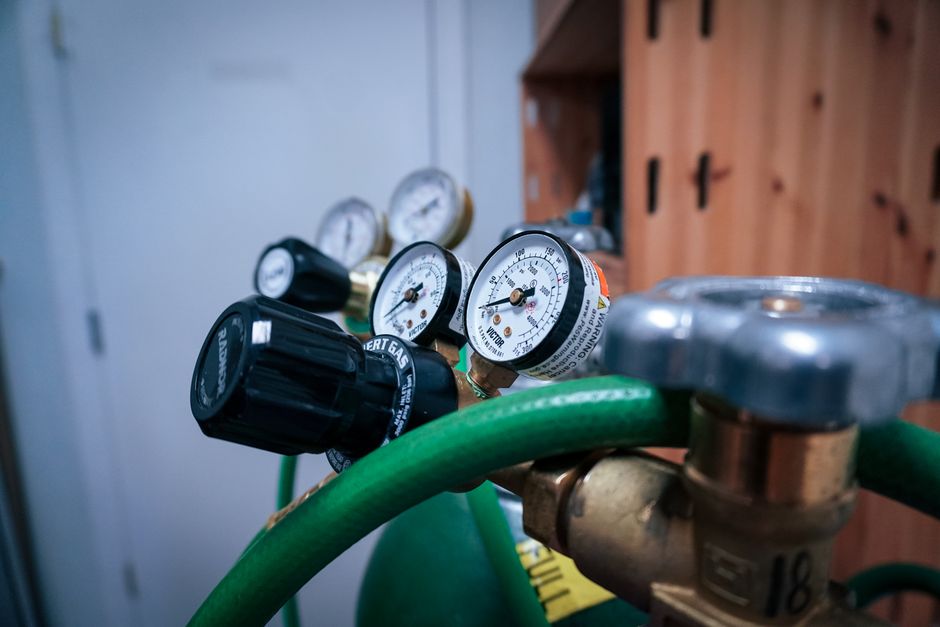
Why your site first aid kit is probably useless applies equally to rescue equipment. The kit needs to be inspected, accessible, and located where the risk actually is. Rescue descent devices need to be load-rated and within certification. Stretchers rated for vertical use are different to standard carry stretchers. Oxygen, if carried, needs to be current and the regulator functional.
Running a monthly check on rescue equipment is not overcautious. It takes fifteen minutes. It is the difference between equipment that works and equipment that fails during the three minutes it actually matters.
The point is not that standard first aid training is worthless on a construction site. It is essential. But it is a foundation, not a complete system. If your people are working above 2 metres, the question is not whether you have a first aider. It is whether you have people who can actually get to the casualty, manage them in place, and bring them down safely. That requires different training, specific equipment, and a rescue plan that means something beyond a paragraph in a document nobody has read since the tender stage.
Train for where the work actually happens.