The air looks clear. No visible haze, no coughing fit, nothing dramatic. And that is exactly how silica dust kills people slowly, without a single warning sign anyone can see.
The all-island silica campaign, run jointly by the Health and Safety Authority and the Health and Safety Executive Northern Ireland, is built on one core problem: construction workers across the island are being exposed to respirable crystalline silica every working day and neither they nor their supervisors know it is happening. Not because they are reckless. Because the hazard is genuinely invisible, and the damage it causes takes years to surface.
By the time a worker gets a silicosis diagnosis, the scarring in his lungs is permanent. There is no treatment that reverses it. The disease can progress even after exposure stops. That is the part that should keep site managers up at night.
What Respirable Crystalline Silica Actually Is
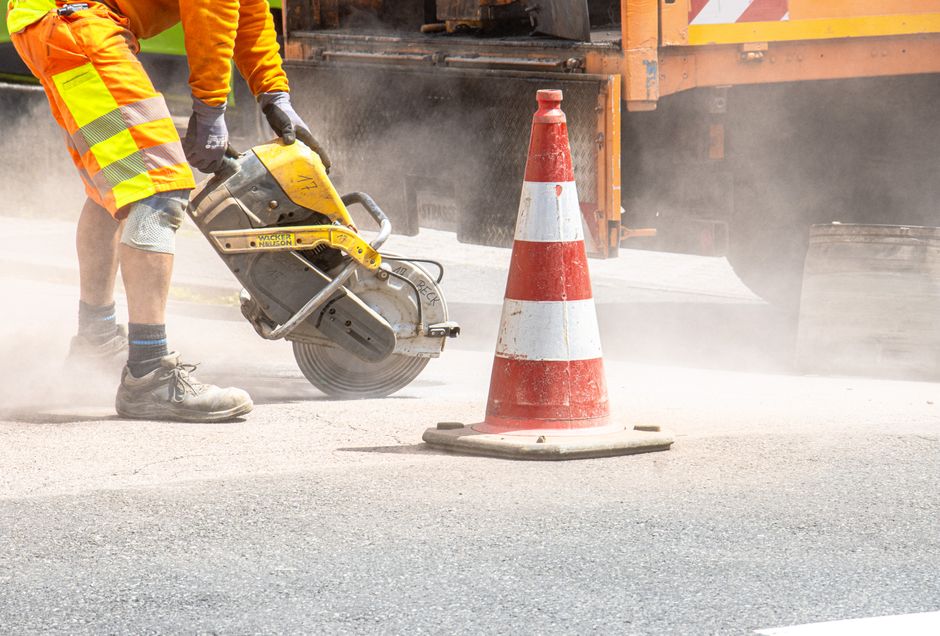
Silica is the mineral that makes up a large portion of concrete, sandstone, brick, mortar, and granite. When you cut, grind, drill, or sand those materials, you break them apart. Some of the particles released are large enough to see as dust clouds. Those are not the problem. The dangerous fraction is called respirable crystalline silica, or RCS. These particles are smaller than 10 microns. They float in air for long periods, travel deep into the lung, and embed in tissue where the body cannot clear them.
The occupational exposure limit for RCS in Ireland is 0.1 mg/m³ as an eight-hour time-weighted average. That concentration is invisible. You cannot smell it. You will not taste it. Standard site observation tells you nothing about whether you are over or under that limit.
The Tasks That Generate Dangerous Levels
Workers and managers often focus on dramatic-looking operations when thinking about dust control. The angle grinder throwing sparks, the massive concrete saw on a civils job. Those are genuine hazards. But some of the worst RCS exposures come from tasks that look routine.
Sweeping. Dry sweeping a workshop or floor after cutting generates enormous concentrations of settled fine dust kicked back into the breathing zone. Hand mixing cement or mortar in a confined space. Chasing walls with a grinder without extraction. Drilling into concrete block without water suppression. Any drilling into concrete block, full stop.
Tunnelling and groundwork are high-risk environments across both jurisdictions. But the campaign has also pushed focus onto refurbishment work, where workers are often in tighter spaces, working alone or in small crews, and where dust suppression kit is less likely to be set up properly.
Why the Hierarchy of Controls Matters Here
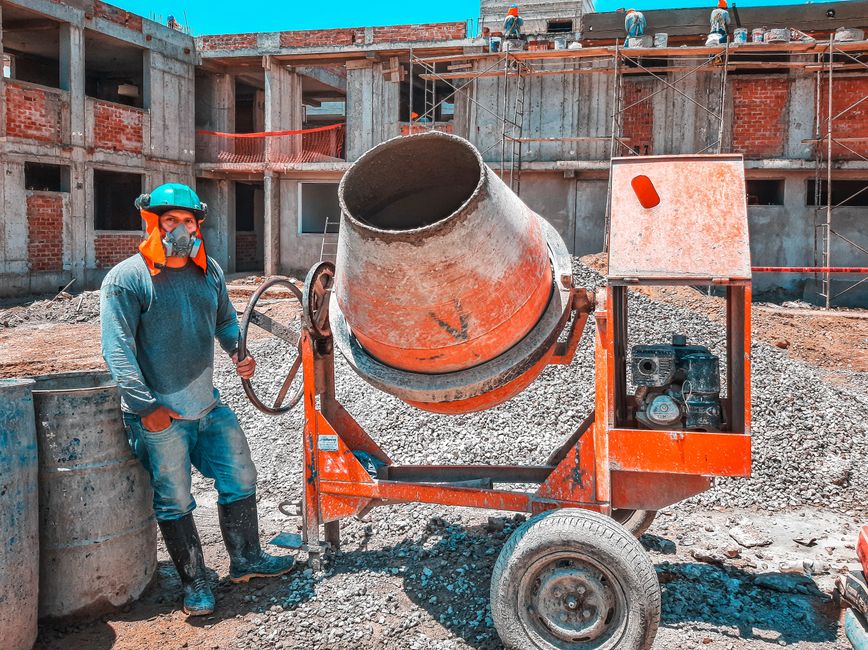
The dust you cannot see is also the dust a disposable mask will not adequately stop. This is where sites fail repeatedly. A P1 filtering facepiece is not adequate for RCS. FFP3 is the minimum respiratory protection standard for silica work. But respiratory protection is the last control on the hierarchy, not the first.
The controls that actually reduce exposure are:
Elimination and substitution. If you can use a lower-silica content product, use it. Pre-cast elements that reduce on-site cutting. Wet processes over dry ones wherever possible.
Engineering controls. On-tool extraction with an H-class vacuum. Water suppression on saws and drills. Local exhaust ventilation in enclosed areas. These controls reduce the dust generated at source before it ever reaches the air.
Work organisation. Rotating workers through high-exposure tasks limits individual dose. Keeping other workers away from dusty operations. Planning the sequence of work so dust settles before workers re-enter an area.
Only after those controls are in place does RPE become part of the solution. Not a replacement for it.
The Medical Surveillance Gap
Here is where the regulatory picture gets uncomfortable. Silicosis in 2026 is not just a historical problem confined to old quarry workers. Young workers in their 30s are being diagnosed with accelerated silicosis, a rapidly progressive form linked to high-intensity exposures. The engineered stone industry saw a wave of these cases, which drove the ban on dry processing of engineered stone. But construction sites are generating the same exposures with different materials.
Medical surveillance for workers regularly exposed to RCS is a legal requirement in Ireland under the Chemical Agents Regulations. This means periodic lung function testing and health assessments, not a one-off induction form. Most sites with short-term subcontractors have no meaningful surveillance in place. Nobody knows those workers' baseline lung function. Nobody will know when it deteriorates.
The HSA can and does inspect for this. The absence of a surveillance programme is an enforcement point, not just a gap in good practice.
What the All-Island Campaign Is Actually Checking
The campaign involves targeted inspections across construction and quarrying on both sides of the border. Inspectors are looking at whether a risk assessment identifies RCS as a hazard, whether control measures are implemented and maintained, whether workers are trained on the specific risks, whether RPE is correctly selected and fit-tested, and whether health surveillance records exist.
A generic COSHH or chemical agents risk assessment that lists "dust" without specifying RCS is not sufficient. Inspectors know the difference. They will also check whether the extraction equipment on site is actually being used, because a wet-cut saw sitting dry beside a worker in a cloud of dust tells a clear story.
The Site Supervisor's Problem
The practical difficulty is that silica risk requires active management rather than passive presence of equipment. A supervisor walking a site cannot see whether the air contains 0.08 mg/m³ or 0.3 mg/m³ of RCS. The only ways to know are air monitoring or a solid understanding of which tasks in which conditions generate dangerous levels without controls.
The campaign guidance is explicit: where you cannot demonstrate control through monitoring, you control through method. Specify wet cutting. Specify on-tool extraction. Write it into the safe system of work. Audit whether it is happening. The monitoring question then becomes about verifying your controls are working, not discovering whether you have a problem.
The turn is this: the all-island campaign is not a paperwork exercise. It is a coordinated attempt to address a disease that is already irreversible in the workers who have it. Sites that manage silica properly are protecting workers from something that will not announce itself for another 15 years.
The lungs being damaged on Irish sites today belong to workers who will not know they are sick until long after they have left those sites. What gets done now is the only intervention that matters.