Someone died because their supervisor told them not to buckle up. That is not speculation. That is the finding from multiple UK enforcement cases in the last three years.
Construction vehicle accidents kill and seriously injure workers every year across Ireland and the UK. A significant number of those incidents involve occupants being thrown from machines, crushed by overturning vehicles, or ejected on rough ground. Seatbelts would have changed the outcome in many of them. Everyone knows this. And yet, on sites right now, workers are operating dumper trucks, telehandlers, and rollers without restraints because nobody told them to use one, or someone actively told them not to.
This is not a knowledge gap. It is a culture problem, and culture problems have sponsors.
What the UK Cases Actually Show
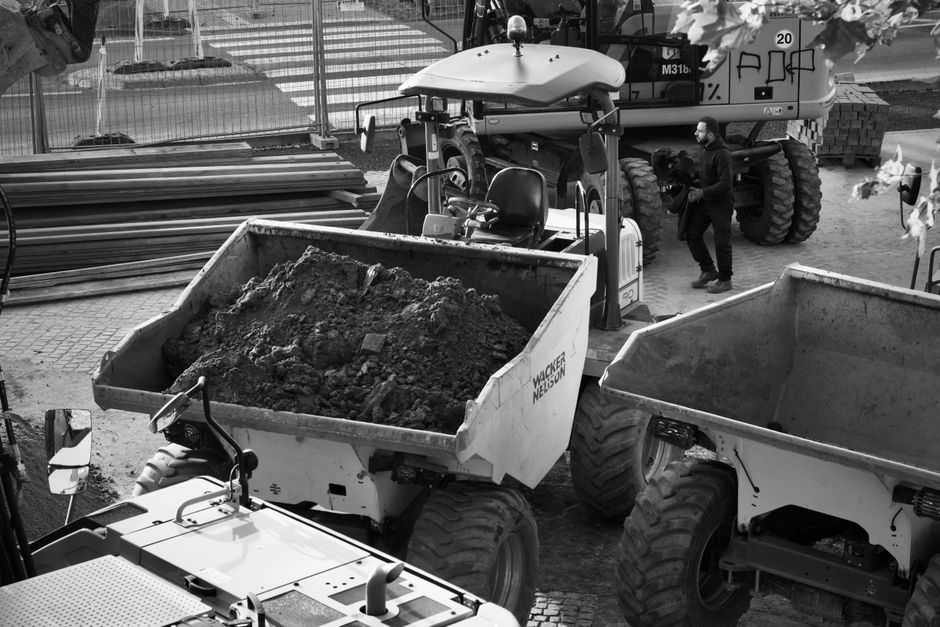
The UK Health and Safety Executive has prosecuted several cases where the absence of seatbelt use was not accidental. Workers gave evidence that they had been told to keep moving, that stopping to belt up slowed the job down, that "nobody uses them here." One case involved a forward-tipping dumper that overturned on a slope. The operator was not wearing a seatbelt. He had been on site for two weeks and had never seen anyone wear one. His supervisor had never mentioned it.
The company was fined. The supervisor was fined personally. The operator spent four months in hospital.
The pattern that emerges from these cases is consistent. Seatbelt use is not prohibited by a written policy. Nobody puts that in writing. Instead, it is normalised out of existence. Workers arrive, observe what experienced colleagues do, and mirror it. If nobody wears a belt, nobody wears a belt. The supervisor who sets that tone by example, or by silence, is legally responsible for the outcome.
The Irish Legal Position
Under the Safety, Health and Welfare at Work Act 2005, employers have a duty to manage and conduct work activities in a way that prevents risks. That duty does not evaporate on a construction site because the distances are short or the vehicle is slow. A 1.5-tonne dumper truck overturning at walking pace on a cambered surface can kill an unbelted operator just as effectively as a motorway collision.
The Road Traffic Acts apply to public roads. On site, the relevant frameworks are general health and safety law and the specific requirements under the Safety, Health and Welfare at Work (General Application) Regulations 2007 and construction-specific regulations. Mobile work equipment must be fitted with appropriate restraint systems where there is a risk of rollover. Where restraints are fitted, workers are required to use them. That is the law. Supervisors who permit non-use are in breach. Employers who fail to enforce it are in breach.
The HSA does inspect for this. It is not theoretical.
Why Supervisors Prevent Seatbelt Use
Productivity pressure is the honest answer. Dumper operators on busy sites can complete dozens of short runs in a shift. Each time they stop, apply the belt, complete the run, and release the belt before tipping, that is time. On a site where the programme is tight and the foreman is watching cycle times, that pressure is real.
The problem is that this reasoning treats a fatal risk as a scheduling inconvenience. It also ignores the fact that one overturning incident can cost a company tens of thousands in fines, legal fees, and compensation before you account for the human cost on the operator and their family.
There is also a myth embedded in construction culture that short distances make seatbelts unnecessary. This is factually wrong. Rollovers on construction sites happen at low speed on uneven ground, on slopes, on soft fill, near excavations. The vehicle does not need to be moving fast. Gravity does the work.
What Your Site Needs to Have in Place
A written rule that nobody enforces is not a control measure. It is paperwork that will be used against you in court.
Actual compliance requires a few things that are not complicated.
First, induction must cover seatbelt use explicitly and specifically for each type of mobile plant on site. Not "wear appropriate PPE." Name the machine, describe the restraint system, demonstrate it.
Second, supervisors need to be told clearly that permitting non-use is a disciplinary matter, not a minor oversight. If your supervisor is the person setting the bad example, your training records are useless.
Third, checks need to happen. Drone surveillance is increasingly being used on larger sites to monitor site behaviour, including vehicle operation. Even without that technology, supervisors and project managers doing site walks should be watching for seatbelt use on plant the same way they watch for PPE on foot.
Fourth, near misses involving plant should be investigated with seatbelt use as a specific question. Not as an afterthought. As a standard line in the report.
The Supervision Problem Is the Actual Problem
Most sites have the right policies written down. The Safety Statement mentions seatbelts. The induction checklist has a tick box. The plant hire agreement specifies that operators must wear restraints. None of that makes a difference if the person running the site daily normalises non-compliance.
The role of supervision on Irish construction sites carries specific legal weight. Supervisors are not just senior workers. They are duty holders. When a supervisor creates a culture where shortcuts are acceptable, they are creating the conditions for a fatality and they are personally exposed to prosecution when that fatality occurs.
The UK cases are not cautionary tales from a different jurisdiction. Irish sites run the same plant, face the same programme pressures, and employ the same supervision culture. The HSA has the same enforcement powers as the HSE. The only difference is whether the incident has happened yet.
Fix the supervision. Everything else follows.