A section of tube-and-fitting scaffold comes down on a busy footpath. Someone walking past loses three weeks of their life to hospital. The contractor says it was unexpected. It never is.
Scaffold collapses on public thoroughfares have a pattern so consistent you could set your watch by it. Inadequate initial design. Inspections that exist on paper but not in practice. Weather events treated as acts of God rather than foreseeable loads. And somewhere in the chain, a competent person who wasn't actually competent. The tragedy isn't the collapse. The tragedy is that every element was visible before it happened.
Ireland's Construction Regulations 2013 are clear on temporary structures. A scaffold must be designed, erected, altered, and dismantled under the supervision of a competent person. Inspections must happen before first use, after any event that could affect stability, and at intervals not exceeding seven days. Those aren't suggestions. They're the floor. And yet sites routinely treat the seven-day inspection as a box-ticking exercise completed by whoever is available, rather than whoever is qualified.
What "Competent Person" Actually Means
This is where most failures begin. Competent person is defined in Irish law as someone with sufficient training, experience, and knowledge appropriate to the work. That definition does real work, or it should. In practice, it gets stretched to cover anyone who has been on a scaffold before.
A competent person for scaffold inspection means someone who understands load distribution, tie patterns, the relationship between bay width and board overhang, how ground conditions affect base plates, and what wind exposure does to a sheeted structure versus an open one. That is a specific skill set. It is not automatically possessed by a general operative who has worked at height for five years.
CISRS cards exist for a reason. The Scaffolding Contractor Certification Scheme and the NASC's guidance on competency standards give employers a framework for knowing what they have. Ignoring that framework and promoting someone to "competent person" because you need the paperwork signed is not a workaround. It is an uncontrolled risk.
The Seven Specific Things Inspectors Miss
Walk around any busy Irish town and look at the scaffolding going up for a facade refurbishment or window replacement. You will find most of these within five minutes.
Inadequate ties. The tie is what connects the scaffold to the building. It resists both push and pull forces. The standard ratio for a sheeted scaffold is one tie per 20 square metres of sheeted face. On short-duration jobs, contractors routinely underspecify ties because re-tying at each lift takes time. This is the single biggest cause of complete collapses.
Base plates on soft ground. A standard base plate distributes load over roughly 150 square centimetres. Put that on disturbed fill or soft subsoil without a sole board and you have created a structure that will settle differentially. Unevenly settled standards create racking forces the rest of the structure was not designed for.
Boards that are not cleated or toe-boarded. Loose boards get kicked off. Debris falls. People below do not expect it. Toe boards are a basic requirement and are routinely absent on the lower lifts of street-fronting scaffolds.
Inadequate bracing on long runs. A facade scaffold longer than about 15 metres without plan bracing can rack sideways under asymmetric load. This is elementary structural behaviour. It still gets ignored.
Sheeting without accounting for wind load. Solid debris netting or sheeting transforms the wind load on a scaffold dramatically. A scaffold designed as an open structure and then fully sheeted for dust containment is now carrying loads it was never calculated for. This combination has featured in several notable collapses.
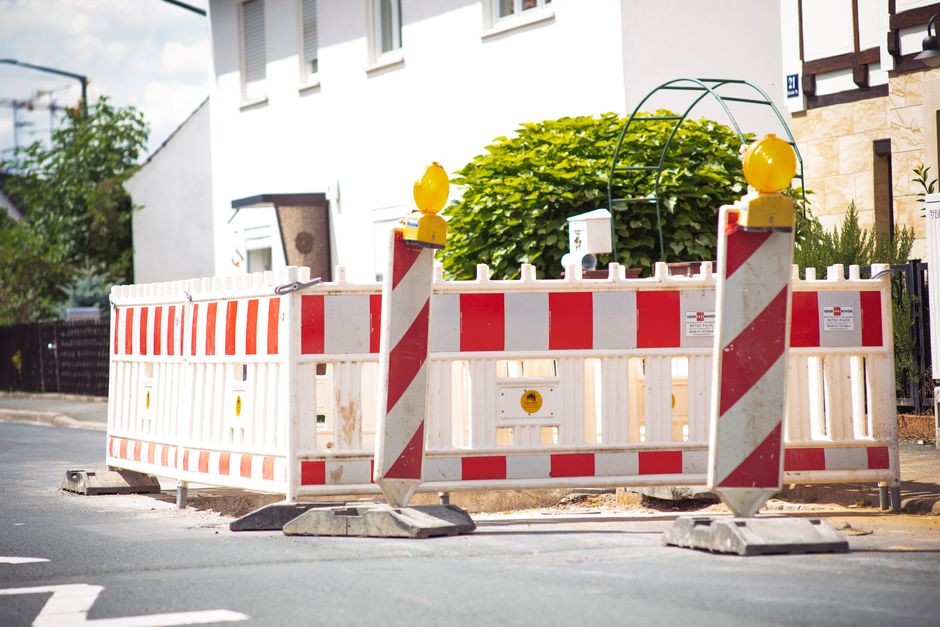
No exclusion zone on the public side. When work is happening overhead, the footpath below needs to be controlled. Barriers and signage are not optional extras. They are the last line of defence when something does fall.
Inspections done but not recorded correctly. Under the 2013 Regulations, an inspection report must be completed before the scaffold is used following each inspection. "I looked at it and it was grand" does not constitute a report. The report must identify the location, the date, who inspected it, what was found, and any remedial action taken.
What a Handover Certificate Tells You (And What It Doesn't)
A scaffold handover certificate means the erecting contractor has checked the structure meets the design intent at the point of handover. It does not mean the structure will remain compliant for the duration of use. That is the user's responsibility.
Too many principal contractors and clients treat the handover certificate as a permanent clearance. It is not. It is a snapshot. The moment something changes, whether that is additional loading, weather damage, modification by an unauthorised person, or just time passing, a new inspection is needed. Platform collapses and roof falls frequently trace back to modifications made after handover by workers who had no authority or training to alter the structure.
What You Can Actually Do Before Calling the HSA
If you manage a site adjacent to a public area, or you are a project supervisor for a job with street-facing scaffolding, you have specific duties. The HSA has prosecuted contractors for exactly these failures, and the fines are not trivial.
Start with the design. Any scaffold over 4 metres in height, or any scaffold in an exposed or unusual location, needs a design by a competent person. That design must be on site. If it is not on site, the scaffold should not be in use.
Check the tie pattern against the design. Physically count the ties. Verify each one is properly fixed to a sound anchor point in the building. A tie wrapped around a drainpipe is not a tie.
Look at the base. Standards should be plumb. Base plates should be sitting flat on sole boards of adequate size. Any standard that has moved or settled needs attention before anyone goes up.
Verify the inspection record is current. The last inspection entry should be dated within seven days or immediately following the most recent adverse weather event.
If you are a member of the public and you see scaffolding that concerns you, you can report it to the HSA directly. The authority has enforcement powers and will inspect. That is not being a nuisance. That is the system working as intended.
The Systemic Problem Nobody Fixes
The deeper issue is procurement. Scaffold packages get squeezed in competitive tender processes until the margin is so thin that any investment in genuine competency disappears. The lowest price wins, the inspection record gets signed off by whoever is standing nearest, and the structure stays up for two years with nobody checking it in any meaningful way.
This is not a problem that better guidance will solve on its own. The role of the project supervisor on Irish sites includes active oversight of temporary works, not just final sign-off. Where that oversight is absent, everything downstream suffers.
Scaffolding is infrastructure. It holds people up. It holds materials up. It stands next to the public for months at a time. Treating it as a throwaway line item rather than a designed and maintained structure is a choice. And when it comes down on someone, the consequences of that choice become very concrete very fast.
The collapse that surprised nobody should have been prevented by the inspection that happened on paper six days before. Fix the inspection. Fix the record. Fix the procurement. The structure will take care of itself.