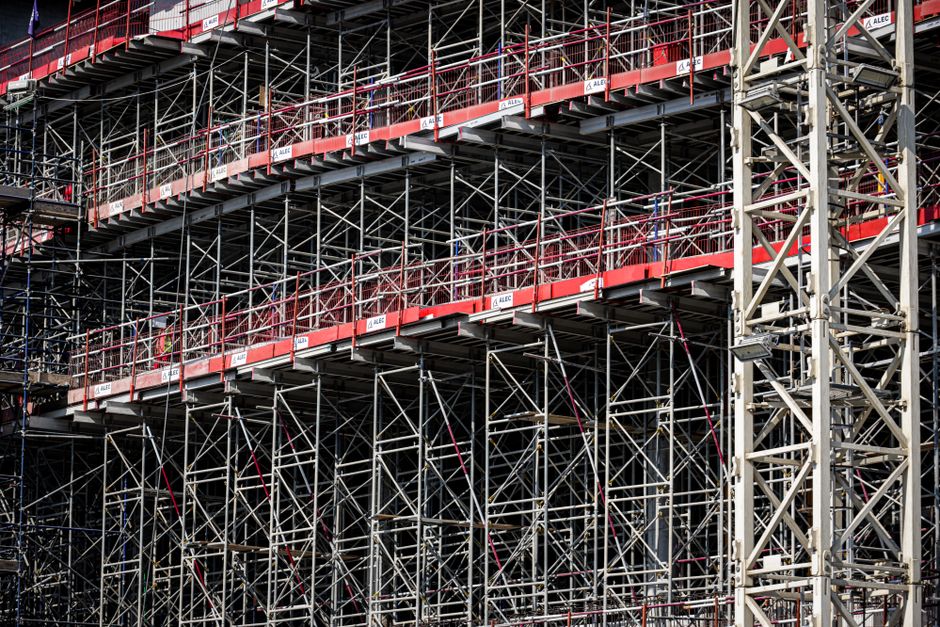
A scaffold collapse does not start with a dramatic failure. It starts with a missing toe board that nobody flagged on Monday morning.
HSA prosecution data from recent years tells a consistent story. The fines in scaffold-related cases are not landing because contractors built something from scratch incorrectly. They are landing because nobody walked the structure after it went up, nobody checked it after the weather turned, and nobody signed anything to say they did. The oversights are not complex. They are fast. And they are costing companies €125,000 a hit.
The regulation is clear enough. Under the Safety, Health and Welfare at Work (Construction) Regulations 2013, scaffolding must be inspected by a competent person before first use, after any event that could affect stability, and at intervals not exceeding seven days. That is the floor, not the ceiling. On most prosecuted sites, the floor was nowhere near being met.
What the Prosecution Files Actually Show
The pattern in HSA enforcement actions is almost boring in its repetition. Missing guard rails. No toe boards on working platforms. Base plates sitting on unstable ground. Ties inadequate for the height of the structure. Incomplete handover certificates. No evidence of any inspection after heavy rain or wind.
None of those take an engineer to spot. Most take under ten minutes to check if you know what you are looking for. The problem is that site managers are busy, the scaffold looks grand from the ground, and nobody has built a habit around formal inspection.
The other consistent thread is documentation. A fine does not just come from a dangerous structure. It comes from a dangerous structure and no record that anyone looked at it. If the HSA inspector arrives on site and asks for your scaffold inspection register and you cannot produce one, you have already lost half the argument.
The Pre-Use Checklist: What Competent Person Actually Means
A competent person under Irish law is not a title. It is a demonstrated combination of training, knowledge, and experience appropriate to the specific task. For scaffold inspection, that typically means someone who has completed a recognised scaffolding inspection course, understands load calculations, and knows what a correctly tied tube looks like versus one that will pull free under load.
Before any scaffold is used for the first time, your competent person needs to check and record the following.
Foundations and base plates. Every standard must have a base plate. Ground beneath must be compacted and level. Sole boards must be used on soft ground. No exceptions.
Standards, ledgers, and transoms. Uprights must be plumb within acceptable tolerances. Ledgers horizontal. Couplers fully tightened. Any sign of deformation or corrosion on tubes means replacement, not a shrug.
Ties and anchorage. The scaffold must be tied to the building at specified intervals based on the height and bay configuration. A general rule is one tie per 32 square metres of scaffold face, but always check the design specification. Ties cannot be removed and replaced with nothing.
Working platforms. Boards must be close-boarded with no gaps over 25mm. No single board bridging should span more than the maximum permitted distance for its thickness. Boards need to overlap correctly at ends.
Guard rails and toe boards. Guard rails at 950mm to 1150mm height. Mid-rails where required. Toe boards minimum 150mm high. These prevent falling objects as much as they prevent falls.
Access and egress. Ladders secured top and bottom, extending at least 1 metre above the landing point. Not tied to a handrail with a single cable tie.
Condition of all components. Bent tubes, damaged couplers, split boards. If it is damaged it comes off the scaffold and goes into a segregated rejection pile.
The Seven-Day Inspection: Why Contractors Keep Skipping It
Seven days passes faster on a live site than anywhere else on earth. The check gets bumped because the foreman is dealing with a delivery, the scaffold looks the same as last week, and the register is in the site office under three other folders.
The seven-day check does not need to be a two-hour exercise. If the scaffold has not been altered, weathered, or had anything impact it, the check can be thorough and still take twenty minutes. The key is that it happens, someone with appropriate competence does it, and it gets recorded on the same day with their name and signature.
After significant wind or rain, that seven-day clock resets. Inspect again. Log it. If you had ties to a temporary structure that has since moved, find out what your ties are connected to now.
What the Handover Certificate Does (And What It Does Not)
A scaffold handover certificate, sometimes called a scaffold tag system, confirms that the structure was inspected and deemed fit for use on the date of handover. It does not cover subsequent alterations. The moment a scaffold is modified after handover, a new inspection is required and the certificate must be updated or reissued.
This is where platform collapses and roof falls often trace back to. A scaffold is handed over correctly. Three days later a bay is extended or a tie is removed to allow a window to open. Nobody tells the competent person. Nobody reinspects. And then someone is on a working platform that no longer meets the original design.
Put a simple rule in place. Any alteration to a scaffold, no matter how minor it looks, requires sign-off from the competent person before work resumes.
The Audit Checklist for Site Managers
This is not the formal inspection. This is the daily site manager walk, before crews start work, that takes five minutes and catches the things that shift overnight.
Morning walk items, in order:
- Are all toe boards still in place on every working platform in use today?
- Are guard rails and mid-rails intact and at correct height?
- Are access ladders still properly secured?
- Has any board moved, warped, or cracked overnight?
- Is there any visible movement in the structure after last night's weather?
- Are any ties missing or visibly disconnected?
- Is there debris or materials on the platform above the permitted load?
- Is the scaffold tag current and still attached?
If any answer is no, work stops on that section until the competent person has assessed and cleared it. Not until someone has looked at it from a distance and said it looks fine.
Contractor Liability: Where the Responsibility Actually Sits
Under the Construction Regulations, the contractor responsible for the scaffold bears primary liability for its safety. That includes scaffolding erected by a subcontractor. If you engaged a scaffolding firm and then failed to inspect their work before your workers used it, that is on you.
The project supervisor for the construction stage carries their own obligations under the Safety, Health and Welfare at Work (Construction) Regulations. Their role requires active oversight, not just signing off on a safety plan that sits in a drawer.
€125,000 is the number that tends to focus attention. But the fines in Irish scaffold prosecutions have reached higher, and they arrive alongside prohibition notices, work stoppage, and reputational damage that follows a company through its next tender process.
The checks that prevent all of this take less time than the HSA inspector will spend on site when something goes wrong. Do them, log them, and make someone accountable for them by name on every working day.