Silica dust has been quietly ending careers and lives on Irish construction sites for decades. Now, for the first time, both jurisdictions on this island are running coordinated enforcement on it simultaneously. That changes the calculus for every firm cutting, grinding, or drilling stone north or south of the border.
What the Campaign Actually Is
The Health and Safety Authority in the Republic and the Health and Safety Executive Northern Ireland ran a joint inspection campaign targeting respirable crystalline silica (RCS) exposure across construction sites. The focus was not on paperwork. Inspectors were arriving on site, watching work happen, and measuring what controls were actually in place versus what was written in a safety statement.
This matters because the gap between those two things on many sites is considerable. A method statement that mentions wet cutting means nothing if the disc grinder is running dry because the water attachment is in a van three sites away.
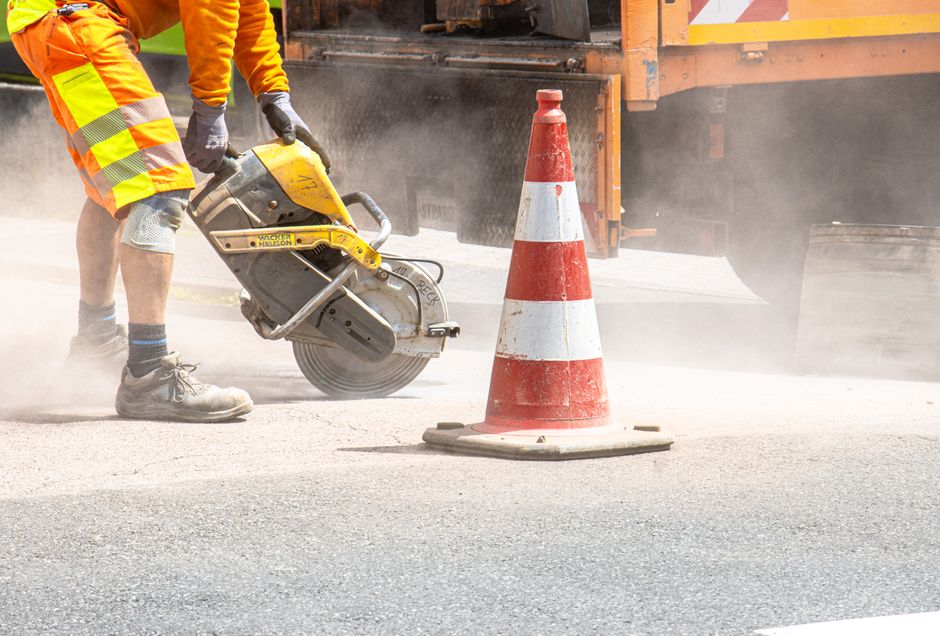
The campaign targeted high-risk tasks directly: cutting kerb stones, grinding concrete, drilling block work, and demolition work generating fine dust. These are not edge-case activities. They are the daily bread of construction in Ireland.
Why Silica Is Suddenly Getting This Level of Attention
Silicosis is irreversible. That is the starting point. Once the scarring is in the lung tissue, no treatment removes it. Workers develop it after years of exposure that felt unremarkable at the time because respirable silica dust is invisible to the naked eye. You cannot smell it. You cannot taste it. By the time a worker has symptoms, the damage is already significant.
What shifted regulatory attention was a combination of factors. Compensation claims from silicosis cases have been rising across Europe. The engineered stone sector in Australia and the UK produced a wave of young workers, some in their thirties, diagnosed with accelerated silicosis. Ireland took notice. The engineered stone ban in the Republic came into force in 2024, but construction dust from natural stone and concrete is still generating exposure levels that exceed legal limits on sites that should know better.
The all-island coordination sends a specific signal. Enforcement is no longer sporadic and regional. It is structured, joint, and ongoing.
What Inspectors Were Looking For
When an inspector arrived on site during this campaign, they were not hunting for paperwork violations. They were assessing whether exposure was being controlled at source. The hierarchy matters here: elimination first, then substitution, then engineering controls, then administrative controls, then PPE. Arriving at a site where workers are relying entirely on dust masks as the primary control is a problem, regardless of what the mask's spec sheet says.
Specific checkpoints included:
Water suppression. Wet cutting reduces airborne dust by around 85 to 90 percent at source. Inspectors checked whether water suppression systems were present, functional, and actually in use during cutting operations.
On-tool extraction. Angle grinders and floor grinders fitted with shrouds connected to an H-class vacuum capture dust before it disperses. Inspectors checked for correct specification, fit, and filter maintenance.
Enclosure and segregation. High-dust tasks done in open, shared work areas expose workers who are not even involved in the task. Segregation of dusty operations from other trades is a control, not a courtesy.
Respiratory protective equipment. When engineering controls are in place and RPE is still required, inspectors checked for FFP3 minimum rating, face-fit testing records, and that workers were actually wearing the right equipment correctly.
Health surveillance. Under the Safety, Health and Welfare at Work (Chemical Agents) Regulations, workers exposed to silica dust above the action value require health surveillance. This means periodic lung function testing, not a form signed at induction.
What Your Site Needs Now
Start with the risk assessment. If it does not identify RCS as a specific hazard for cutting and grinding work, it is incomplete. A generic dust hazard assessment does not cut it under current enforcement expectations.
Then audit what is actually happening during those tasks, not what the method statement says. Walk the site during a concrete cutting operation and watch. Is the water running? Is the vacuum connected and switched on? Is the operator wearing a correctly fitted FFP3?
Document the health surveillance register. If you have workers who have been cutting stone regularly for two or more years and there are no lung function tests on record, that is an exposure to enforcement action, not just a regulatory gap.
Training records need to show that workers understand why controls exist, not just that they attended a toolbox talk. An inspector asking a worker why wet cutting matters should get an answer that goes beyond "because we have to."
The Enforcement Consequences Are Real
Improvement notices, prohibition notices, and prosecutions all came out of the campaign's predecessor inspections over recent years. Fines for silica-related failures in the Republic can reach six figures in serious cases, and the reputational damage from an HSA prosecution is harder to recover from than the fine itself.
The all-island dimension adds a layer worth noting. Firms operating in both jurisdictions now face coordinated scrutiny. A firm found lacking in Limerick and Belfast simultaneously is not dealing with two isolated incidents. That pattern will be visible to both regulators.
Silica dust has always been your legal problem. The campaign simply removed any remaining excuse for not knowing it.