Every construction worker in Ireland has sat through a toolbox talk about silica. Most of them walked straight back out and started dry-cutting concrete without a mask. Knowing the risk and changing behavior are two completely different problems.
The dust itself is invisible at dangerous concentrations. You cannot see respirable crystalline silica the way you can see sawdust or smoke. A worker cutting sandstone, grinding concrete, or drilling into block work is generating particles smaller than 10 microns across. Those particles travel straight past the nose and throat and embed in lung tissue. The body cannot remove them. Over years, the accumulation triggers silicosis, an irreversible scarring of the lungs that can progress even after exposure stops. It also raises the risk of lung cancer, COPD, and kidney disease. Silicosis in 2026 is still killing young workers from exposure that happened a decade earlier on sites where everyone knew the rules.
So why does the cutting keep happening without controls?
The Problem Is Not Ignorance
Ask workers on a busy Dublin site whether silica dust is dangerous. They will tell you it is. Ask them what controls are required. Many can list them: water suppression, on-tool extraction, RPE rated to FFP3, wet methods where dry is not necessary. The knowledge is there. What is missing is the bridge between knowing and doing.
Research into occupational health behavior consistently points to the same pattern. Workers discount long-latency risks. A hazard that kills you in 20 years feels abstract when you have a deadline at 4pm today. A fall from height or an unguarded machine creates an immediate, visible consequence. Silica creates a cough. Maybe. Eventually.
This is not stupidity. It is how human risk perception works. We are wired to respond to threats that are immediate and certain, not threats that are statistical and distant. The construction industry has never fully reckoned with that gap.
Production Pressure Does the Heavy Lifting
The second driver is less psychological and more structural. Sites run on programmes. Supervisors are measured on output. A wet cutting method takes longer. An on-tool extraction unit needs to be set up, maintained, and its filters replaced. These are not enormous barriers, but on a site where time is money and the foreman is watching, they become reasons to cut corners.
Workers read the environment around them. If a supervisor walks past a dry cut without saying a word, the message is clear. If RPE is stored in a container two hundred metres from where the work is happening, the message is also clear. The paperwork says one thing. The site says another. Workers trust what they see, not what is written in the safety plan.
This is where the compliance mindset fails completely. Hanging a poster about silica controls, filing the COSHH assessment, and handing out masks during induction creates the appearance of a managed risk. It does not change what happens at 2pm when a worker needs to make three cuts quickly and the wet attachment is nowhere to be found.
What Actually Changes Behavior
The evidence from occupational health research and from sites that have genuinely reduced silica exposure points to three things.
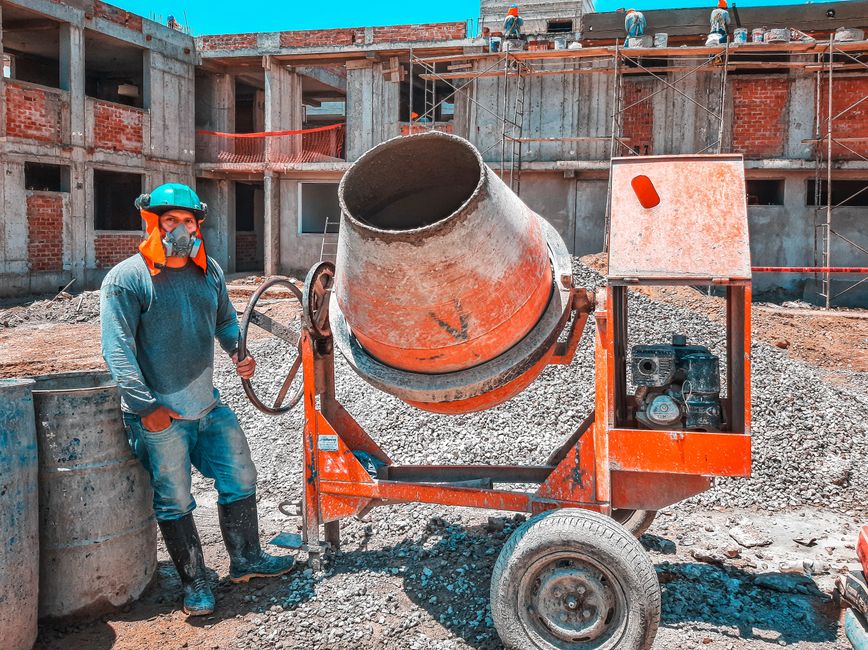
First, controls need to be the path of least resistance. If wet cutting or on-tool extraction is harder to access than dry cutting without protection, most workers will choose the easier option under pressure. The intervention is not training. It is design. Keep water attachment kits within arm's reach of cutting equipment. Make FFP3 masks available at the point of work, not in a storage unit. Remove the friction from the safe method.
Second, supervisors need to stop being silent bystanders. A supervisor who does not intervene when dry cutting happens without controls has made a decision. It is a decision to accept that risk. Training supervisors to intervene consistently, and then holding them accountable when they do not, is more effective than any number of awareness campaigns aimed at workers.
Third, health surveillance needs to be treated as seriously as incident reporting. Silicosis is detectable early through periodic lung function testing and chest imaging. Workers who see a colleague's lung function declining have a concrete, personal reason to use controls. Abstract statistics about disease prevalence do not create the same effect. An occupational physician presenting real data to a real crew does.
The Regulatory Picture
The Chemical Agents Regulations and the Safety, Health and Welfare at Work Act place clear duties on employers to assess and control exposure to silica. The occupational exposure limit for respirable crystalline silica in Ireland is 0.1 mg/m³ as an eight-hour time-weighted average. That limit is routinely exceeded during dry cutting of granite, sandstone, and concrete block without controls. The HSA has enforcement powers and uses them, but inspection frequency means that many sites go years without scrutiny.
The law is adequate. Enforcement is not consistent enough to change the day-to-day calculus on site. That is a straightforward problem with a straightforward solution that requires political will and resource allocation. Neither has been forthcoming at the scale the problem demands.
The Turn
Awareness campaigns are not worthless. Getting workers to understand what silicosis does to a 45-year-old man who started on sites at 18 is worth doing. But campaigns are the floor, not the ceiling. The industry has been running them for years while occupational lung disease rates in construction remain stubbornly high. Something upstream of awareness is broken, and it lives in production culture, site design, and supervision.
Fix the environment before you fix the attitude. The attitude tends to follow.