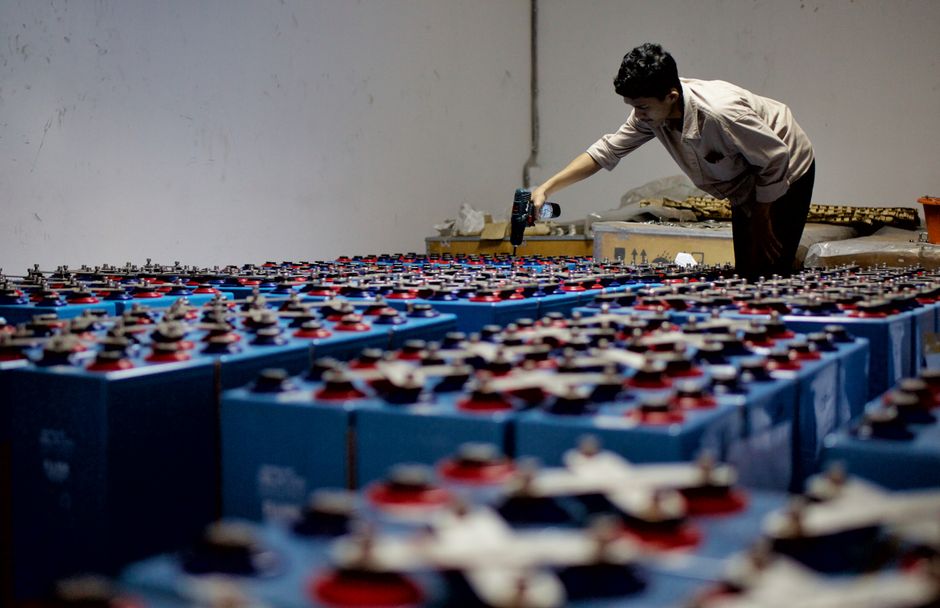
A lithium-ion battery sitting in a cardboard collection box in your stockroom is not inert. It is a compressed chemical reaction waiting for permission to start.
Battery fires cost £2.37bn annually across the UK and Ireland, and the number is climbing. The reason is not arson or faulty wiring. It is the growing volume of used electronics moving through warehouses, retail back-rooms, and waste collection points, where nobody has formally assessed the risk. Irish businesses collecting WEEE (Waste Electrical and Electronic Equipment) for recycling are caught directly in this. And most of them have no idea what their actual exposure is.
What Thermal Runaway Actually Is
Thermal runaway is not a slow burn. It is a self-reinforcing chemical chain reaction inside a lithium-ion cell that generates its own heat faster than it can be dissipated. Once it starts, nothing you do at the point of ignition stops it.
It begins with a trigger. A damaged cell. A short circuit from physical impact. A cell that was stored partially charged in a hot environment. Internal contamination from manufacturing defects. Any of these can push a cell into an exothermic reaction that raises its temperature. That heat damages adjacent cells. Those cells fail. The reaction cascades.
Temperatures inside a failing battery pack can exceed 700 degrees Celsius. It produces its own oxygen, which is why CO2 and dry powder extinguishers are largely ineffective. The gas vented during runaway is toxic and flammable. If that gas ignites, you have a fireball, not just a smouldering bin.
Why Warehouses Are the Highest-Risk Point in the Chain
The electronics recycling chain has several chokepoints. Warehouses and retail collection points are the most dangerous because they aggregate damaged, unknown-condition batteries in bulk, often in confined storage with limited detection systems.
A returned smartphone that was dropped last week. A power bank someone put through the wash. An e-cigarette with a swollen cell. All of these go into the same WEEE collection bin, often alongside flammable packaging, in a room that may have one smoke detector and no sprinklers.
The specific hazards in a warehouse setting:
Stacking and compression. Cardboard boxes stacked on top of battery-containing devices can compress swollen cells past their mechanical limits.
Temperature variation. Irish warehouse temperatures swing significantly across seasons. Heat accelerates cell degradation. A marginally compromised cell that was stable in January may not be stable in July.
Charge state. Lithium-ion cells should be stored at 40 to 60 percent charge. Devices coming in through WEEE collection are at unknown charge states, often fully charged.
Mixed battery chemistries. Lithium iron phosphate, lithium cobalt oxide, lithium polymer. Each has different failure characteristics. They all end up in the same box.
Detection lag. Most smoke detectors respond to combustion products. By the time a standard detector triggers, thermal runaway is already underway.
The Legal Position for Irish Businesses
The Waste Management (Batteries and Accumulators) Regulations 2014 set out how batteries must be collected, treated, and recycled in Ireland. They do not in themselves address fire risk management during storage. That falls under the Safety, Health and Welfare at Work Act 2005 and the Fire Services Act 1981, which together require employers to identify hazards in the workplace and take reasonably practicable steps to control them.
Fire safety for Irish businesses requires a fire safety register, a fire risk assessment, and documented procedures. If you are storing WEEE-collected electronics and your fire risk assessment does not specifically address lithium-ion batteries, it is not compliant. The HSA and local fire authority have both prosecuted on exactly this gap.
WEEE producers and distributors registered under the scheme also carry a duty of care along the collection chain. If your collection practices create a foreseeable fire risk and you have not addressed it, liability does not stop at the recycler's gate.
Auditing Your Current Disposal Practices
This is not complicated. It is a matter of asking the right questions in the right order.
Step 1: Map where batteries enter your building. Collection bins, returned goods, in-store repair takeback, staff device disposal. Every intake point is a risk point. List them all.
Step 2: Assess physical condition at intake. You cannot guarantee every device is undamaged. But you can train staff to flag visually swollen batteries, devices with cracked casings, or units that feel warm. Those items should not go into standard collection bins.
Step 3: Check your storage conditions. What is the maximum temperature in your collection storage area in summer? Is it ventilated? Are batteries stored near flammable materials? What is the maximum quantity stored at any one time before collection?
Step 4: Review your detection and suppression. Standard smoke detectors may not give early enough warning for lithium fires. Some warehouses are now installing hydrogen gas detectors as an earlier indicator of cell failure. If you have sprinklers, verify they cover battery storage areas specifically.
Step 5: Review your collection frequency. The longer batteries sit in your building, the greater the exposure. If your WEEE collector visits monthly, that is 30 days of accumulated risk. Weekly collection from high-volume points is worth the cost.
Step 6: Check your emergency response plan. Your staff need to know not to fight a lithium battery fire with standard extinguishers. The correct response is evacuation, call fire services, and if safe to do so, attempt to move the item to an outdoor area and douse it with large volumes of water to slow the thermal runaway. That procedure needs to be written, posted, and trained.
The Turn
None of this is speculative risk. The Association of Chief Fire Officers in the UK has flagged battery fires as a primary driver of waste site and warehouse fires. Ireland's fire services are seeing the same pattern. The batteries are getting into the system in larger volumes every year because the devices that contain them are everywhere and the disposal infrastructure has not kept pace with the fire risk they carry.
Audit your collection chain now. The regulation requires it. The chemistry demands it.