You can breathe fine on a Tuesday. You can be dying by the following year. That is how silicosis works, and that is exactly why the quarry industry has a problem it keeps failing to take seriously.
The Health and Safety Authority's targeted campaign on lung disease in quarrying is not bureaucratic box-ticking. It is a response to a pattern the inspectors have been watching build for years. Quarry workers, aggregate plant operatives, and construction workers cutting or crushing stone are inhaling respirable crystalline silica, a particle so fine it sits in the air like invisible smoke and travels straight into the deepest part of the lung. The body cannot clear it. The lung tries to wall it off. The result is scarring, and scarring in lung tissue does not reverse.
What makes this worse than most occupational hazards is the timeline. A worker can spend a decade at the face, feel completely fine, and only start coughing in their fifties. By the time occupational lung disease shows up on a scan, it has usually been developing for years. This is not like a broken arm. There is no obvious moment of harm, no incident report, no near-miss form. Just gradual, invisible damage accumulating shift by shift.
What Silicosis Actually Does to a Lung
Silica dust, when it is respirable, means particles smaller than 10 microns. You cannot see them without instrumentation. They pass through the nose, throat, and upper airways without triggering any defence mechanism, and land in the alveoli, the air sacs where gas exchange happens.
The immune system treats these particles as foreign bodies and sends macrophages to destroy them. The silica particles destroy the macrophages instead. The dead cells release inflammatory signals, more macrophages arrive, and the cycle continues. The result is nodular fibrosis. Dense scar tissue forms, stiffening the lung and reducing its capacity over time.
Simple silicosis develops after years of moderate exposure. Accelerated silicosis can develop in as few as five years with higher concentrations. Acute silicosis, the most dangerous form, can emerge within weeks of extremely heavy exposure and progresses rapidly to respiratory failure.
Silicosis also significantly increases the risk of tuberculosis. A worker with silicosis is several times more likely to develop TB than someone without the condition. It raises the risk of lung cancer. It can trigger autoimmune conditions including scleroderma and lupus. This is not a single-organ problem.
Why Quarrying Is the Frontline
Granite, sandstone, flint, and slate all contain significant quantities of crystalline silica. So does concrete. So does the aggregate that comes out of a crushing plant. Quarry workers are exposed at every stage: blasting, loading, crushing, screening, and transport. Dry operations are particularly hazardous. Wind compounds the problem by carrying dust across a site and beyond the immediate work area.
Silicosis is not unique to quarrying, but quarrying generates some of the highest concentrations of respirable crystalline silica of any industry. Workers who have spent careers at stone-processing plants or aggregate operations can accumulate exposures that dwarf those of most construction trades.
The exposure limit under Irish law, derived from EU occupational exposure limit directives, is 0.1 milligrams of respirable crystalline silica per cubic metre of air, measured as an eight-hour time-weighted average. Exceeding that limit is a legal breach. Monitoring whether you are near it requires air sampling. Most quarry operators do not sample nearly often enough.
What the HSA Campaign Is Actually Looking For
The HSA's quarry lung disease campaign focuses on whether operators have a functioning health surveillance programme in place, whether dust controls are working, and whether workers have access to and use appropriate respiratory protective equipment.
On the health surveillance side, inspectors want to see lung function testing, also called spirometry, being carried out at regular intervals for workers in high-exposure roles. They want records. They want evidence that results are being acted on, not just filed. A worker whose spirometry results show a decline should trigger a review, a referral, and a reassessment of controls. A folder of results with no follow-up action is not a programme, it is paperwork.
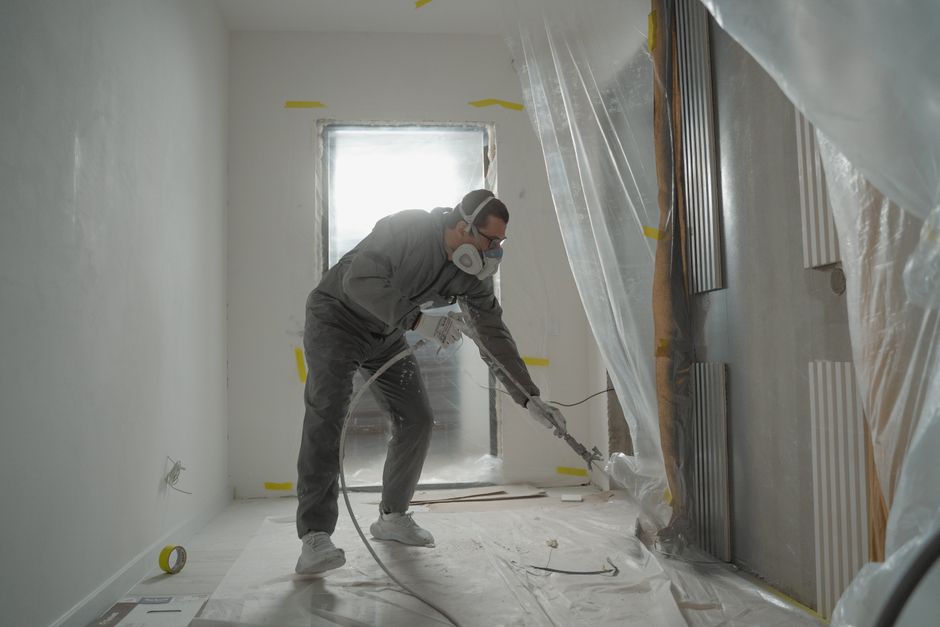
On dust controls, the hierarchy matters. Suppression first: wet methods on crushing and screening equipment, enclosed cabs with filtered air, water sprays at transfer points. Ventilation second: local exhaust ventilation on enclosed processing areas. Respiratory protection only as a last resort, not a substitute for engineering controls. An RPE policy that relies entirely on workers wearing masks while the plant runs dry is failing its workers and, increasingly, failing inspections.
Spotting the Signs Before the Scan
Silicosis is asymptomatic in early stages. That is the problem. By the time a worker notices breathlessness on exertion, a persistent cough, or fatigue during physical tasks, the fibrosis is already established. None of these symptoms are specific to silicosis, which is another reason why workers dismiss them for years.
The only reliable way to catch silicosis before it becomes severe is structured health surveillance. Spirometry before a worker starts in a high-exposure role gives a baseline. Repeated testing every one to three years, depending on exposure levels, tracks any decline. A drop in FEV1 (forced expiratory volume in one second) that cannot be explained by age or smoking is a red flag. A chest X-ray interpreted by a qualified reader, using the ILO classification system, can identify early nodular changes.
Workers who have spent time in quarrying, aggregate processing, or stone cutting and who have never had occupational lung function testing should seek one. The Occupational Health service through their GP is the starting point. They are entitled to request this. The disease being in early stages is not a reason to wait.
What Employers Must Do Right Now
Under the Safety, Health and Welfare at Work Act 2005 and associated chemical agents regulations, employers in quarrying and aggregate industries have specific duties around hazardous substance control. Crystalline silica falls within those duties.
The mandatory steps are straightforward even if executing them properly takes work. Carry out a specific risk assessment for silica exposure. Identify which tasks and roles generate the highest concentrations. Implement engineering controls and verify they are working, which means dust monitoring by a competent person with calibrated equipment. Provide appropriate RPE for residual exposure, specifically FFP3 half-masks or powered air-purifying respirators for high-exposure tasks, fitted and face-fit tested. Run a health surveillance programme with a qualified occupational health professional. Keep records for 40 years, because the disease has a latency that outlasts most employment relationships.
The engineered stone ban introduced in response to silicosis deaths in the worktop fabrication industry demonstrated that regulators will act decisively when evidence of harm reaches a threshold. Quarrying has not yet reached that threshold in terms of regulatory intervention. That does not mean the exposure is safe. It means the consequences are slower to become visible.
The Turn
The HSA campaign creates an opportunity. Inspectors on site are not the enemy here. A quarry operator who can demonstrate real, functioning controls and a genuine health surveillance programme is unlikely to face enforcement action. An operator who cannot demonstrate either needs to understand that the workers getting sick in ten years are the workers on site today.
Act on this before symptoms appear. That is not a slogan. It is the only window that actually exists.