Rinsing raw chicken does not remove bacteria. It aerosols them. That is the entire problem, and it has been the entire problem for years.
Campylobacter is Ireland's most common cause of bacterial food poisoning. The Food Safety Authority of Ireland estimates it causes tens of thousands of cases every year, with many going unreported because people assume a bad 24 hours is "a stomach bug" rather than what it actually is: a foodborne illness that was preventable. Poultry is the main source. And the habit of washing raw chicken before cooking it is one of the most reliable ways to spread the bacteria around your kitchen before you even turn on the heat.
What Campylobacter Actually Does
Campylobacter jejuni lives in the gut of poultry. It gets onto the meat during slaughter and processing. It survives refrigeration. It does not survive heat. That last point is the only one that matters from a safety standpoint.
Symptoms come on 2 to 5 days after exposure. Diarrhoea, stomach cramps, fever, nausea. It lasts about a week in most cases. In older people, young children, or anyone immunocompromised, it can be considerably worse. A small percentage of cases trigger reactive arthritis or Guillain-Barré syndrome, a serious neurological condition. These are not common outcomes, but they are real ones, and they all trace back to a moment in someone's kitchen.
The infectious dose is low. As few as 500 organisms can cause illness. A single contaminated bird can carry millions. That context matters when you understand what happens when you hold it under a running tap.
Why Washing Makes It Worse
Water does not kill Campylobacter. It moves it.
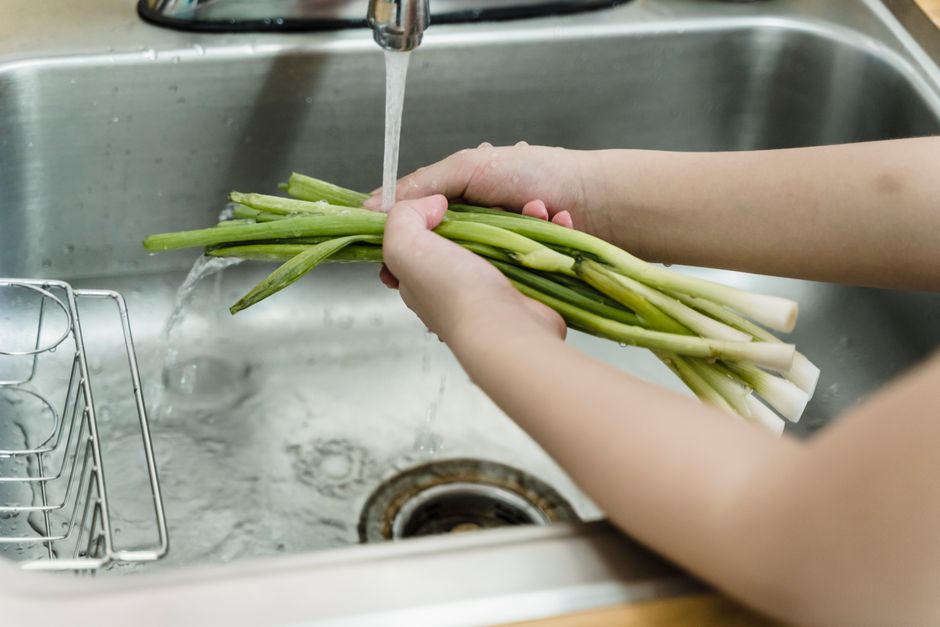
When you rinse raw chicken under a tap, water hits the surface and bounces. Those droplets, now carrying bacteria from the meat, land on your sink basin, the tap itself, the draining board, the counter, your hands, any dishes that happen to be nearby, and potentially food already sitting out. Studies using ultraviolet tracers have shown bacterial spread up to a metre from the sink during chicken rinsing. You cannot see it happening. The kitchen looks exactly the same after as it did before.
The logic people use for washing is usually one of two things: "to get rid of sliminess" or "to clean it before cooking." Both misunderstand what cooking does. The oven, the pan, or the grill will reach temperatures that destroy Campylobacter completely. A thorough rinse under a cold tap does nothing to it.
What to Do Instead
Handle raw chicken as though the surface is contaminated, because it is.
Keep it cold and contained. Store raw chicken on the bottom shelf of the fridge, in a sealed container or on a plate, so it cannot drip onto other food. If it was bought fresh and is being cooked the same day, fine. Beyond two days, freeze it.
Use a dedicated chopping board. Colour-coded boards exist for a reason. Red for raw meat. Do not use the same board for vegetables, bread, or anything that will not be cooked.
Cook it to 75°C at the thickest point. A meat thermometer removes the guesswork. Juices running clear is a reasonable indicator but not a reliable one. The thermometer is reliable.
Wash your hands immediately after handling raw poultry. Not a quick rinse. Soap and water, 20 seconds minimum, before you touch anything else in the kitchen.
Clean and disinfect contact surfaces. The chopping board, the counter where the packaging sat, the knife. Hot soapy water, then a disinfectant spray if you have one. The sink basin itself needs cleaning after raw poultry prep, because drips will have landed there even without the rinsing.
Manage packaging carefully. The juice in the bottom of the tray is heavily contaminated. Dispose of the packaging without letting it drip across the counter. Wash your hands after binning it.
The Cross-Contamination Problem Nobody Thinks About
Cross-contamination hidden spots are where most home food poisoning incidents actually start. It is not the undercooked centre of a chicken breast. It is the salad that was prepped on the same board that handled raw chicken an hour earlier. It is the tap handle touched with contaminated hands that then gets touched again by clean ones. It is the knife that was rinsed but not properly washed between tasks.
Professional food handlers learn this in training. Home cooks generally do not, because nobody tells them in a way that sticks. Food safety guidance tends toward the vague. "Handle with care." "Avoid cross-contamination." These phrases mean nothing without the specifics behind them.
The specifics are: Campylobacter on raw poultry is real, it is there in quantity, and it spreads through contact with surfaces and hands, not through the air. So every surface that raw chicken touches is a potential source of illness for someone else in your household. The tap handle. The fridge door handle you grabbed when you pulled the chicken out. The phone you answered while cooking.
The Habit That Is Hard to Break
Washing chicken is a generational habit in many Irish kitchens. People learned it from their parents, who learned it from theirs. It feels like cleaning. It looks like cleaning. The logic is intuitive even though it is wrong.
The FSA and FSAI have both run campaigns on this. The message has not fully landed, partly because it conflicts with something that feels sensible. Telling someone their kitchen habit is making food less safe is a harder sell than you might think.
But the mechanism is not complicated. Bacteria on the surface of raw chicken, water hitting it and bouncing, droplets landing on adjacent surfaces. That is the whole story. Once you have seen it explained with tracers under UV light, the urge to rinse disappears fairly quickly.
Cook the chicken properly and the bacteria are gone. That is the control measure. Everything else is about not moving the contamination around your kitchen before you get there.