An egg recall warning issued jointly by the Food Standards Agency and Food Standards Scotland flagged Ukrainian-origin shell eggs distributed across Great Britain. The product crossed multiple borders. The documentation gap followed it every step of the way.
Irish retailers who import via UK distributors, or who source from suppliers that do, are part of this story whether they know it or not. The supply chain does not stop at Holyhead. Neither does the liability.
What Actually Happened
The FSA/FSS alert identified shell eggs of Ukrainian origin sold under various labels in GB. The concern centred on traceability failures and uncertainty about whether the eggs met import requirements following post-Brexit third-country rules. Ukraine is not in the EU. Eggs from Ukraine entering the EU single market must meet specific veterinary certification requirements. Eggs entering GB must meet different but equally specific requirements. Eggs that then travel onwards into Ireland sit at the intersection of both regulatory regimes, and most of the food businesses handling them have no idea which rules apply.
The eggs were not necessarily unsafe. That is almost beside the point. The problem is that nobody in the distribution chain could prove they were safe, because the documentation to demonstrate compliance was either absent or incomplete. In food safety law, that gap is not a technicality. It is the entire case against you.
Why Irish Retailers Are Exposed
Ireland imports food products from and through the UK constantly. Some of this is direct importation from GB distributors. Some is indirect, where an Irish wholesaler sources from a GB supplier who sources from a European importer who sources from a non-EU country. The paperwork at each stage is supposed to travel with the product. In practice, it often does not.
Under EU Regulation 178/2002, the General Food Law that applies in Ireland, every food business operator in the chain bears responsibility for the safety and traceability of products they place on the market. This includes retailers. Buying from a reputable-sounding wholesaler is not a defence. The regulation is clear: you are responsible for verifying that what you sell meets the requirements, and you must be able to demonstrate traceability one step back and one step forward.
The FSAI enforces this in Ireland. When a product recall is triggered, the FSAI expects every business that handled the product to produce records within hours. Not days. Hours. Businesses that cannot do this face enforcement action independent of whether the product itself caused any harm.
The Third-Country Import Problem
Post-Brexit, eggs coming into the EU from Great Britain are third-country imports. They require health certificates issued by a competent authority in the exporting country, and they must enter through a Border Inspection Post. Eggs that originated in Ukraine and transited through GB before arriving in Ireland carry an additional layer of complexity. They need to demonstrate compliance with both the GB import regime and the EU import regime for Ukrainian-origin product.
Most small and medium Irish food retailers are not checking any of this. They are buying eggs from a supplier they trust, receiving a delivery docket, and putting the boxes on a shelf. The trust is understandable. The legal exposure is real.
The FSAI's traceability standards have become stricter in recent years, and the Ukrainian egg situation is exactly the kind of scenario those standards were designed to address. A product of non-EU origin, passing through multiple jurisdictions, with each border crossing creating another opportunity for documentation to degrade.
What a Proper Supplier Verification Check Looks Like
Most retailers do some version of supplier verification. They check that their main wholesaler has a Food Business Operator registration. They might ask for a copy of a HACCP plan. Then they stop. That is not supplier verification for imported goods. That is a filing exercise.
Genuine supplier verification for imported food involves checking the origin country of products, not just the country of your immediate supplier. It involves asking for import documentation for third-country products, specifically the Common Health Entry Document or equivalent. It involves confirming that Border Inspection Post clearance was obtained. And it involves keeping records of all of this in a format that can be produced to an inspector at short notice.
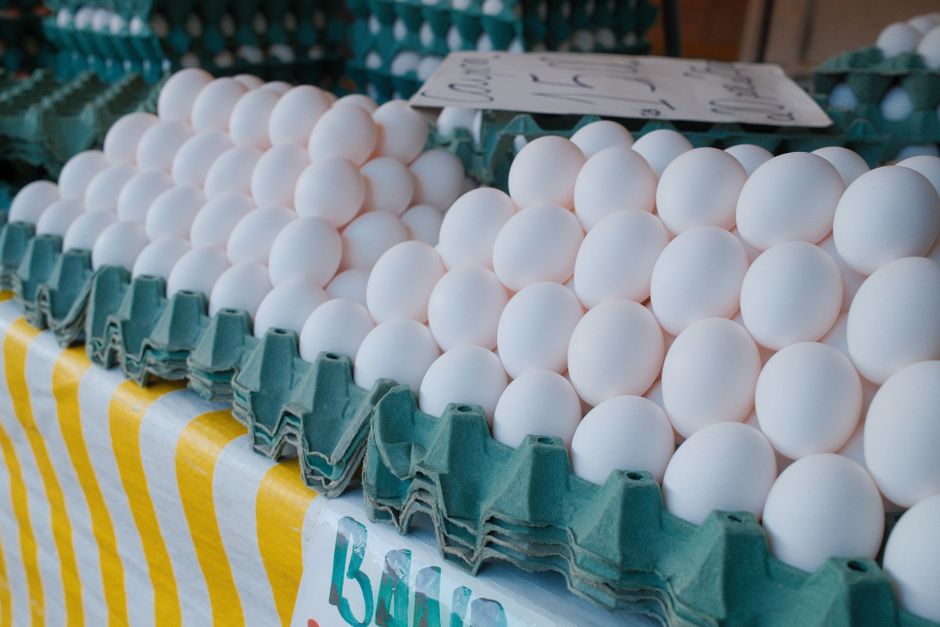
For eggs specifically, you are also looking at the stamp code on the egg itself. EU eggs carry a code that identifies the production method, country of origin, and farm identification number. An egg without a readable code, or with a code that does not match the declared origin on the packaging, is a red flag. If you are sourcing eggs through a distribution chain that crosses multiple jurisdictions, inconsistency between the egg code and the label should stop the purchase.
A structured approach to auditing suppliers for safety compliance is not optional when your supply chain includes imported goods. It is the mechanism that keeps the liability where it belongs, with the supplier who got it wrong, rather than with you for failing to check.
What the FSAI Can Do to You
The FSAI has powers under the Food Safety Authority of Ireland Act 1998 and the European Communities (Official Controls on Foodstuffs) Regulations. These include issuing Closure Orders, Improvement Orders, and Prohibition Orders. They also include prosecution, with fines up to €3,000 per offence on summary conviction, and significantly higher penalties on indictment.
More damaging in practice is reputational exposure. A product recall linked to your business name, even if you were three steps removed from the original failure, generates coverage. It generates customer questions. It generates exactly the kind of scrutiny that finds the next gap.
Food crime is also a factor. The growing boldness of food fraud in the Irish and UK markets means that mislabelled origin is not always accidental. Ukrainian eggs sold as EU-origin product, or repackaged to obscure their provenance, represent a known pattern. Retailers who cannot verify origin are the last line of defence against this, and they are currently failing that role by default.
The Minimum You Should Have in Place Right Now
First, map your egg supply chain completely. Where do your eggs come from, and what is the country of origin as declared on the import documentation? If your supplier cannot answer this question by the end of the week, that is your answer.
Second, request copies of import certificates for any non-EU origin products. If your supplier cannot provide these, they either do not exist or the supplier does not know where they are. Neither is acceptable.
Third, check your traceability records. Can you identify every batch of eggs you received in the past month, when they arrived, and where they went? Can you produce this information within two hours of a FSAI request? If not, fix the record system before anything else.
Fourth, put a clause in your supplier contracts requiring them to notify you of any product alerts, country of origin changes, or supply chain alterations affecting the goods they supply to you. This does not eliminate liability, but it closes the information gap that leaves retailers the last to know.
The Ukrainian egg warning will not be the last time a product crosses borders with inadequate documentation. Supply chains are long, and the weakest link is always the business that assumed someone else had already checked.
Check your eggs. Check your records. Do not wait for the Closure Order to find out you were the weakest link.